
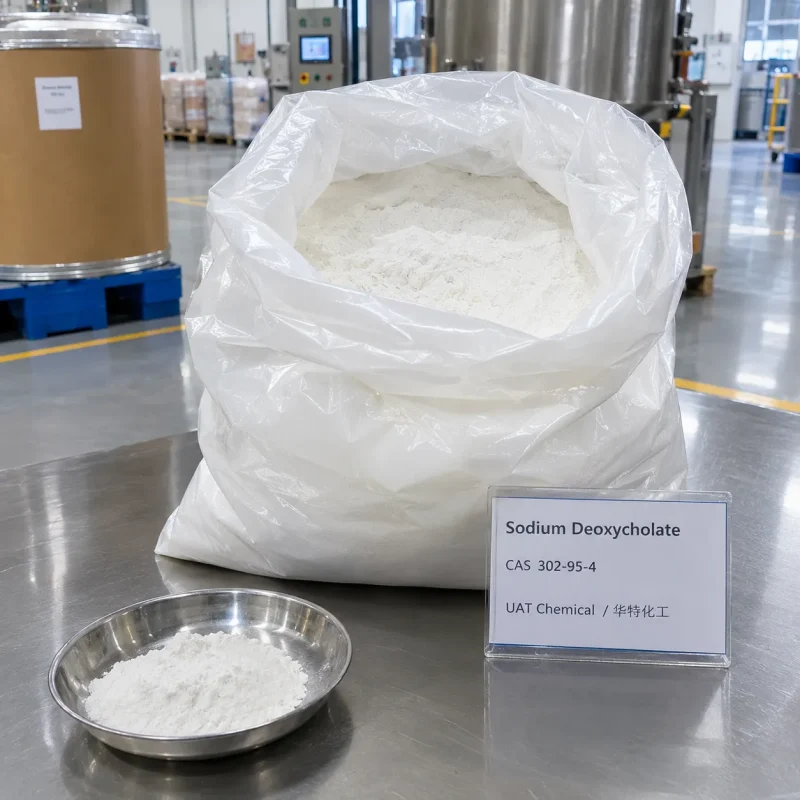
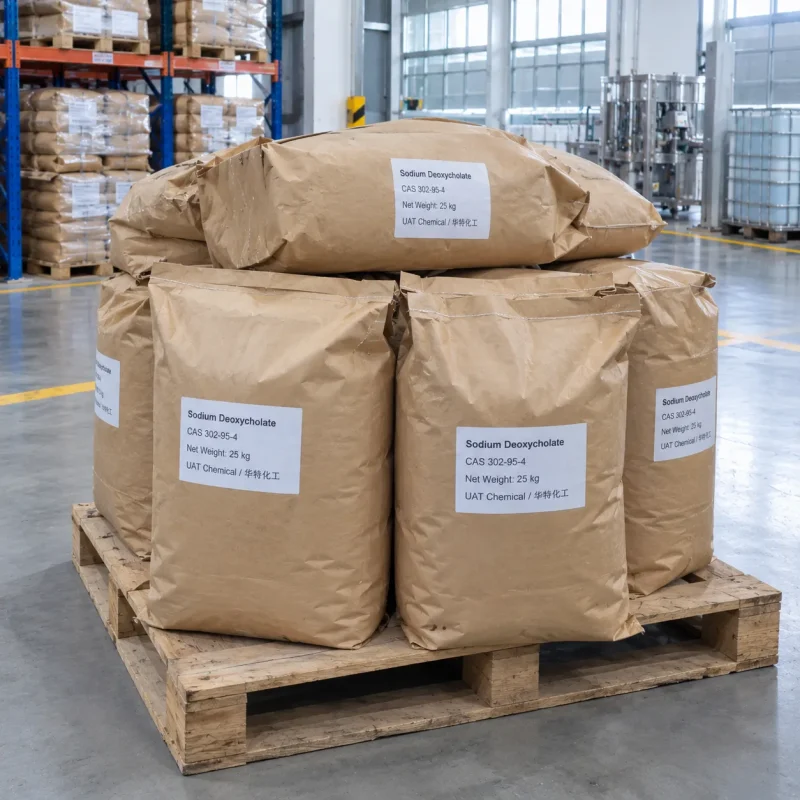
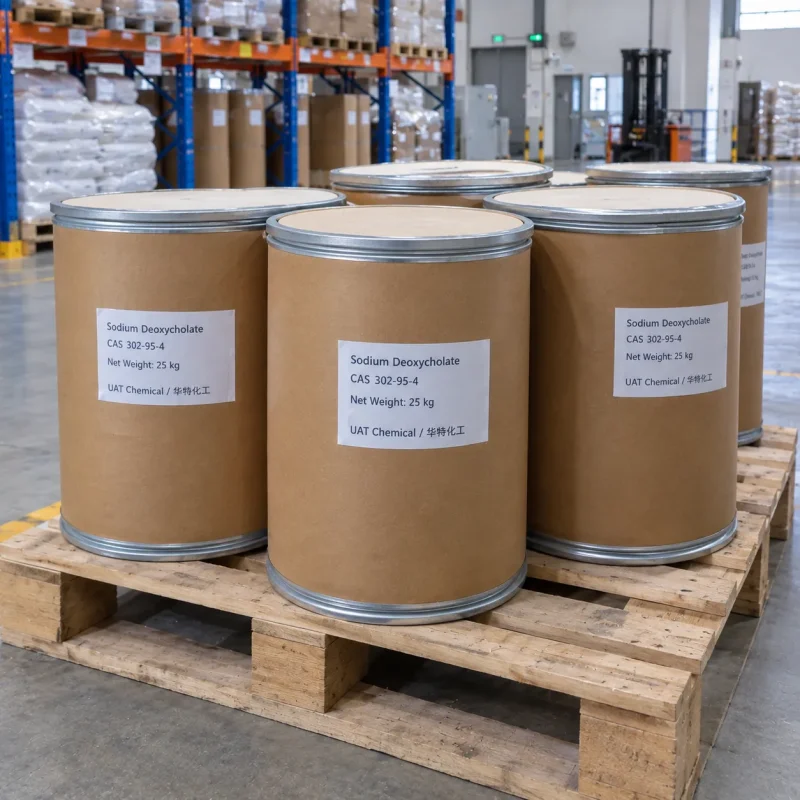
Sodium Deoxycholate CAS 302-95-4
Sodium deoxycholate is the sodium salt of deoxycholic acid, a secondary bile acid and a water-soluble anionic detergent supplied as a white to cream crystalline powder. The steroid backbone disrupts lipid bilayers more gently than straight-chain ionic detergents, making the salt a standard component of cell lysis and protein extraction systems. Beyond the bench it serves as an emulsifying and solubilizing excipient, a bile salt in selective culture media, and an emulsifier in personal care. UATChem supplies sodium deoxycholate in reagent, biochemical and pharmaceutical grades, from sample packs to bag and drum quantities, with the assay, origin and animal-origin documentation matched to the intended use on the COA.
- CAS: 302-95-4
- EC Number: 206-132-7
- Synonyms: Deoxycholic acid sodium salt; bile salt
- Chemical Name: 3alpha,12alpha-dihydroxy-5beta-cholan-24-oic acid sodium salt
- Molecular Formula: C₂₄H₃₉NaO₄
- Molecular Weight: 414.55
- Appearance: White to cream crystalline powder
- Type: Anionic bile salt detergent (surfactant)
- Solubility: Soluble in water as the sodium salt
- Origin: Animal-derived, traditionally bovine or ovine bile
- Main use: Cell lysis, membrane protein work, culture media, excipient
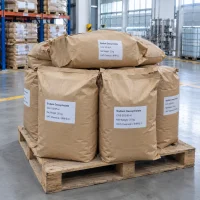
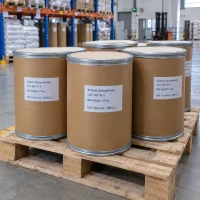
- Packaging: Sample pack; 1 kg bag; fiber drum
About Sodium Deoxycholate
Sodium deoxycholate is the sodium salt of deoxycholic acid, one of the secondary bile acids. The commercial powder is a white to cream crystalline solid that dissolves in water, where the bile salt forms micelles and behaves as a strong yet relatively mild anionic detergent. Because the molecule is built on a rigid steroid ring rather than a straight alkyl chain, it breaks lipid and protein interactions without the harsher denaturing action of sodium dodecyl sulfate, and it can be removed later by dialysis. The material is naturally present in bile and has traditionally been recovered from bovine or ovine sources, which puts origin documentation at the center of pharmaceutical and biotech purchasing. The sodium salt is the practical water-soluble article; the free acid, deoxycholic acid, is a separate material with different applications.
Where It Is Used
The same detergent property carries sodium deoxycholate through several downstream industries:
- Biotechnology and protein work. Cell and virus lysis, RIPA and tissue lysis buffers, membrane-bound protein and receptor extraction, nucleic acid isolation, and affinity column elution or regeneration.
- Microbiology and media. A bile salt in selective agars such as deoxycholate citrate media, where it suppresses gram-positive organisms while enteric bacteria grow.
- Biopharma and liposomes. A solubilizing and emulsifying excipient for poorly soluble actives, liposome and vaccine adjuvant systems, and a processing aid in purification.
- Cosmetics and personal care. Anionic emulsifier and stabilizer, supporting delivery of active ingredients in rinse-off and leave-on formulas.
Grades, Origin and Specifications
Most commercial sodium deoxycholate is recovered from bovine or ovine bile rather than fully synthesized, so source species and origin matter to regulated customers. Pharmaceutical and biopharma lots can be supplied with traceable origin and a TSE/BSE suitability statement; give us the intended route and destination so the paperwork matches it.
Reagent and biochemical grades suit lysis buffers, membrane protein extraction and culture media, where a low ultraviolet background and clear solution matter for protein work. Excipient grade is released against the agreed specification or pharmacopoeia expectation with a full COA; tighter cell-culture or injectable profiles are quoted on request.
Typical quality items are shown below; exact limits depend on the ordered grade, and the batch COA is the confirmed record.
| Parameter | Value |
|---|---|
| Appearance | White to cream crystalline powder |
| Product type | Anionic bile salt detergent (surfactant) |
| Assay and identity | Reagent or pharmacopoeia value on the COA |
| Solubility | Soluble in water as the sodium salt |
| Loss on drying and clarity | Within grade limits, reported on the COA |
| UV background | Controlled low absorbance for protein grade |
| Origin and TSE/BSE | Traceable bovine or ovine origin; statement on request |
Packaging and Storage
Small development quantities leave in sealed bottles or foil pouches, while routine supply runs in 1 kg foil or polyethylene bags and fiber or cardboard drums for larger volumes. The powder is hygroscopic, so every pack is sealed against moisture and should be kept closed, cool, dry and away from direct light at room temperature. Sodium deoxycholate is handled as a non-hazardous solid for ordinary freight, the COA and any animal-origin or TSE/BSE letters travel with the shipment, and the retest date is shown on the label.
Frequently Asked Questions
Q: Is sodium deoxycholate animal-derived and what origin documents come with it?
A: Usually bovine or ovine derived; pharma lots include origin records and a TSE/BSE letter on request. State the route.
Q: Which grade should I choose, reagent or pharmaceutical?
A: Reagent grades suit lysis, protein and media; excipient grade meets tighter spec and COA, injectable profiles on request.
Q: Is sodium deoxycholate the same as the deoxycholic acid used in injections?
A: No. The sodium salt is a detergent and excipient; free deoxycholic acid is the injectable active and is not interchangeable.
Related products
Ready to Source? Talk to Our Engineers
Industrial Chemical Raw Materials, Factory-Direct — Quote Within 1 Hour
Stable high-purity supply, flexible packaging and complete compliance documentation for your formulations — exporting worldwide since 2006.
- 1000+Products
- 200+QC Protocols
- 7–15Days Delivery
- Factory-Direct Pricing
- COA / TDS / SDS Included
- Free Samples for Testing
- ISO 9001 Certified