
Cationic Starch CAS 56780-58-6
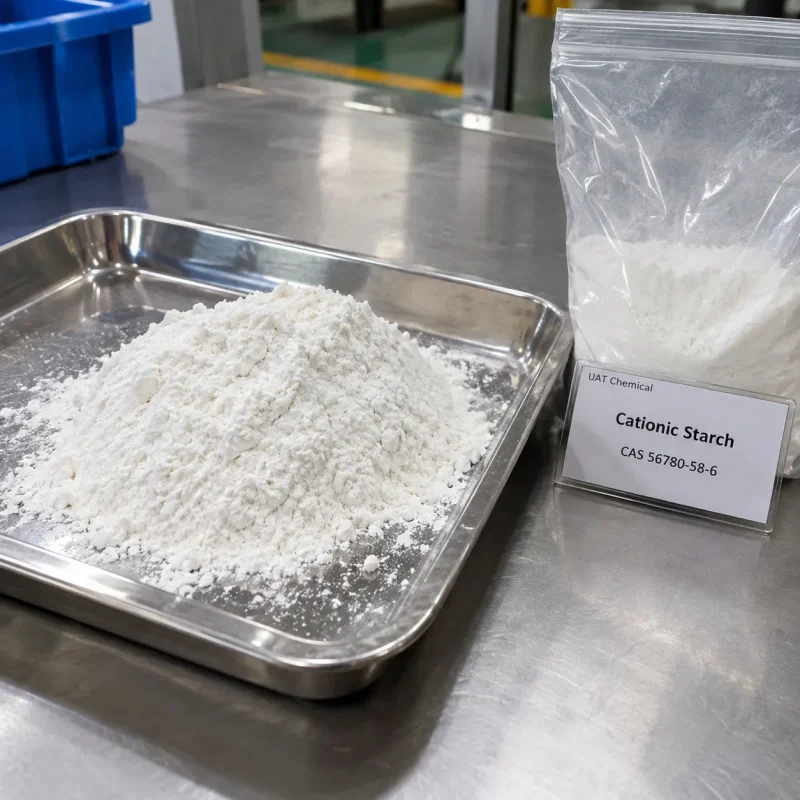
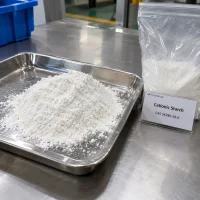
Cationic Starch (CAS 56780-58-6) is corn or tapioca starch modified with quaternary ammonium groups, sold as a white fine powder. Its positive charge binds straight to negatively charged cellulose and fillers in a neutral furnish, lifting first-pass retention, drainage and sheet strength without alum, and it doubles as a surface size and textile warp size. It is cooked before dosing to activate it. We stock standard wet-end grades in 25 kg PE-lined bags and 1000 kg bulk bags. Tell us the furnish and the nitrogen or viscosity grade you need, and we will match it.
- CAS: 56780-58-6
- Synonyms: Quaternary ammonium starch; cationic modified starch
- Source: Corn / tapioca based
- Appearance: White to off-white fine powder
- Nitrogen Content: 0.25 – 0.35% (standard wet-end grade)
- Viscosity (5%, 95 °C): 100 – 300 mPa·s
- Moisture: ≤ 13.0%
- Main Uses: Wet-end retention and strength, surface sizing, textile sizing
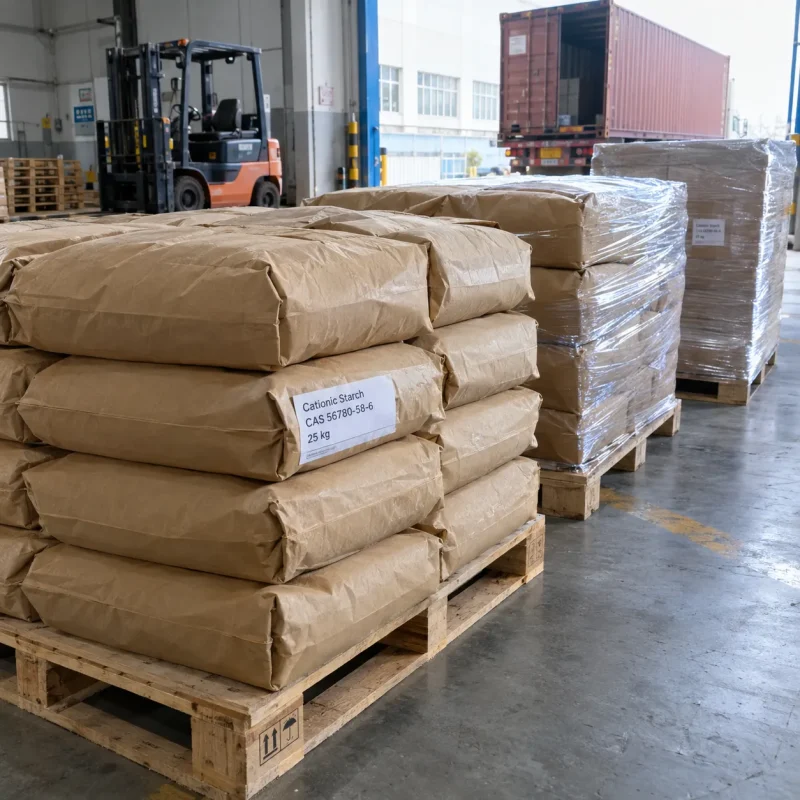
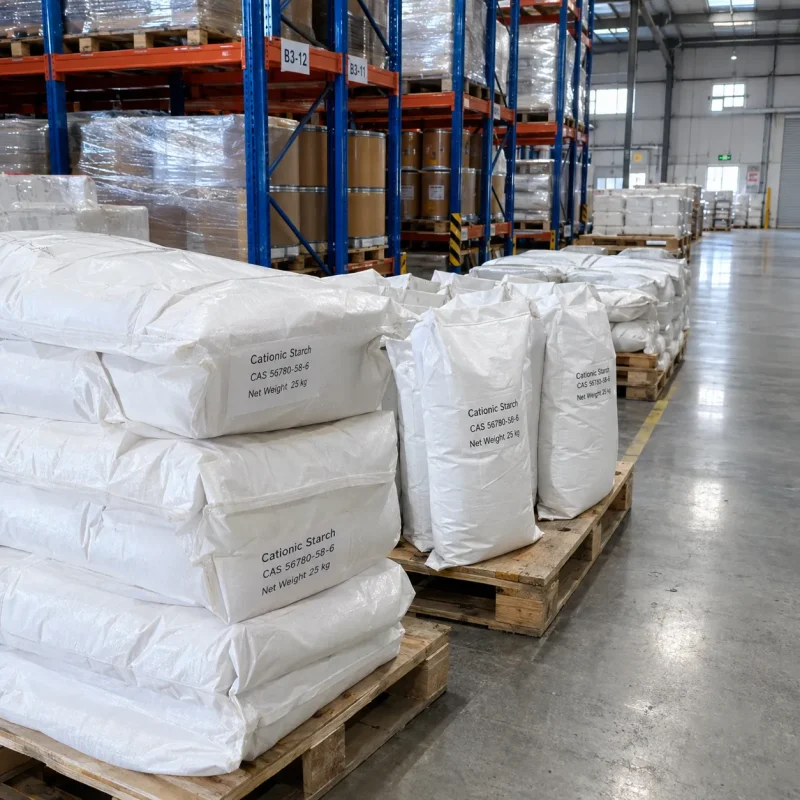
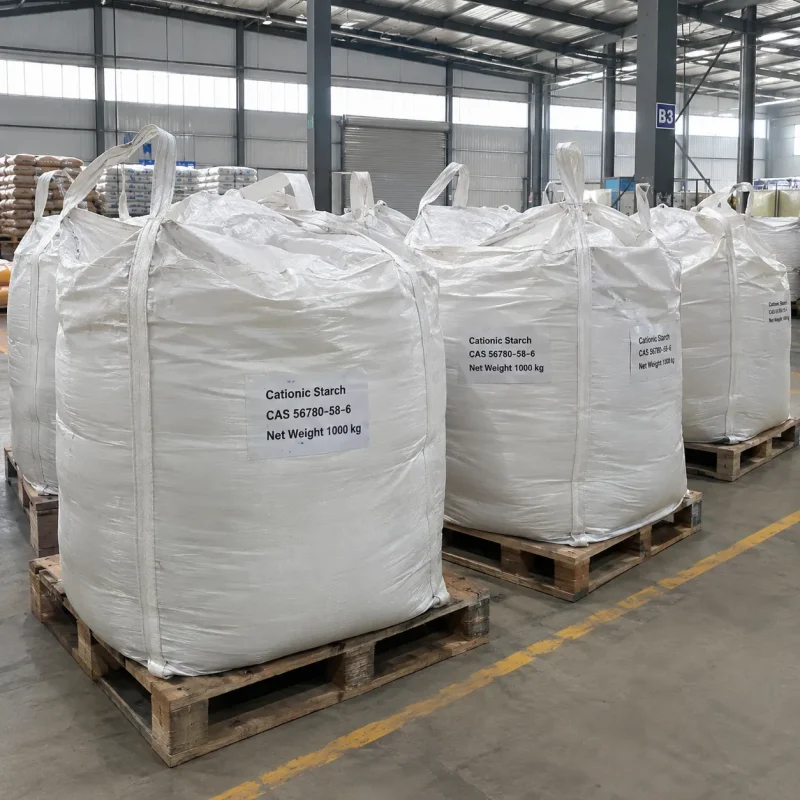
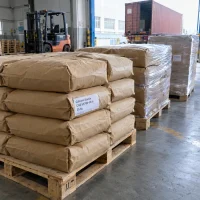
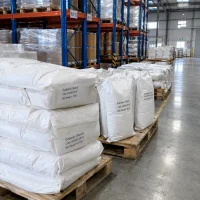
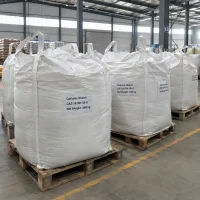
- Packaging: 25 kg kraft bag with PE liner; 1000 kg bulk bag, custom packing available
What Cationic Starch Is
Cationic starch starts as ordinary corn or tapioca starch. A controlled etherification step grafts quaternary ammonium groups onto the starch chain, giving it a permanent positive charge that native starch does not have. That charge is the whole point of the product: it pulls the starch onto negatively charged cellulose fibers and filler particles instead of letting it wash out with the white water. The powder disperses in cold water but only gelatinizes and becomes active once it is cooked, usually to around 90 °C.
Why It Works Without Alum
Older anionic starch has the opposite charge, so it only holds onto fibers in an acidic furnish with alum to bridge the gap. Cationic starch is attracted to the fibers on its own, which lets it run in neutral and slightly alkaline systems built around calcium carbonate filler, with no alum and less machine corrosion. Charge density is set by the degree of substitution, measured here as nitrogen content: low for routine wet-end addition, medium for the size press, high for heavily filled furnishes and effluent flocculation.
Where It Is Used
- Wet-end addition. Goes into thin stock before the headbox to hold fines and filler, speed dewatering and build tensile, burst and internal bond strength.
- Surface sizing. Applied at the size press to bind surface fibers, cut linting and dusting, and lift print density.
- Textile warp sizing. Forms a flexible protective film on cotton and blended yarns that washes out easily with enzymes during desizing.
- Water treatment. Acts as a natural-based flocculant for suspended solids and dye effluent, and in sludge dewatering.
Standard Wet-End Grade Specifications
| Test Item | Standard Wet-End Grade |
|---|---|
| Appearance | White to off-white fine powder |
| Nitrogen Content | 0.25 – 0.35% |
| Viscosity (5% solution, 95 °C) | 100 – 300 mPa·s |
| Moisture Content | ≤ 13.0% |
| pH (10% solution) | 5.0 – 7.0 |
| Fineness (100 mesh pass) | ≥ 98% |
Cooking, Storage and Ordering
- Disperse the powder in cold water first to stop lumps, then heat to 85-95 °C under stirring and hold for 15-20 minutes to fully gelatinize before dosing.
- The dry powder is hygroscopic, so keep bags sealed below 30 °C in a dry store, away from acid or alkali fumes. Starch dust can irritate airways, so wear a dust mask when handling bulk bags.
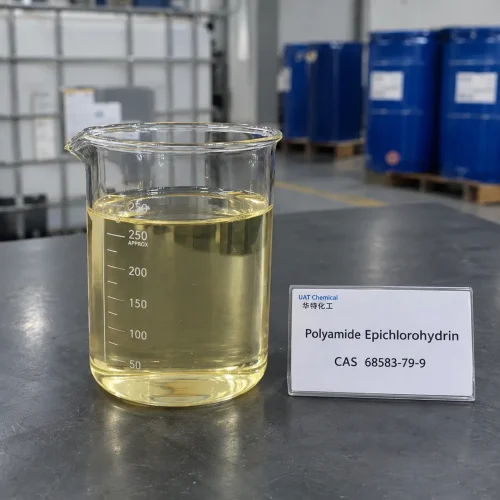
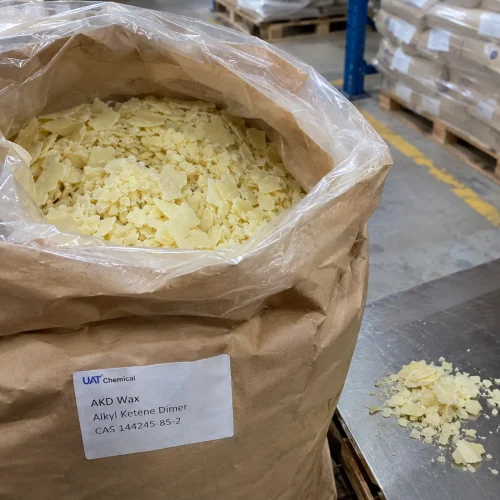
- Packaging: 25 kg PE-lined kraft bags and 1000 kg bulk bags; non-hazardous for normal transport. COA, TDS and SDS come with every order, samples are available, and quotes go out within one working day. It pairs in the same neutral furnish with AKD Wax CAS 144245-85-2 and PAE CAS 68583-79-9.
FAQ
Q: Which nitrogen grade fits a standard wet end?
A: Low nitrogen suits routine wet-end; medium fits the size press, high fits filled furnishes.
Q: Why no alum with cationic starch?
A: It binds fibers directly in neutral stock; anionic starch needs alum and acidic conditions.
Q: Does the powder dissolve in cold water?
A: It only disperses cold; cook to 85-95 °C for 15-20 minutes to gelatinize and activate it.
Related products
Ready to Source? Talk to Our Engineers
Industrial Chemical Raw Materials, Factory-Direct — Quote Within 1 Hour
Stable high-purity supply, flexible packaging and complete compliance documentation for your formulations — exporting worldwide since 2006.
- 1000+Products
- 200+QC Protocols
- 7–15Days Delivery
- Factory-Direct Pricing
- COA / TDS / SDS Included
- Free Samples for Testing
- ISO 9001 Certified