
Glacial Acetic Acid CAS 64-19-7
Glacial Acetic Acid (CAS 64-19-7), also called ethanoic acid, is the anhydrous form of acetic acid, a clear, colorless liquid with the sharp, pungent smell of vinegar. It mixes with water in any proportion and freezes into an ice-like solid around 16.6 °C, the trait behind the word glacial. It is a core feedstock for vinyl acetate, acetate esters and acetic anhydride, and purified grades serve as the E260 food acidulant and as a pharmaceutical synthesis reagent. The liquid is flammable and corrosive, so it travels as dangerous goods in plastic-lined or stainless containers. UATChem supplies industrial, food (E260) and pharmaceutical grades in drums, IBCs and ISO tanks. Tell us the grade, packing and quantity, and we will quote the matching lot with COA and SDS.
- CAS: 64-19-7
- EC Number: 200-580-7
- Synonyms: Ethanoic acid; anhydrous acetic acid
- Molecular Formula: C₂H₄O₂ (CH₃COOH)
- Molecular Weight: 60.05
- Appearance: Clear, colorless liquid, pungent vinegar odor
- Grades: Industrial, food (FCC, E260) and pharmaceutical; assay per COA
- Density (20 °C): about 1.049 g/mL
- Boiling Point: 118 °C
- Freezing Point: around 16.6 °C
- Flash Point: 39 °C (closed cup)
- Main Uses: VAM, PTA and acetate synthesis; food acidulant; textiles; pharmaceuticals
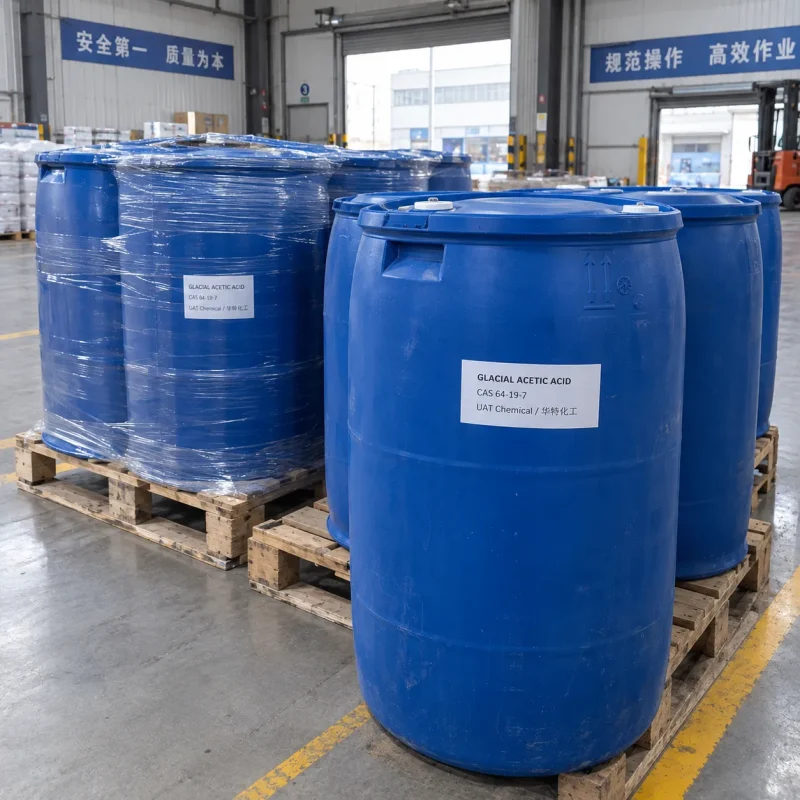
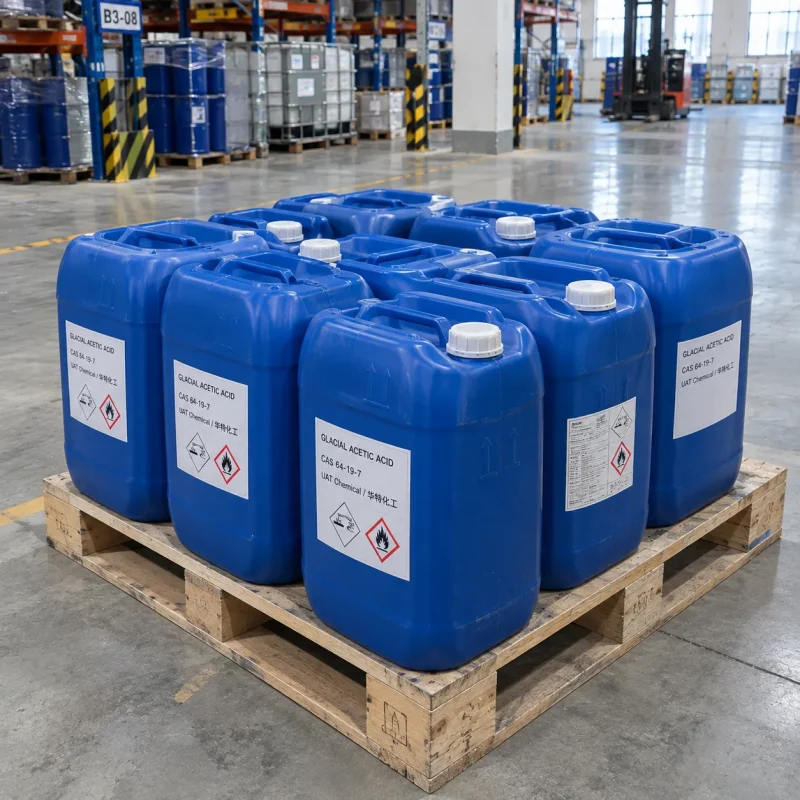
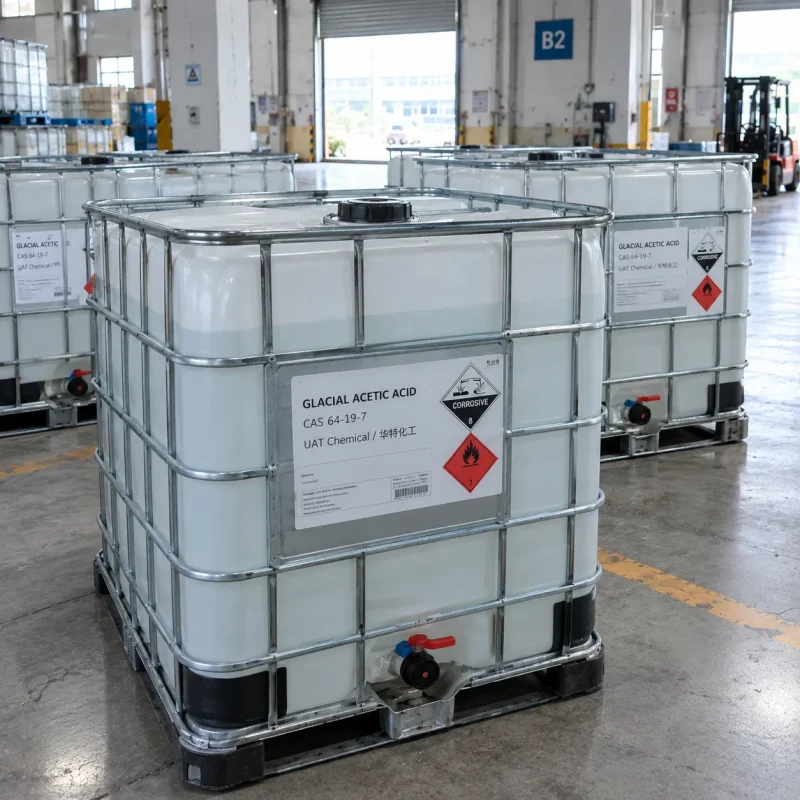
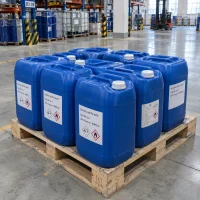
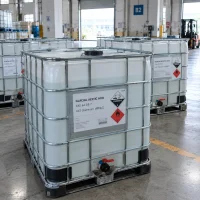
- Packaging: 25 kg / 30 kg HDPE drum; IBC; ISO tank, custom packing
What Glacial Acetic Acid Is
Glacial acetic acid is one of the largest-volume organic chemicals in industry. Glacial means the water-free material, a clear, colorless, corrosive liquid that is fully miscible with water and alcohol and turns into an ice-like solid at about 16.6 °C in cold storage. Industrial grade feeds large chemical processes, food grade meets FCC and carries the E260 additive number for vinegar, pickling and acidulation, and pharmaceutical grade follows USP or Ph Eur monographs. UATChem supplies all three grades, with the assay and certificates shown on each lot COA.
Where It Is Used
- Chemical intermediates. The largest share becomes vinyl acetate monomer for PVA, PVAc, adhesives and coatings, solvent for purified terephthalic acid in polyester, and feed for acetate esters, acetic anhydride, chloroacetic acid and metal acetates.
- Food and beverage. Food grade FCC material with the E260 number acidulates and preserves vinegar, pickles, sauces, canned goods and condiments.
- Pharmaceuticals. Pharmaceutical grade serves as a synthesis and acetylation reagent, a buffer and an antiseptic in drug and medical formulations.
- Textile and other industrial work. Diluted acid neutralizes fabric after dyeing and scouring, supports cellulose acetate, and enters descaling, cleaning, leather and agricultural formulations.
Typical Specifications
Industrial, food and pharmaceutical lots share the same physical identity below, while the assay, impurity limits and grade certificates are reported on the COA for each lot.
| Parameter | Value |
|---|---|
| Appearance | Clear, colorless liquid |
| Grade | Industrial; food (FCC, E260); pharmaceutical on request |
| Density (20 °C) | about 1.049 g/mL |
| Freezing Point | around 16.6 °C |
| Boiling Point | 118 °C |
| Flash Point | 39 °C (closed cup) |
| Miscibility | Fully miscible with water and alcohol |
| UN Classification | UN 2789, Class 8 (3), packing group II |
Storage, Handling and Ordering
- Store in tightly closed stainless steel or plastic-lined drums and tanks in a cool, ventilated place, away from strong oxidizers, nitric acid and alkalis. The liquid freezes near 16.6 °C, so insulated or heated tanks and lines prevent cold-weather blockages and frozen drums are thawed gently.
- Wear goggles, acid-resistant gloves and protective clothing under ventilation, as the liquid burns skin and eyes and the vapors irritate airways. Fight fire with alcohol-resistant foam, dry powder, water spray or carbon dioxide, and keep containers cool.
- UATChem packs 25 kg and 30 kg HDPE drums, IBCs and ISO tanks, with food grade certificates on request. The liquid travels as corrosive dangerous goods; COA and SDS accompany every order and food lots carry FCC, E260, Halal or Kosher papers. Send grade, quantity and destination for a quote.
FAQ
Q: What is glacial acetic acid mainly used for?
A: Most goes to vinyl acetate, PTA and acetate intermediates; food grade is the E260 acidulant and pharma grade feeds synthesis.
Q: What does glacial mean and will it freeze?
A: Glacial means water-free; it solidifies near 16.6 °C, so cold shipments use insulated tanks and drums thaw gently.
Q: How is it packed and shipped?
A: It goes out in 25 kg or 30 kg HDPE drums, IBCs and ISO tanks as corrosive dangerous goods, with COA and SDS for every lot.
Related products
Ready to Source? Talk to Our Engineers
Industrial Chemical Raw Materials, Factory-Direct — Quote Within 1 Hour
Stable high-purity supply, flexible packaging and complete compliance documentation for your formulations — exporting worldwide since 2006.
- 1000+Products
- 200+QC Protocols
- 7–15Days Delivery
- Factory-Direct Pricing
- COA / TDS / SDS Included
- Free Samples for Testing
- ISO 9001 Certified