
Brassylic Acid CAS 505-52-2
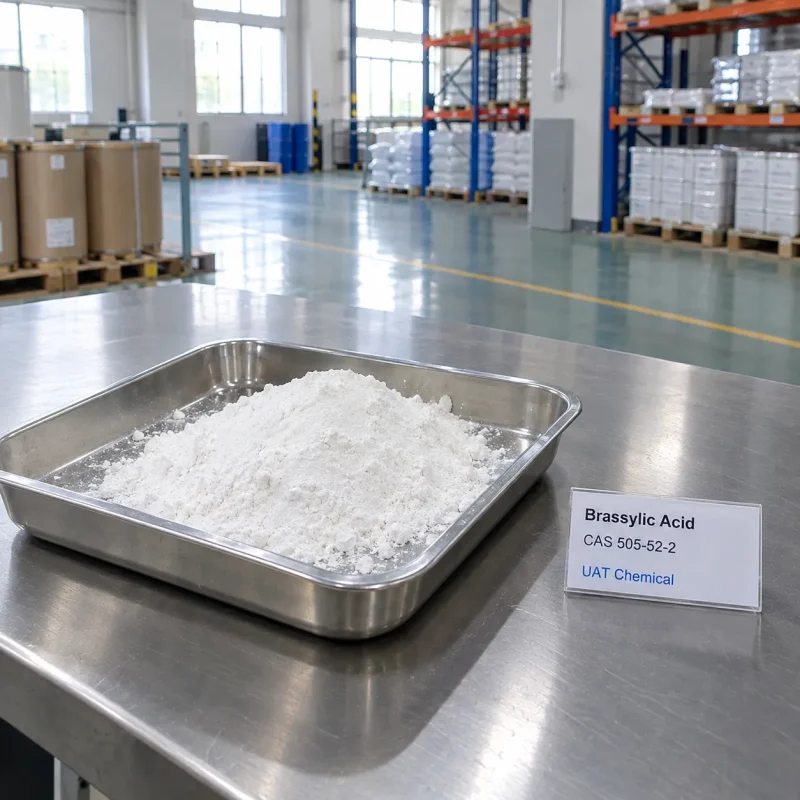
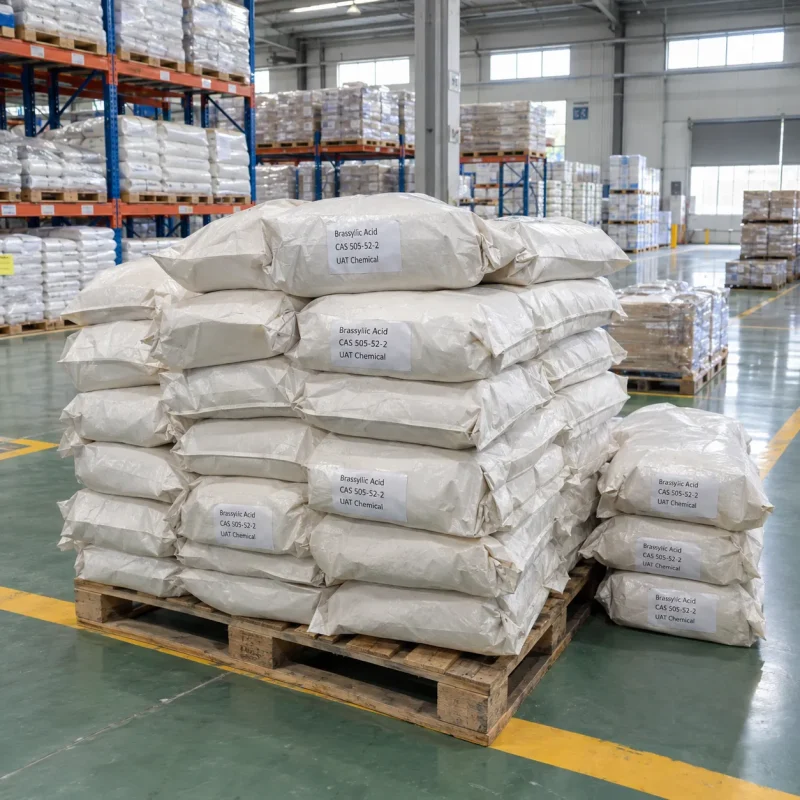
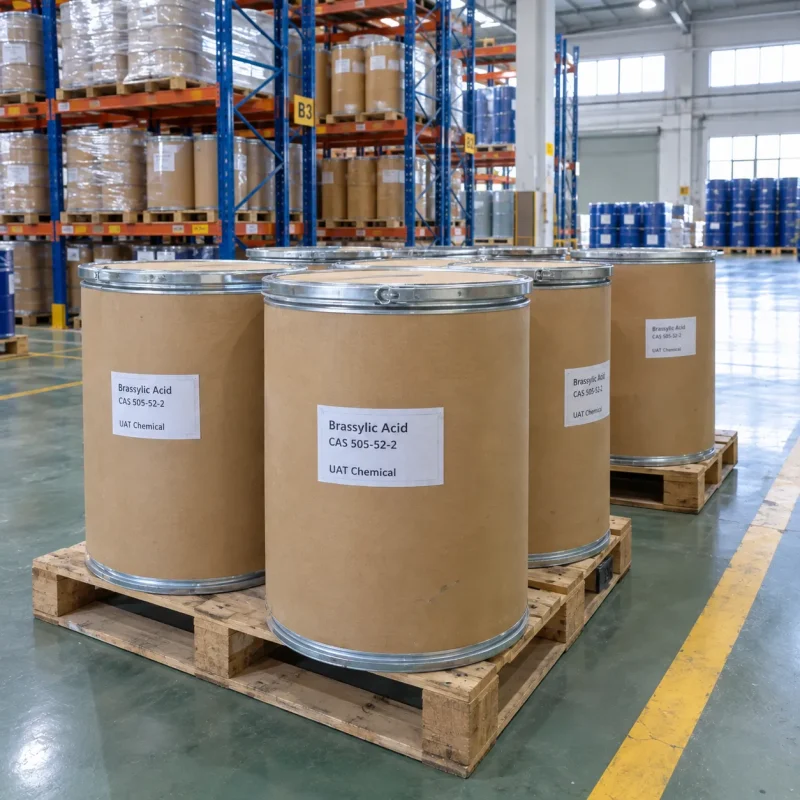
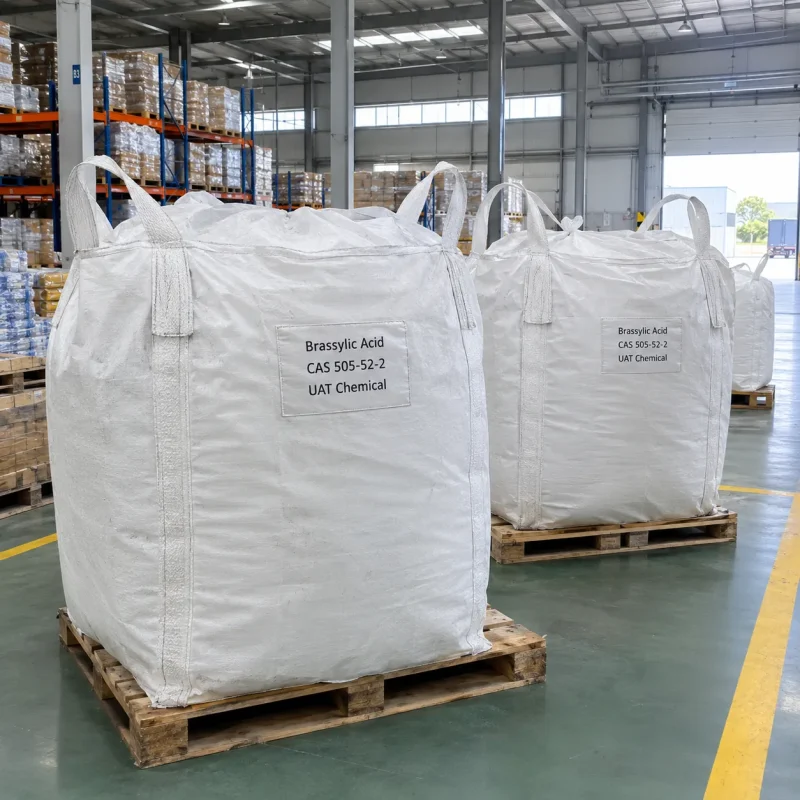
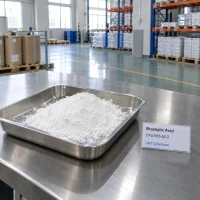
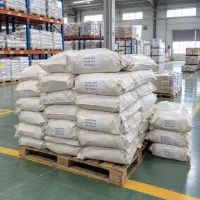
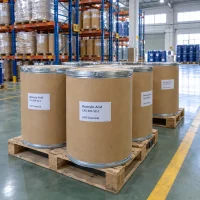
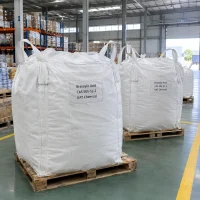
Brassylic Acid (CAS 505-52-2) is a C13 long-chain dicarboxylic acid, supplied as white flakes or powder. Its main use is in long-chain polyamides, the fragrance ingredient ethylene brassylate (Musk T), and synthetic ester lubricants. UATChem offers industrial grade at 99.0% min and polymerization grade at 99.5% min, packed in 25 kg woven bags, fibre drums and FIBC bulk bags, with COA, TDS and SDS on every order.
- CAS: 505-52-2
- EINECS: 208-011-4
- Synonyms: Tridecanedioic acid; 1,11-Undecanedicarboxylic acid; Tridecane-1,13-dioic acid
- Molecular Formula: C13H24O4
- Molecular Weight: 244.33
- Appearance: White to off-white flake or powder
- Assay (GC): 99.0% min (industrial) / 99.5% min (polymerization)
- Melting Point: 110 – 114 °C
- Acid Value: 455 – 463 mg KOH/g
- Packaging: 25 kg woven bag / fibre drum; FIBC bulk bag
What Is Brassylic Acid?
Brassylic acid is a long-chain dicarboxylic acid, a straight molecule with a reactive acid group at each end and thirteen carbon atoms in between. That length does the real work. Polymers made from it soak up far less moisture than short-chain equivalents and stay supple in the cold, and when the chain closes into a ring it reaches the size that produces the warm, lingering musk note used in perfumery. Commercial material comes from natural erucic acid, which is split by oxidative cleavage and then crystallised and dried into flakes.
What It Goes Into
- Long-chain polyamides. A co-monomer for nylon 1313, transparent polyamides and copolyamide resins. The C13 backbone lowers water uptake and improves dimensional stability, something short-chain nylons cannot offer.
- Macrocyclic musk. Cyclised with ethylene glycol it forms ethylene brassylate (Musk T), the warm, persistent musk found in fine fragrance, detergents and personal care.
- Hot-melt adhesives and powder coatings. A building block for copolyamide hot-melts used in textiles and electronics, and for flexible powder-coating resins that need a low melt viscosity.
- Synthetic ester lubricants. Esterified with branched alcohols it yields base stocks for greases, engine oils and compressor fluids that must perform at both high and low temperatures.
- Metalworking and rust prevention. Brassylic salts lay down a thin protective film on metal, acting as corrosion inhibitors in cutting fluids, rolling oils and temporary protectives.
Industrial and Polymerization Grades
| Test Parameter | Industrial Grade | Polymerization Grade |
|---|---|---|
| Assay (GC) | 99.0% min | 99.5% min |
| Melting Point | 110 – 114 °C | 112 – 114 °C |
| Acid Value | 455 – 463 mg KOH/g | 457 – 462 mg KOH/g |
| Water Content | 0.5% max | 0.2% max |
| Ash Content | 0.1% max | 0.05% max |
| Heavy Metals (as Pb) | 10 ppm max | N/A |
Polymerization grade is intended for reactor feed, where tighter water and ash limits protect the polymerisation process.
Packaging, Storage and Delivery
- Store cool, dry and sealed, away from oxidizers and strong bases; moisture uptake shows up as caked flakes.
- Dust can form combustible mixtures. Control dust and use local extraction when conveying or sieving.
- Packaging: 25 kg woven bags or fibre drums, and FIBC bulk bags for container volumes; palletised for export; private labelling on request.
- COA, TDS and SDS on every shipment; samples available; quotes within one working day. State the grade (industrial or polymerization) and quantity in your RFQ.
FAQ
Q: What is brassylic acid used for?
A: Long-chain polyamides, ethylene brassylate musk, ester lubricants and rust inhibitors.
Q: How is it different from undecanedioic acid?
A: Chain length: C13 polymers stay flexible, take up less water and hold their dimensions.
Q: What is ethylene brassylate?
A: A macrocyclic musk formed when brassylic acid cyclizes with ethylene glycol.
Q: Which grade suits polyamide reactors?
A: The 99.5% polymerization grade, with water at 0.2% and ash at 0.05% max.
Q: How should it be stored?
A: Sealed and dry; it cakes when damp, and dust can form combustible mixtures.
Related products
Ready to Source? Talk to Our Engineers
Industrial Chemical Raw Materials, Factory-Direct — Quote Within 1 Hour
Stable high-purity supply, flexible packaging and complete compliance documentation for your formulations — exporting worldwide since 2006.
- 1000+Products
- 200+QC Protocols
- 7–15Days Delivery
- Factory-Direct Pricing
- COA / TDS / SDS Included
- Free Samples for Testing
- ISO 9001 Certified