
Sodium Butyrate CAS 156-54-7
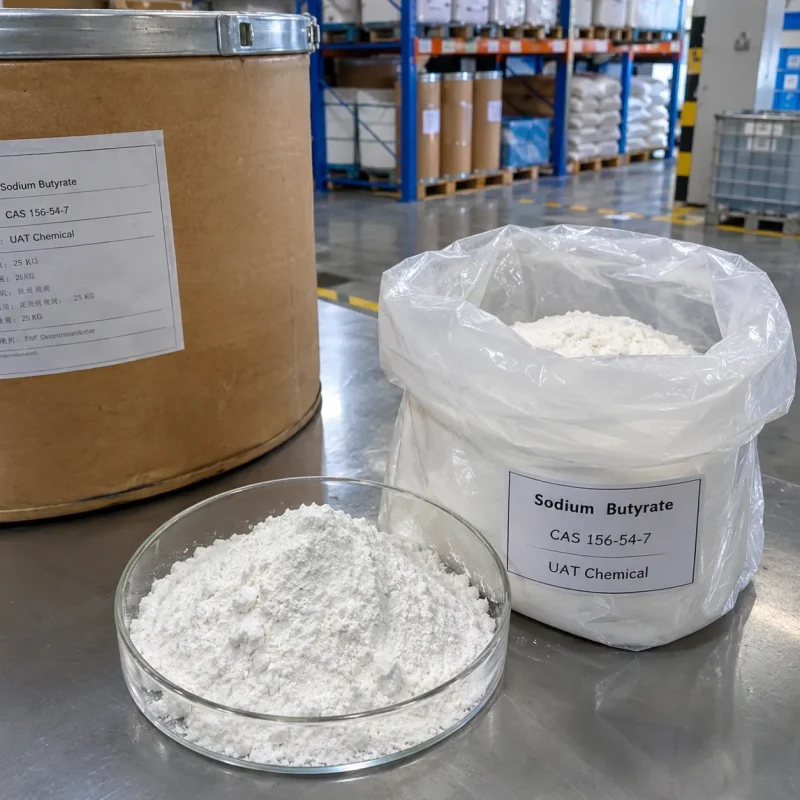
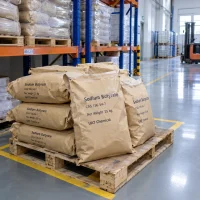
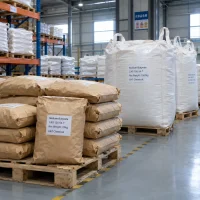
Sodium Butyrate (CAS 156-54-7) is the sodium salt of butyric acid, a white crystalline powder that feeds the cells lining the intestine. In swine, poultry and aquafeed it supports gut development and eases post-weaning diarrhea, a staple of antibiotic-free diets. Plain powder releases early with a butyric smell; coated granules reach the hindgut with far less odor. We supply 98% powder and coated slow-release grades in 25 kg and jumbo bags. Tell us the animal and plain or coated, and we will quote the right grade.
- CAS: 156-54-7
- EC Number: 205-857-7
- Synonyms: Butyric acid sodium salt; Sodium n-butyrate
- Molecular Formula: C₄H₇NaO₂
- Appearance: White crystalline powder / coated granules
- Purity (dry basis): ≥ 98.0% (coated grades at 30%, 50%, 70%)
- Water Content: ≤ 2.0%
- pH (5% solution): 8.0 – 10.0
- Free Butyric Acid: ≤ 1.0%
- Main Uses: Swine, poultry and aquaculture gut health; feed preservative
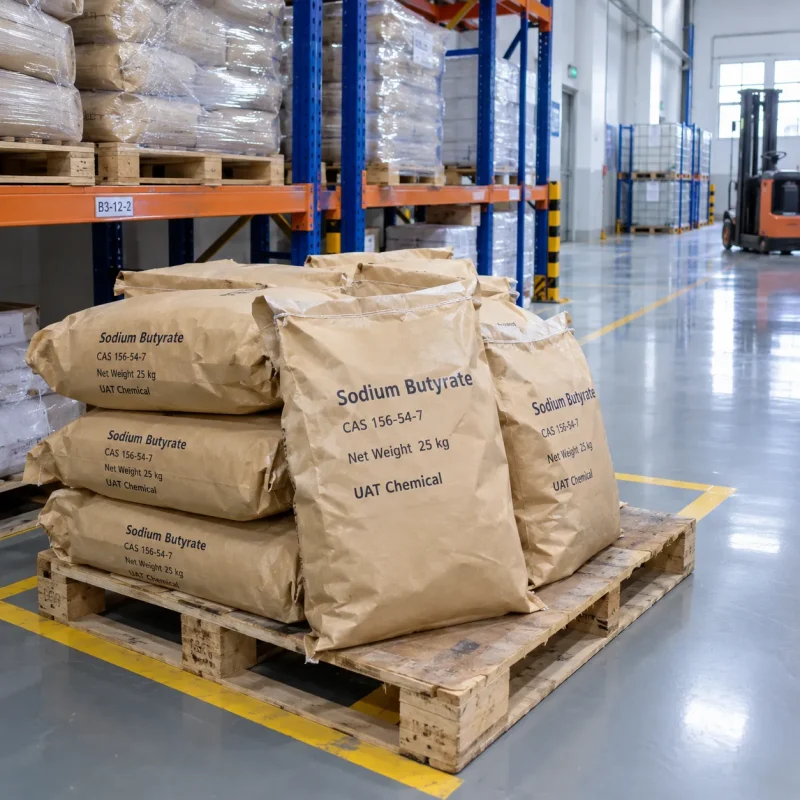
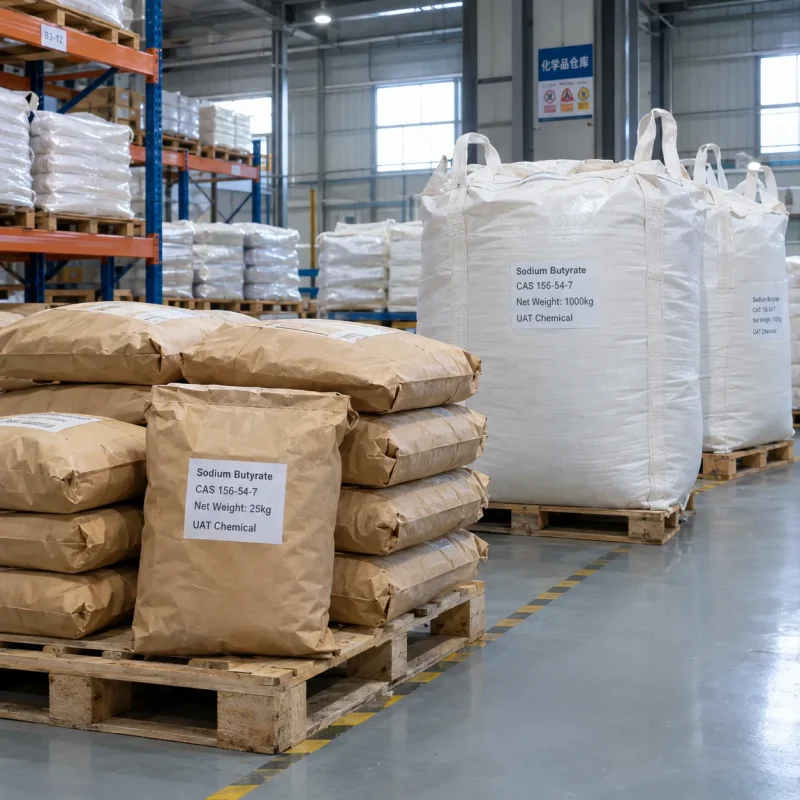
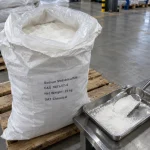
- Packaging: 25 kg PE-lined woven bag; 500 kg jumbo bag, custom packing available
What Sodium Butyrate Is
Sodium butyrate is the sodium salt of butyric acid, a short-chain fatty acid, sold as a white crystalline powder or as coated granules. Butyrate is the preferred fuel of the cells that line the colon, so adding it to feed helps the gut wall grow and repair itself and keeps unwanted bacteria in check. It has become one of the standard ingredients in antibiotic-free feeding programs for young pigs, poultry and farmed fish, and it also does duty as a mold inhibitor and a fine chemical intermediate.
Plain Powder or Coated Granules?
This choice decides most of the quote. Plain 98% powder is the low-cost workhorse: it dissolves quickly in the upper gut, but it carries the sharp butyric odor and can be partly absorbed before reaching the hindgut. Coated granules wrap the butyrate in a lipid layer so it survives the stomach and opens in the intestine, where it is needed most. The coating also removes most of the smell from the plant and the feed, and it is the usual pick for piglets, chicks and aquafeed. Coated grades are sold by active butyrate content, commonly 30%, 50% and 70%.
Where It Is Used
- Swine. Supports villi growth, steadies the gut after weaning and reduces post-weaning diarrhea and growth checks in piglets.
- Poultry and aquaculture. Added to broiler, layer and fish or shrimp feed to support the gut wall, improve nutrient uptake and lift feed conversion.
- Feed preservation. Holds back mold and spoilage bacteria in feed, silage and pet food and extends shelf life.
- Fine chemicals. Serves as an intermediate for butyric acid derivatives and as a modifier in resin and polymer work.
Technical Specifications
| Parameter | Specification |
|---|---|
| Molecular Formula | C₄H₇NaO₂ |
| Molecular Weight | 110.08 g/mol |
| Appearance | White crystalline powder / coated granules |
| Purity (dry basis) | ≥ 98.0% |
| Water Content | ≤ 2.0% |
| pH (5% aqueous solution) | 8.0 – 10.0 |
| Free Butyric Acid | ≤ 1.0% |
| Heavy Metals (as Pb) | ≤ 10 ppm |
Storage, Handling and Ordering
- Unlike enzymes, sodium butyrate needs no cold chain. Keep bags sealed in a cool, dry place at 5 to 30 °C and away from strong acids and oxidizers; it picks up moisture easily, and open bags should be used up quickly.
- The plain grade has a noticeable butyric smell, so good ventilation and a dust mask and goggles are worth using when tipping bags. Classified Non-DG for normal transport.
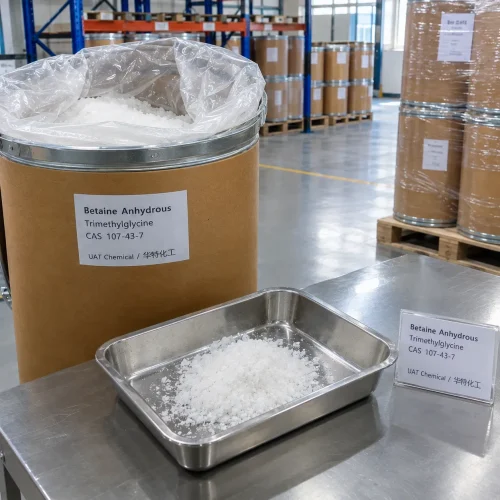
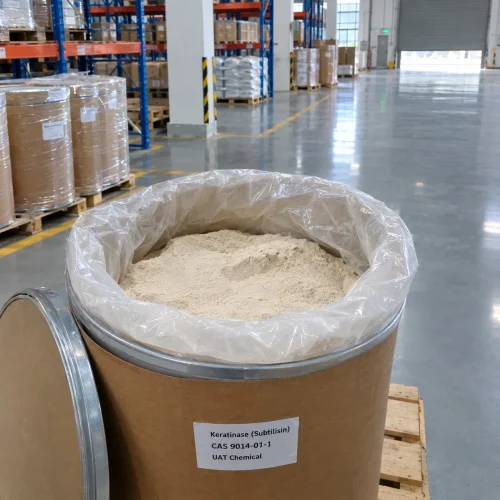
- Packed in 25 kg PE-lined woven bags and 500 kg jumbo bags, with coated grades and custom packing on request; COA, TDS and SDS accompany every order. It often goes into premix alongside Betaine Anhydrous CAS 107-43-7 and digestive enzymes such as Keratinase (Subtilisin) CAS 9014-01-1.
FAQ
Q: Plain powder or coated granules?
A: Plain powder releases fast and costs less; coated granules reach the hindgut with less odor.
Q: How much goes into piglet feed?
A: Roughly 1 to 3 kg per tonne of feed for plain powder; dose coated grades by active content.
Q: Does caking mean it has gone off?
A: Soft lumps crush away harmlessly; hard caking with a rancid smell means moisture has got in.
Related products
Ready to Source? Talk to Our Engineers
Industrial Chemical Raw Materials, Factory-Direct — Quote Within 1 Hour
Stable high-purity supply, flexible packaging and complete compliance documentation for your formulations — exporting worldwide since 2006.
- 1000+Products
- 200+QC Protocols
- 7–15Days Delivery
- Factory-Direct Pricing
- COA / TDS / SDS Included
- Free Samples for Testing
- ISO 9001 Certified