
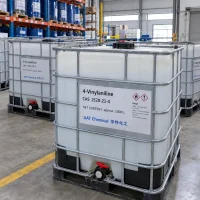
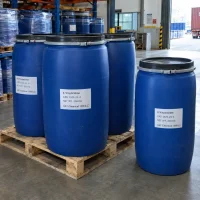
4-Vinylaniline CAS 1520-21-4
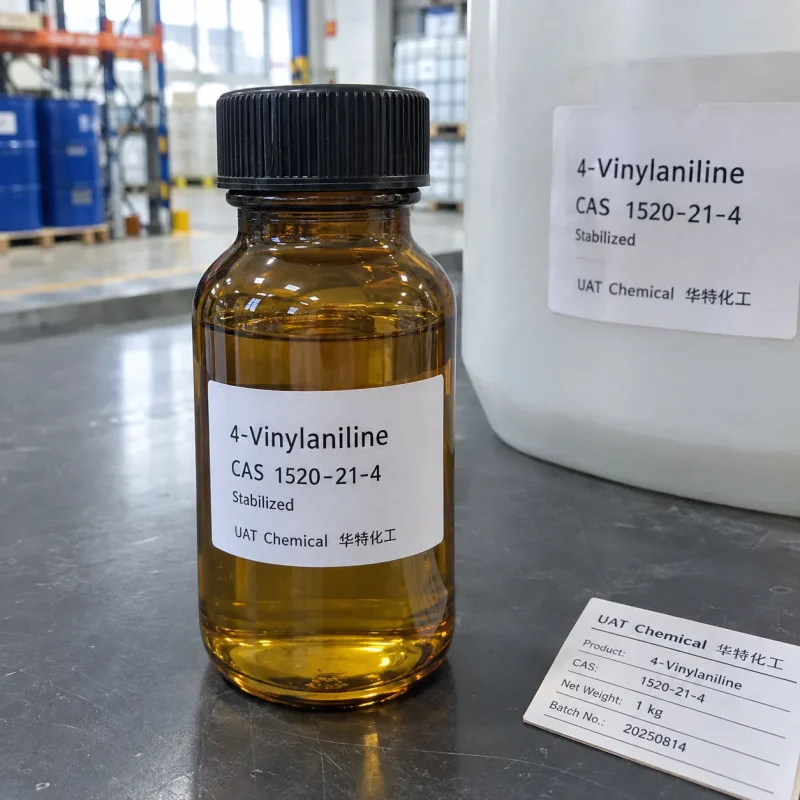
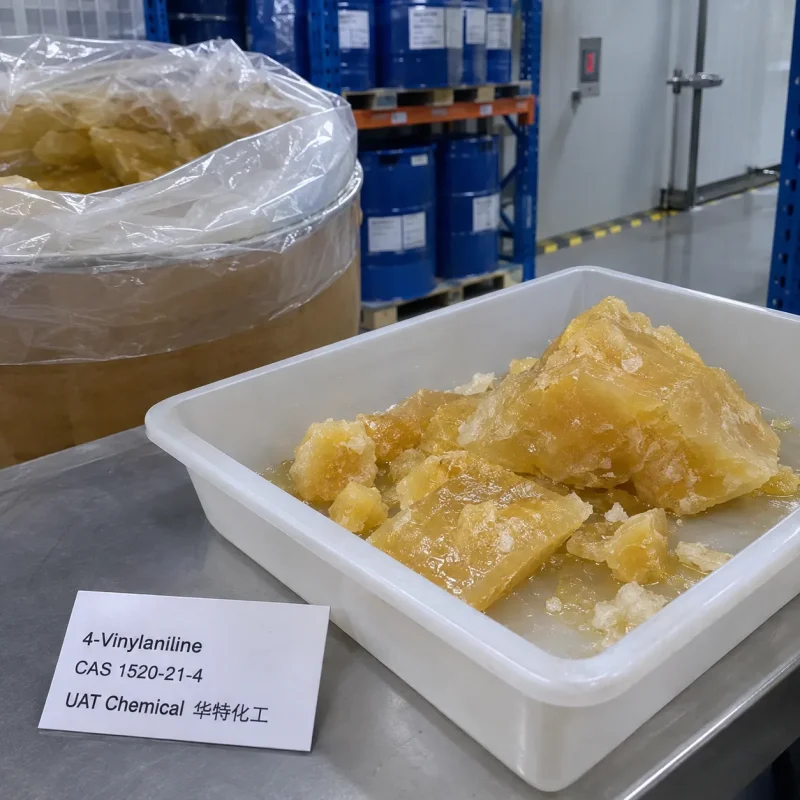
4-Vinylaniline (CAS 1520-21-4), also called 4-aminostyrene, carries a polymerizable vinyl group and a reactive amino group on one benzene ring, so it works both as a monomer and a fine chemical intermediate. It is built into functional polymers and graft copolymers and used in dye and pharmaceutical synthesis. Melting around 23 to 24 °C, the material is a clear to yellowish liquid in warm conditions and solidifies when cold, and standard lots are stabilized against self-polymerization. We offer technical to high-purity grades in drums and IBCs; tell us the grade and stabilized or not for a quote.
- CAS: 1520-21-4
- Synonyms: 4-Aminostyrene; p-Vinylaniline; 4-Ethenylaniline
- Molecular Formula: C₈H₉N
- Molecular Weight: 119.16
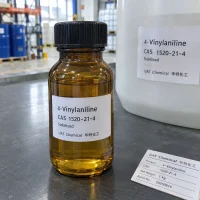
- Appearance: Clear to pale yellow liquid above 24 °C; soft solid when cold
- Assay: 90% technical (stabilized) to 97 / 98% high purity
- Melting Point: 23 to 24 °C
- Boiling Point: 213 to 214 °C
- Density: 1.017 g/mL at 25 °C
- Form / Stabilizer: Stabilized grades standard; unstabilized on request
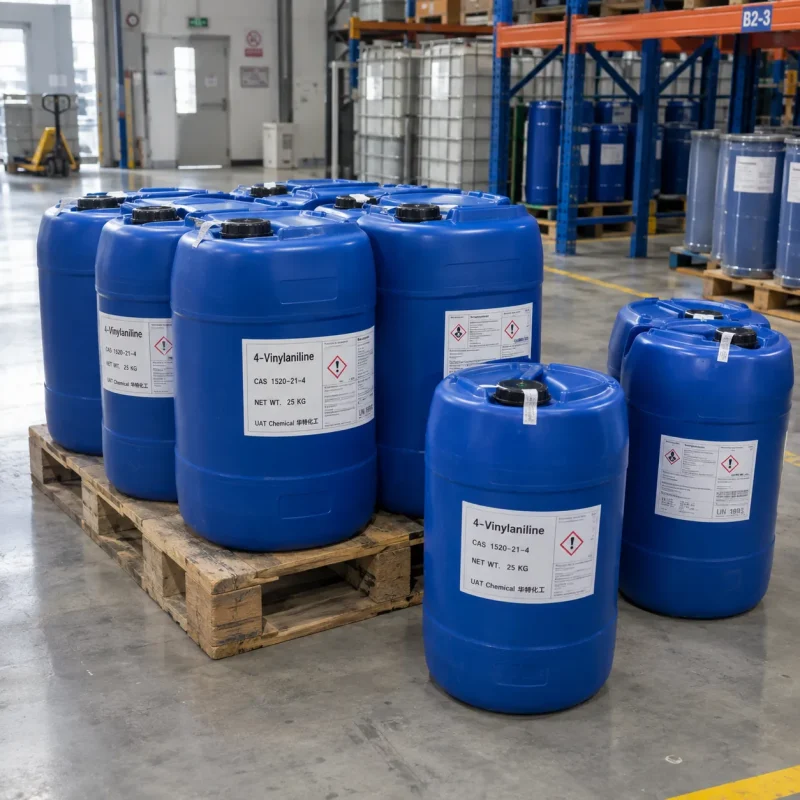
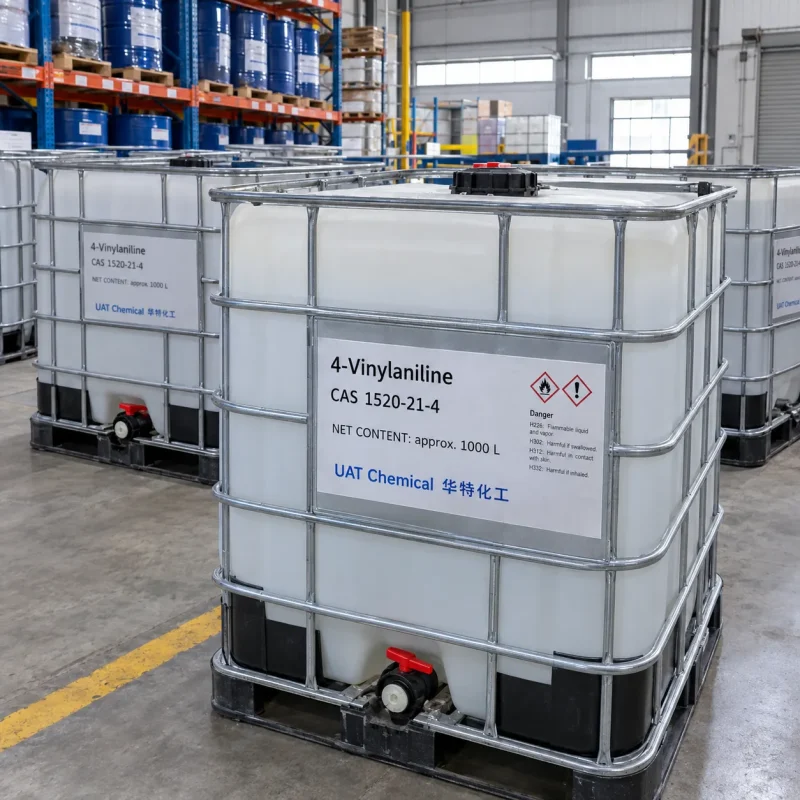
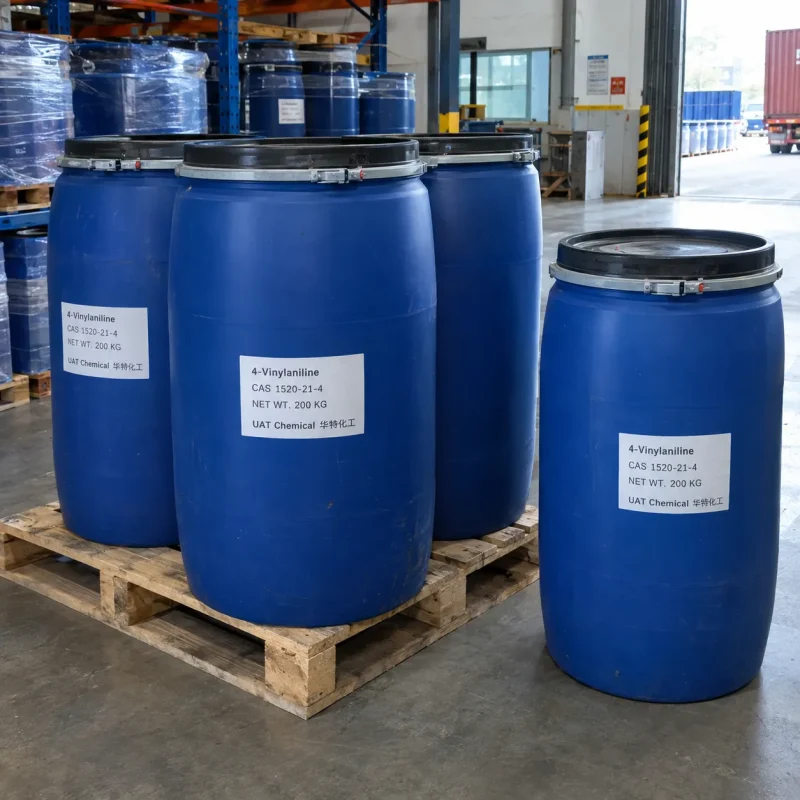
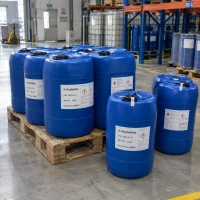
- Packaging: 25 kg / 200 kg blue drums; 1000 L IBC, custom packing available
What 4-Vinylaniline Is
4-Vinylaniline is an aniline with a vinyl group at the para position, giving two reactive sites on one molecule. The vinyl group polymerizes by radical and other routes, while the amino group takes part in diazotization, amidation and coupling reactions. With both groups present, a polymer chain can carry free amino groups for later grafting, dye attachment or crosslinking, and the same molecule serves as a styrenic building block in dye and pharmaceutical fine chemical work. Lots run from a 90% stabilized technical grade to 97 to 98% high-purity material, with the choice depending on bulk polymer modification versus sensitive synthesis.
Stabilized Grade and Low Melting Point
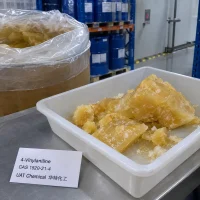
4-Vinylaniline melts around 23 to 24 °C, so it appears as a clear to pale yellow liquid in warm weather and sets to a soft solid in the cold; drums arriving partly solid are normal, and gentle warming followed by mixing gives a uniform lot again. Heat, light and oxygen can trigger self-polymerization of the vinyl group, so standard lots carry an inhibitor and are packed to keep air and light out, while unstabilized material is available for processes where inhibitor would interfere. When ordering, confirm stabilized or unstabilized, the inhibitor type and level, and the storage temperature, and keep stock cool, dark and sealed.
Polymer, Dye and Pharmaceutical Uses
- Functional polymers and resins. Copolymerized or grafted to introduce amino groups into polymers, coatings, resin modifiers and amino-functional particles for later coupling or crosslinking.
- Electronic and photo materials. A building block for amino-styrenic and conductive or light-sensitive polymers, photoresist chemistry and surface or self-assembly modification.
- Dyes and pharmaceuticals. The aminostyrene skeleton is used as an intermediate for azo and disperse dyes and for pharmaceutical fine chemical and heterocyclic synthesis.
Typical Specifications
The table spans common technical and high-purity grades; exact assay, inhibitor type and level, and unstabilized material are confirmed per order.
| Parameter | Value |
|---|---|
| Appearance | Clear to pale yellow liquid above 24 °C; soft solid below |
| Assay | 90% technical (stabilized) to 97 / 98% high purity |
| Melting Point | 23 to 24 °C |
| Boiling Point | 213 to 214 °C |
| Density | 1.017 g/mL at 25 °C |
Packaging, Documents and Ordering
- Shipped as a liquid in 25 kg and 200 kg blue plastic drums or 1000 L IBCs, sealed and light-protected; store cool, dark and sealed, away from heat, light and oxidizers, and keep containers closed after opening.
- An aniline-derived combustible liquid with a flash point near 99 °C, it is handled with ventilation, gloves and eye protection and kept off the skin; hazard classification and labels follow the SDS for each order.
- Every lot ships with a COA showing assay, density, appearance and inhibitor detail, together with SDS, and samples are supported. For a quote, send the CAS, grade, stabilized or unstabilized, inhibitor preference, quantity, packing and destination port.
FAQ
Q: Is 4-vinylaniline a liquid or a solid?
A: It melts at 23 to 24 C, so it is liquid when warm and a soft solid when cold; warm and mix drums that arrive partly solid.
Q: Do you supply 4-vinylaniline stabilized or unstabilized?
A: Standard material is stabilized with inhibitor; unstabilized can be arranged, with inhibitor type and level on the COA.
Q: What grades of 4-vinylaniline are available?
A: Grades run from a 90% stabilized technical grade for polymer work to 97 to 98% high-purity material for sensitive synthesis.
Related products
Ready to Source? Talk to Our Engineers
Industrial Chemical Raw Materials, Factory-Direct — Quote Within 1 Hour
Stable high-purity supply, flexible packaging and complete compliance documentation for your formulations — exporting worldwide since 2006.
- 1000+Products
- 200+QC Protocols
- 7–15Days Delivery
- Factory-Direct Pricing
- COA / TDS / SDS Included
- Free Samples for Testing
- ISO 9001 Certified