
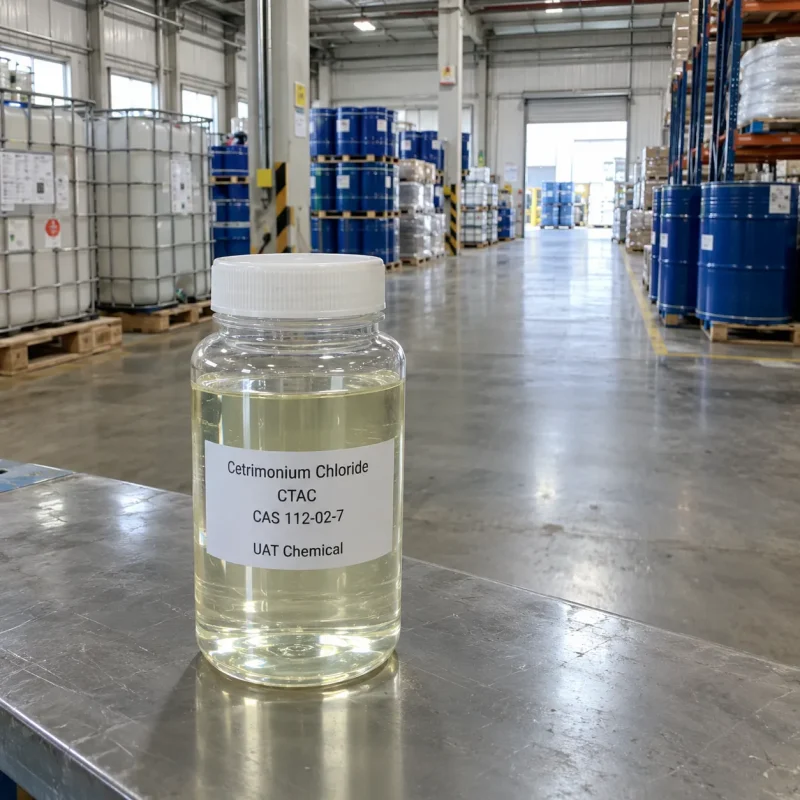
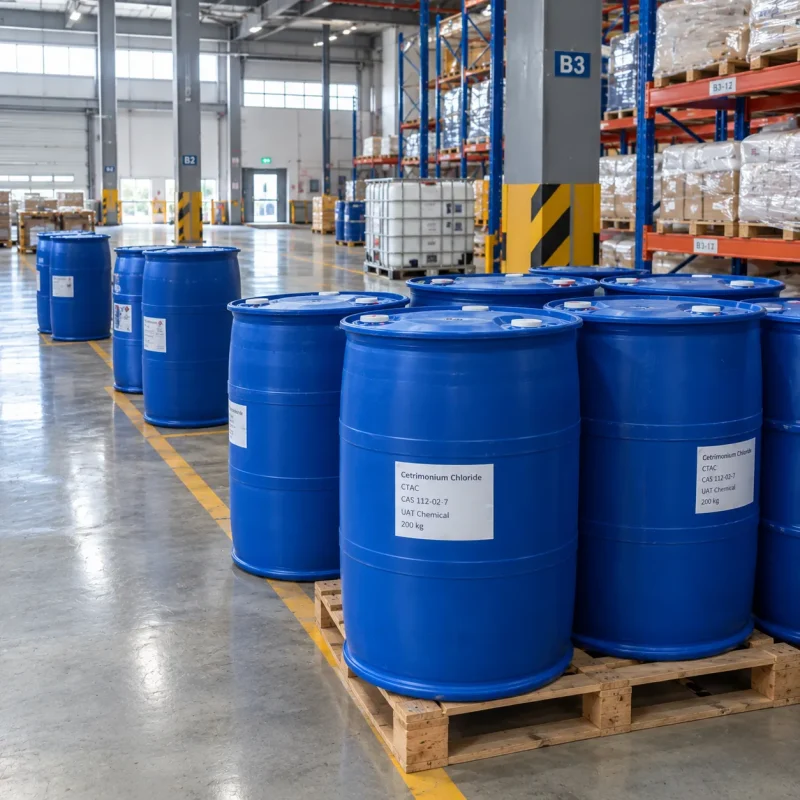
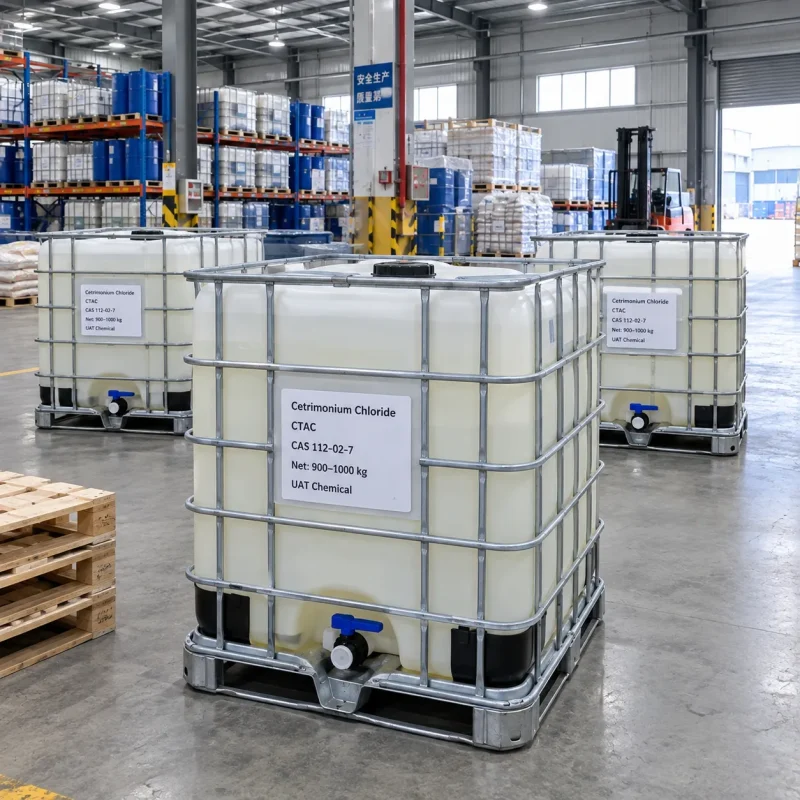
Cetrimonium Chloride (CTAC) CAS 112-02-7
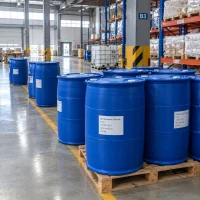
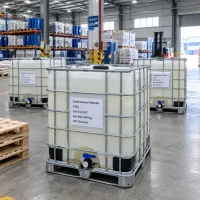
Cetrimonium chloride, also written cetyltrimethylammonium chloride and widely called CTAC, is a single-chain quaternary ammonium salt and a cationic surfactant. The positive head group adsorbs onto negatively charged hair, textile fibres and other charged surfaces, while the long cetyl chain conditions, softens and cuts static. Most personal-care volume moves as a clear, pale yellow aqueous solution, and a white crystalline solid is available for high-active formulations and synthesis. UATChem supplies cetrimonium chloride in both liquid and solid forms for makers of hair conditioners, antistatic and disinfectant products and textile auxiliaries, packed in drums and IBCs, with active content and grade reported on the COA.
- CAS: 112-02-7
- EC Number: 203-928-6
- Synonyms: Cetyltrimethylammonium chloride; hexadecyltrimethylammonium chloride; CTAC; 1631
- Family: Cationic quaternary ammonium surfactant (quat)
- Molecular Formula: C₁₉H₄₂ClN
- Molecular Weight: 320.00
- Forms: Aqueous solution (standard); crystalline solid on request
- Appearance, liquid: Clear, colourless to pale yellow liquid
- Function: Conditioning, antistatic, emulsifying, antimicrobial
- Compatibility: Pairs with cationic, nonionic and amphoteric surfactants
- Main use: Hair conditioners and care, disinfectants, textile auxiliaries
- Packaging: Plastic drums; IBC for bulk liquid
About Cetrimonium Chloride
Cetrimonium chloride is the common and INCI name for cetyltrimethylammonium chloride, a quaternary ammonium salt built from a sixteen-carbon cetyl chain and a positively charged trimethylammonium head. This structure makes the molecule both surface-active and strongly adsorbing: the charged head attaches to negatively charged surfaces while the fatty chain leaves a smooth, lubricating film. In hair care the film eases wet and dry combing, reduces flyaway and static and softens coarse hair, making the material a workhorse of rinse-off conditioners and treatment products. The chloride salt is normally sold as a ready-to-use aqueous solution for cosmetic and disinfectant work, while the dry crystalline solid suits high-active formulations and phase-transfer catalysis. The bromide counterpart is cetrimonium bromide (CTAB, CAS 57-09-0), a separate article.
Applications
CTAC appears across personal care, hygiene and industrial formulations:
- Hair and personal care. Light conditioning agent and antistatic in rinse-off conditioners, hair masks, cream rinses, two-in-one shampoos and anti-frizz products, with supporting emulsifying and antimicrobial action in creams and lotions.
- Disinfection and preservation. Cationic active in quaternary surface disinfectants and sanitizers for hospitals, food premises and institutions, often blended with other quats, plus preservative support in rinse-off cosmetics.
- Textiles. Fabric softening and antistatic finishing, levelling and dye-retarding during dyeing, and improved fibre feel and processing.
- Other industrial uses. Cationic emulsifier for asphalt and silicone oils, glass-fibre processing aid, biocide in water treatment, and a phase-transfer catalyst in organic synthesis with the solid grade.
Specifications
CTAC is cationic and pairs well with cationic, nonionic and amphoteric surfactants, but ordinary soap and anionic surfactants such as SLES can bind it into an inactive complex, making conditioners a more natural fit than simple anionic shampoos. Personal-care lots follow the INCI grade with the documentation expected for that use, and industrial lots serve disinfection, textile and catalytic applications; active content is reported on the COA for both liquid and solid forms.
Typical profile; active content and limits depend on form and grade, and the batch COA governs.
| Parameter | Value |
|---|---|
| Form | Aqueous solution (standard); crystalline solid on request |
| Appearance, liquid | Clear, colourless to pale yellow liquid |
| Appearance, solid | White crystalline powder |
| Product type | Cationic quaternary ammonium surfactant |
| Active content | Reported on the COA for liquid and solid |
| Compatibility | Cationic, nonionic and amphoteric systems; not anionic soap |
| Main functions | Conditioning, antistatic, emulsifying, antimicrobial |
Packaging and Storage
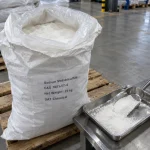
The aqueous solution ships in plastic drums and IBCs with small orders in sample bottles, and the solid goes in fibre drums or lined bags. A few points keep both forms in good condition:
- Keep containers sealed, cool and away from direct light, and protect the liquid from freezing.
- Store apart from soap, anionic surfactants and strong oxidizers.
- The concentrate and the solid dust can irritate eyes and skin; use gloves and eye protection.
- SDS and COA are supplied with every order, with export packing for drum and IBC shipments.
Frequently Asked Questions
Q: Do you supply the liquid solution or the solid powder?
A: The liquid is standard for cosmetics; the crystalline solid is offered for high-active use and phase-transfer catalysis.
Q: What is the difference between CTAC and CTAB?
A: CTAC is the chloride salt (CAS 112-02-7), usually a liquid; CTAB is the bromide salt (CAS 57-09-0), usually a solid.
Q: Why is CTAC used in conditioners rather than ordinary shampoo?
A: CTAC is cationic and binds to hair; anionic shampoo surfactants inactivate it, so conditioners suit it best.
Related products

Ready to Source? Talk to Our Engineers
Industrial Chemical Raw Materials, Factory-Direct — Quote Within 1 Hour
Stable high-purity supply, flexible packaging and complete compliance documentation for your formulations — exporting worldwide since 2006.
- 1000+Products
- 200+QC Protocols
- 7–15Days Delivery
- Factory-Direct Pricing
- COA / TDS / SDS Included
- Free Samples for Testing
- ISO 9001 Certified