
Palmitoylethanolamide PEA CAS 544-31-0
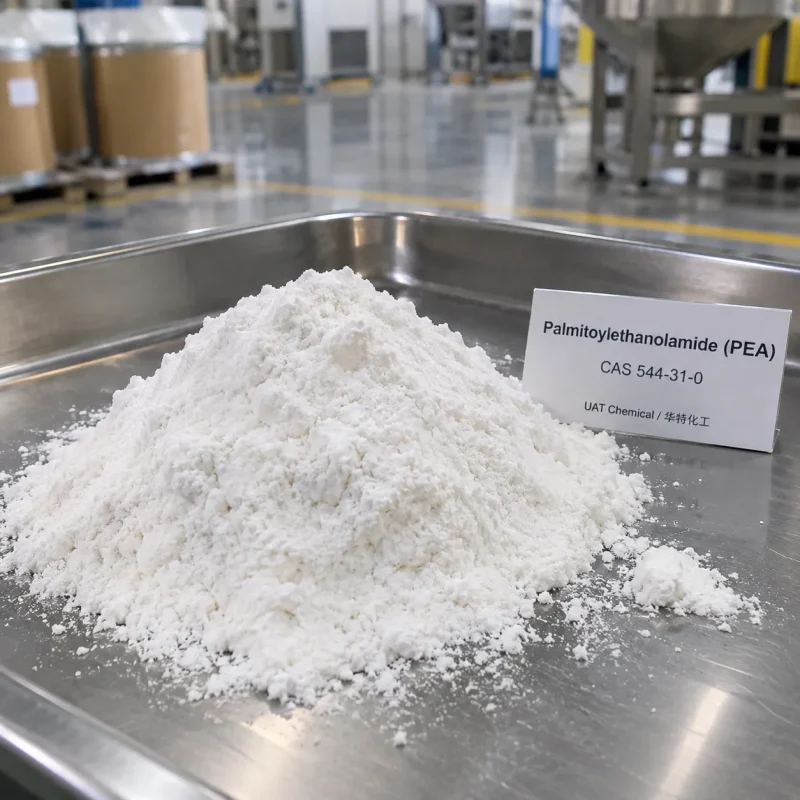
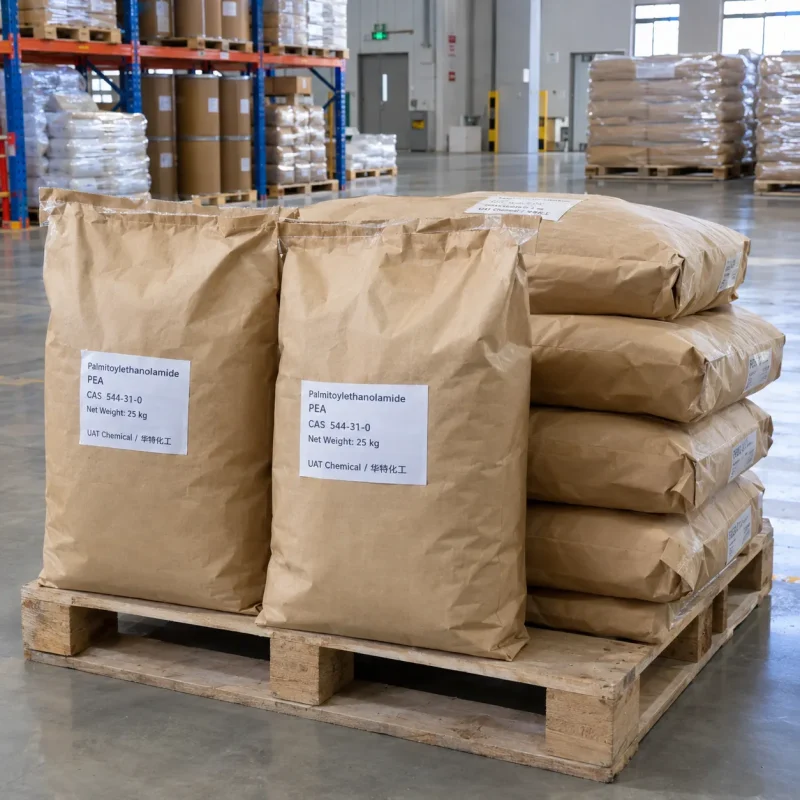
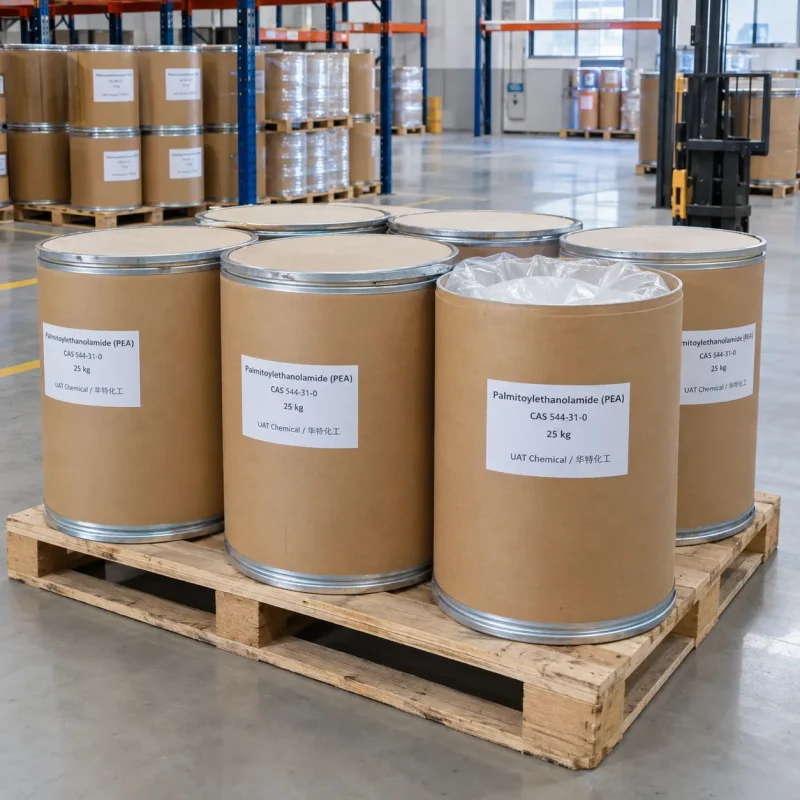
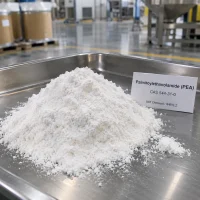
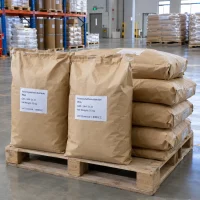
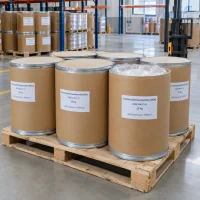
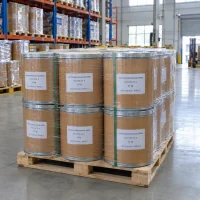
Palmitoylethanolamide, shortened to PEA (CAS 544-31-0), is an endogenous fatty acid amide and a white to off-white waxy crystalline solid that also occurs naturally in foods such as egg yolk and peanuts. It does not dissolve in water and disperses best in lipid systems, melting in the mid nineties. UATChem supplies standard and micronized PEA powder, flakes and granules for supplement, food and cosmetic customers. Most volume goes into comfort, joint and relaxation capsules, tablets and powders, while topical and pet care lines use it for soothing products. The lipid nature calls for cool, shaded, sealed storage. Material is packed in 25 kg kraft bags or fiber drums; send the grade, form, quantity and destination for a quote with COA and SDS.
- CAS: 544-31-0
- EC Number: 208-867-9
- Synonyms: PEA; Palmidrol; N-palmitoylethanolamine
- Molecular Formula: C₁₈H₃₇NO₂
- Molecular Weight: 299.49
- Appearance: White to off-white waxy crystalline powder / flakes
- Melting Point: 93 – 98 °C
- Solubility: Insoluble in water; soluble in lipids and hot ethanol
- Source: Synthetic; endogenous fatty acid amide
- Form: Standard or micronized powder; flakes; granules
- Use: Supplements, functional food, pet nutrition, cosmetics
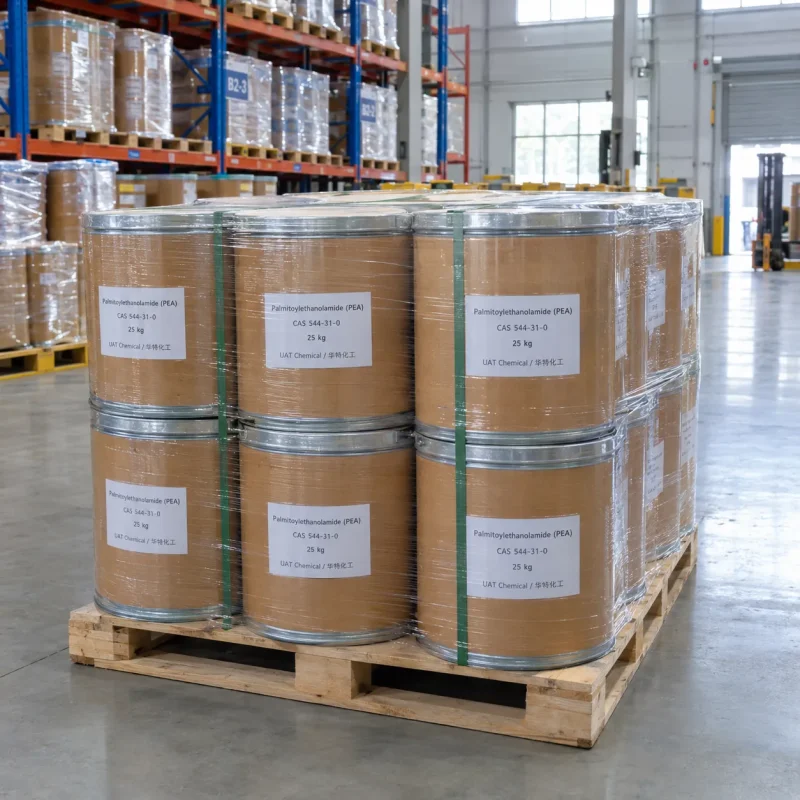
- Packaging: 25 kg kraft bag / fiber drum, custom packing available
What Palmitoylethanolamide (PEA) Is
Palmitoylethanolamide is a long chain N-acylethanolamine, the amide formed from palmitic acid and ethanolamine, and the body produces the same molecule in its own tissues. It is sold as a white to off-white waxy powder, flakes or granules that are insoluble in water but work in lipid bases and filled capsules. Micronized PEA is milled to a finer particle size for smoother dispersion and is a common choice in finished supplements, while standard powder, flakes and granules suit different blending and compaction lines. UATChem supplies dietary supplement, food and cosmetic oriented material, with assay, particle size and microbiological results reported on the COA for each lot.
Supplements, Pet Nutrition and Topical Use
- Dietary supplements. Used in comfort, joint and relaxation capsules, tablets and powders, often blended with other nutrition ingredients.
- Pet nutrition. Added to canine and feline joint and comfort supplements, chews and functional treats.
- Cosmetics and topical. A soothing and skin conditioning ingredient in creams, balms and lipid based personal care.
- Functional food. Incorporated into lipid based functional foods and nutrition products where a waxy, oil soluble amide fits.
Comfort and nerve focused blends often pair PEA with alpha lipoic acid; UATChem also supplies alpha lipoic acid powder for the same supplement formulations.
Typical Specifications
Supplement, food and cosmetic grades differ in assay, particle size and microbiological limits, with values reported on the COA for each lot; the physical constants below identify the material.
| Parameter | Typical Value |
|---|---|
| Appearance | White to off-white waxy crystalline powder / flakes |
| Melting Point | 93 – 98 °C |
| Solubility | Insoluble in water; soluble in lipids and hot ethanol |
| Form | Standard or micronized powder; flakes; granules |
| Grade | Supplement / food / cosmetic, COA per lot |
Packaging, Documents and Ordering
- Packed in 25 kg kraft paper bags or fiber drums with liner, palletized and wrapped; the waxy lipid solid is kept sealed, cool, shaded and away from heat to avoid caking or softening.
- PEA is a food related fatty acid amide safe within normal use. Every lot carries a COA with assay, particle size, melting point and microbiological results, together with TDS and SDS; food or supplement compliance documents can be discussed, and samples are supported.
- For a quote, UATChem needs the grade (supplement, food or cosmetic), form (standard, micronized, flakes or granules), quantity, packing and destination port.
FAQ
Q: What is palmitoylethanolamide (PEA) used for?
A: It is a fatty acid amide in comfort, joint supplements, pet nutrition and soothing cosmetics, standard or micronized powder.
Q: What is the difference between standard and micronized PEA?
A: Micronized PEA is milled finer for smoother dispersion in capsules; standard powder, flakes and granules suit other lines.
Q: Is palmitoylethanolamide soluble in water?
A: No, PEA is insoluble in water and works in lipid bases, oil fills and capsules, and needs cool, sealed storage away from heat.
Related products
Ready to Source? Talk to Our Engineers
Industrial Chemical Raw Materials, Factory-Direct — Quote Within 1 Hour
Stable high-purity supply, flexible packaging and complete compliance documentation for your formulations — exporting worldwide since 2006.
- 1000+Products
- 200+QC Protocols
- 7–15Days Delivery
- Factory-Direct Pricing
- COA / TDS / SDS Included
- Free Samples for Testing
- ISO 9001 Certified