
Betaine Anhydrous CAS 107-43-7
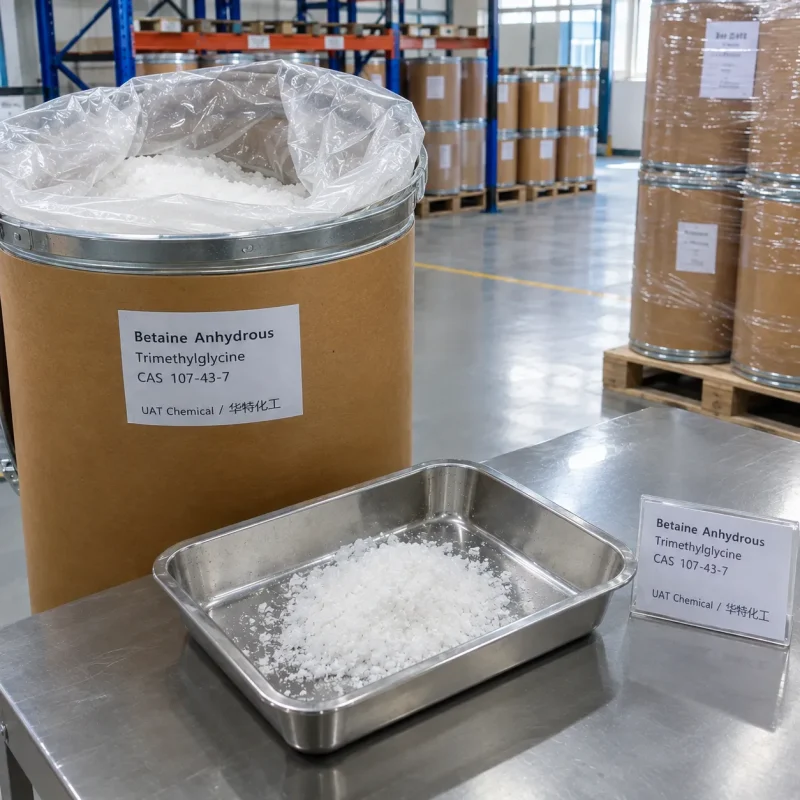
Betaine anhydrous, also called trimethylglycine or TMG (CAS 107-43-7), is a white, sweet tasting crystalline powder that dissolves easily in water. In feed it works as a methyl donor that spares methionine and choline and helps poultry, pigs, fish and shrimp handle heat and salinity stress. The anhydrous form has no bound water or chloride and mixes cleanly into premix, but it is strongly hygroscopic and must stay dry. UATChem supplies feed, food and cosmetic grades in PE lined bags and fibre drums, with assay and moisture on the COA. Send grade, particle size and quantity for COA, TDS and SDS.
- CAS: 107-43-7
- EC Number: 203-490-6
- Synonyms: Trimethylglycine; TMG; glycine betaine
- Molecular Formula: C₅H₁₁NO₂
- Molecular Weight: 117.15
- Type: Zwitterionic betaine, methyl donor and osmolyte
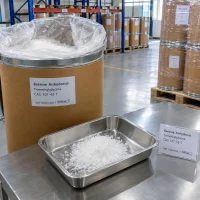
- Appearance: White crystalline powder, slightly sweet
- Solubility: Freely soluble in water, sparingly in ether
- Hygroscopicity: Strongly hygroscopic, keep sealed and dry
- Grades: Feed, food, cosmetic
- Use: Feed premix, aquafeed, food, personal care
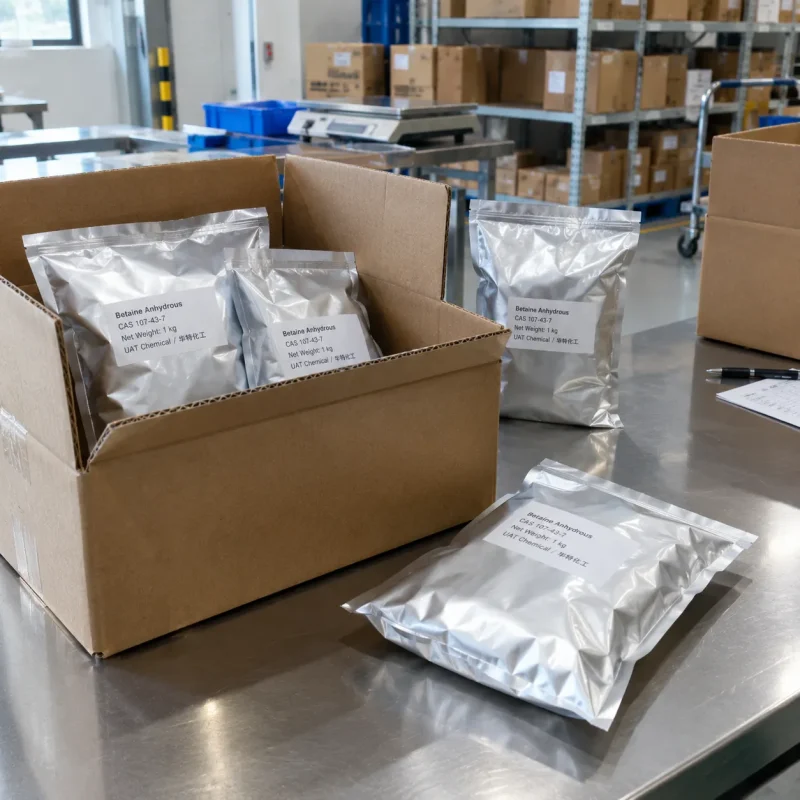
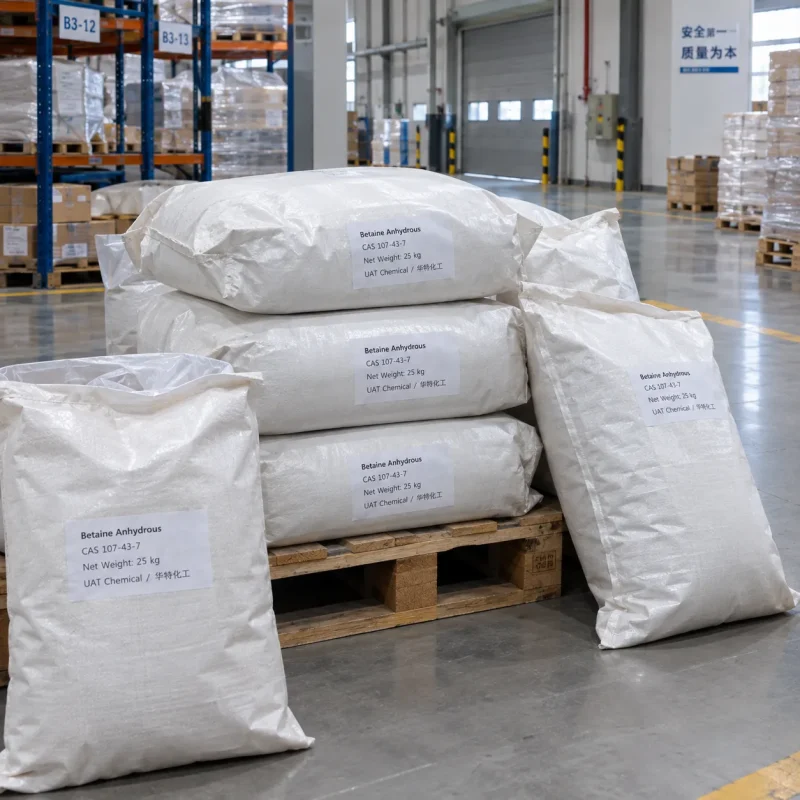
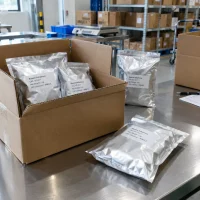
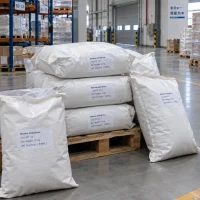
- Packaging: PE lined bag / fibre drum, custom packing available
What Betaine Anhydrous Is
Betaine anhydrous (C₅H₁₁NO₂) is anhydrous trimethylglycine, a white, sweet tasting crystalline powder. It dissolves freely in water and pulls moisture from air, so sealed, dry storage matters. Most volume goes to feed as a methyl donor and osmoprotectant, with smaller use in food, supplements and cosmetics. It has no chloride, unlike betaine hydrochloride. UATChem supplies feed, food and cosmetic grades, with assay on the COA.
Feed, Food and Cosmetic Uses
- Poultry, swine and aquafeed. A methyl donor that spares part of the methionine and choline in the formula, supports intake and growth, and helps birds, pigs, fish and shrimp tolerate heat and salinity swings.
- Ruminant and other premix. Added to ruminant and specialty premixes for methyl nutrition and osmotic stress support.
- Food and supplements. Used in functional foods, beverages and flavourings, and as trimethylglycine in nutritional products.
- Cosmetics and fermentation. Used under the INCI name Betaine for light, non greasy moisture in personal care, and as an osmoprotectant in fermentation.
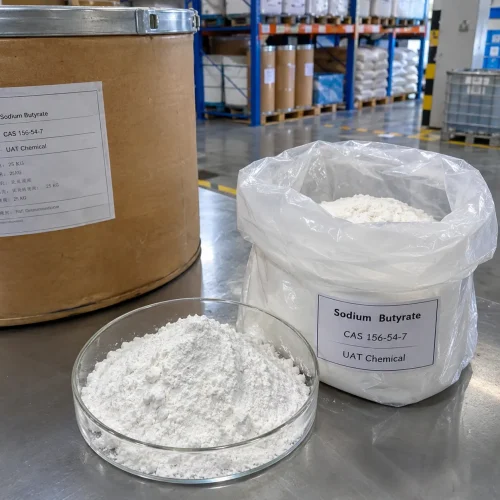
Feed premix buyers often pair betaine with other functional additives; UATChem also supplies sodium butyrate for gut health support in the same diets.
Typical Specifications
Feed, food and cosmetic grades differ in assay, moisture and particle size, reported on the COA for each lot; the table below identifies the material.
| Parameter | Typical Value |
|---|---|
| CAS / EC | 107-43-7 / 203-490-6 |
| Synonyms | Trimethylglycine; TMG; glycine betaine |
| Molecular Formula | C₅H₁₁NO₂ |
| Appearance | White crystalline powder, slightly sweet |
| Solubility | Freely soluble in water, sparingly in ether |
| Form | Anhydrous, no chloride; strongly hygroscopic |
Packaging, Documents and Ordering
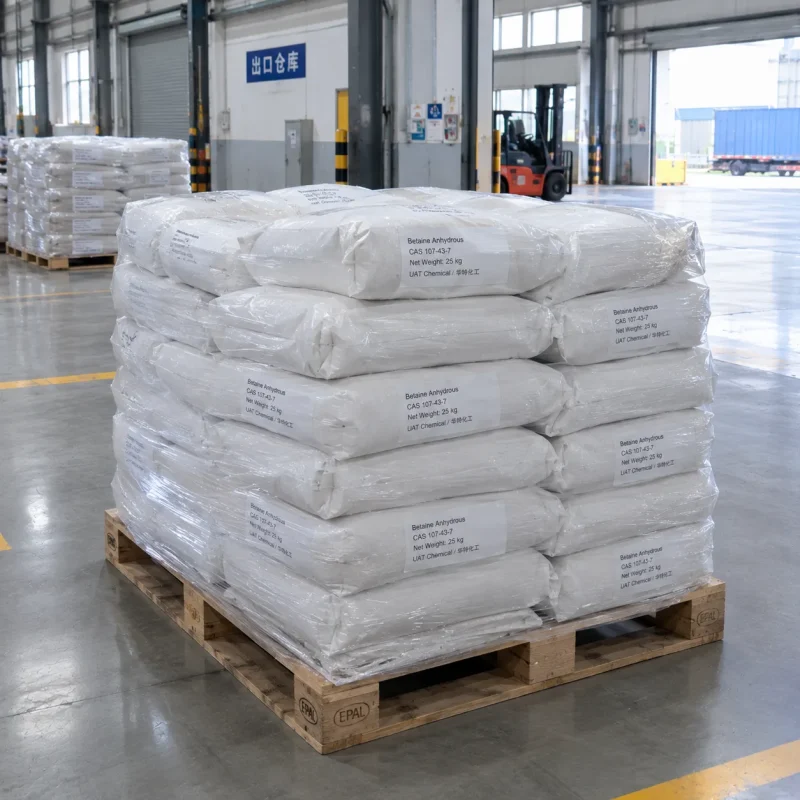
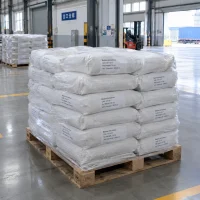
- Small lots in 1 kg aluminium foil sample bags, and PE lined heat sealed 25 kg bags or fibre drums for volume orders, with pallets stretch wrapped; keep stock sealed, cool and dry.
- Soft, easily crushed lumps are harmless surface caking, while hard wet lumps mean water has entered and the lot should be rechecked; feed, food and cosmetic grades follow local additive, food and cosmetic rules, and every lot ships with COA, TDS and SDS.
- For a quote, UATChem needs the grade, particle size, quantity and destination port.
FAQ
Q: What is the difference between betaine anhydrous and betaine hydrochloride?
A: Anhydrous has no bound water or chloride and more active betaine; hydrochloride contains chloride and usually costs less.
Q: Why did my betaine anhydrous form lumps?
A: It is strongly hygroscopic; soft crushable lumps are normal, but hard wet lumps mean moisture entered, so recheck the lot.
Q: Which betaine grade should feed and cosmetic buyers order?
A: Feed and aquafeed use feed grade; food, supplement and personal care buyers take food or cosmetic grade, assay on the COA.
Related products
Ready to Source? Talk to Our Engineers
Industrial Chemical Raw Materials, Factory-Direct — Quote Within 1 Hour
Stable high-purity supply, flexible packaging and complete compliance documentation for your formulations — exporting worldwide since 2006.
- 1000+Products
- 200+QC Protocols
- 7–15Days Delivery
- Factory-Direct Pricing
- COA / TDS / SDS Included
- Free Samples for Testing
- ISO 9001 Certified