
Vitamin B6 CAS 8059-24-3
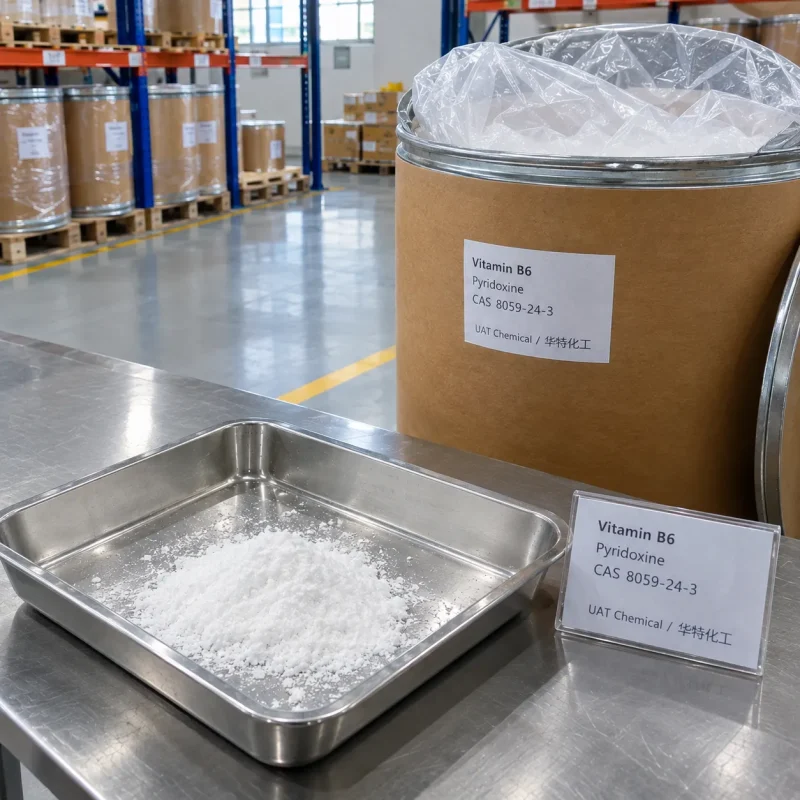
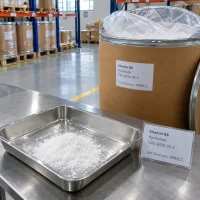
Vitamin B6 (Pyridoxine Hydrochloride) is a water-soluble B-group vitamin supplied as feed-grade white crystalline powder. It acts as a coenzyme in amino acid metabolism, nervous system function and immune regulation across livestock, aquaculture and pet nutrition. UATChem supplies high-purity Vitamin B6 with consistent assay, good flowability and full export compliance documentation for large-scale feed manufacturing. Each shipment includes COA, TDS, SDS.
- CAS No: 8059-24-3
- Synonyms: Pyridoxine hydrochloride; Pyridoxine HCl; Vitamin B6 hydrochloride; Adermine hydrochloride; 3-Hydroxy-4,5-bis(hydroxymethyl)-2-methylpyridine hydrochloride
- EC Number: 200-211-9
- Molecular Formula: C₈H₁₁NO₃·HCl
- Molecular Weight: 205.64 g/mol
- Appearance: White to off-white crystalline powder
- Assay (dry basis): ≥ 98.0%
- Loss on Drying: ≤ 0.5%
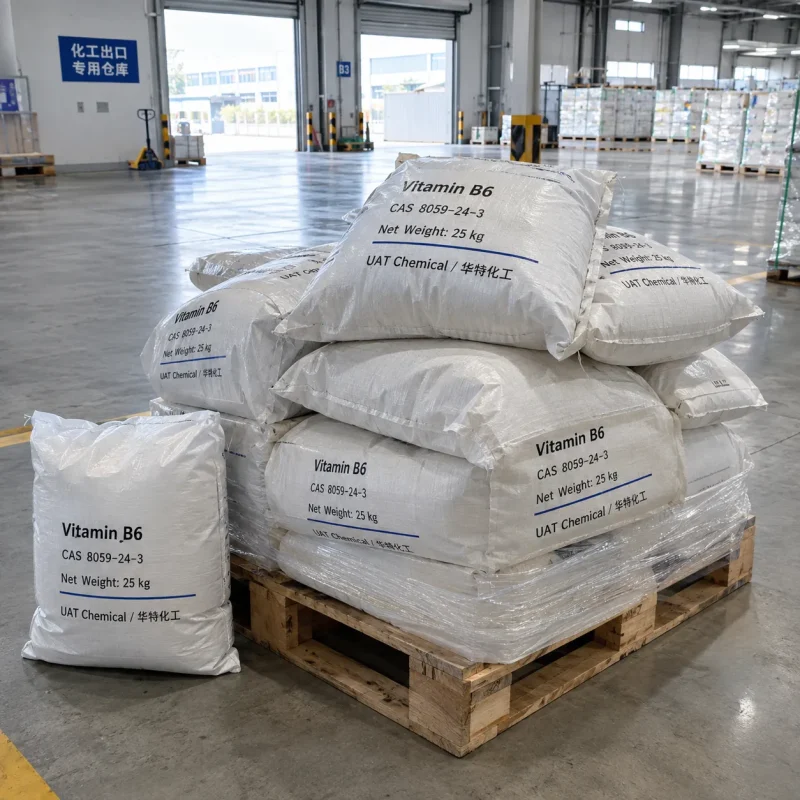
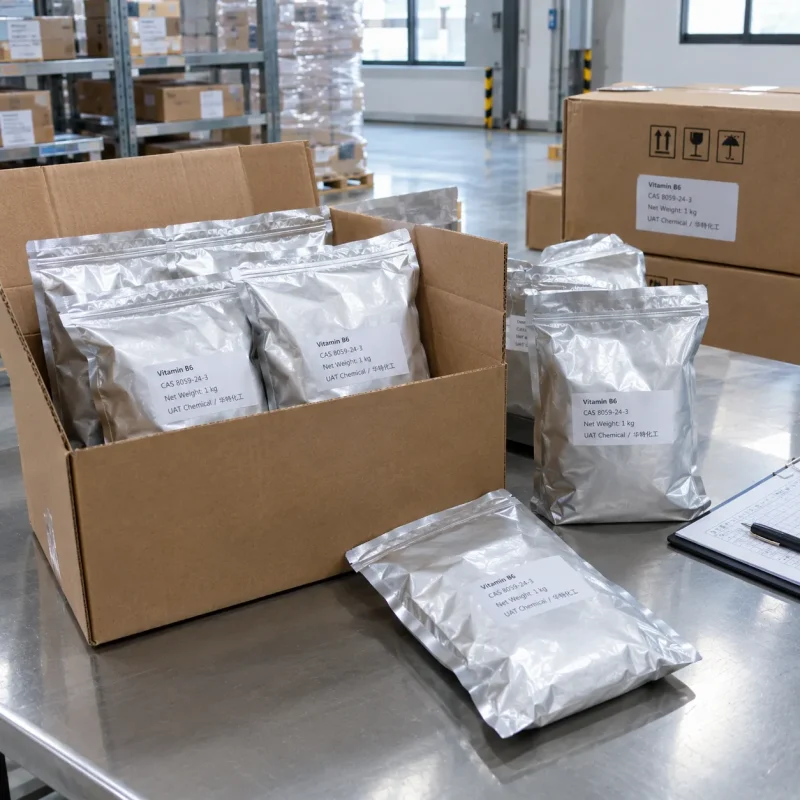
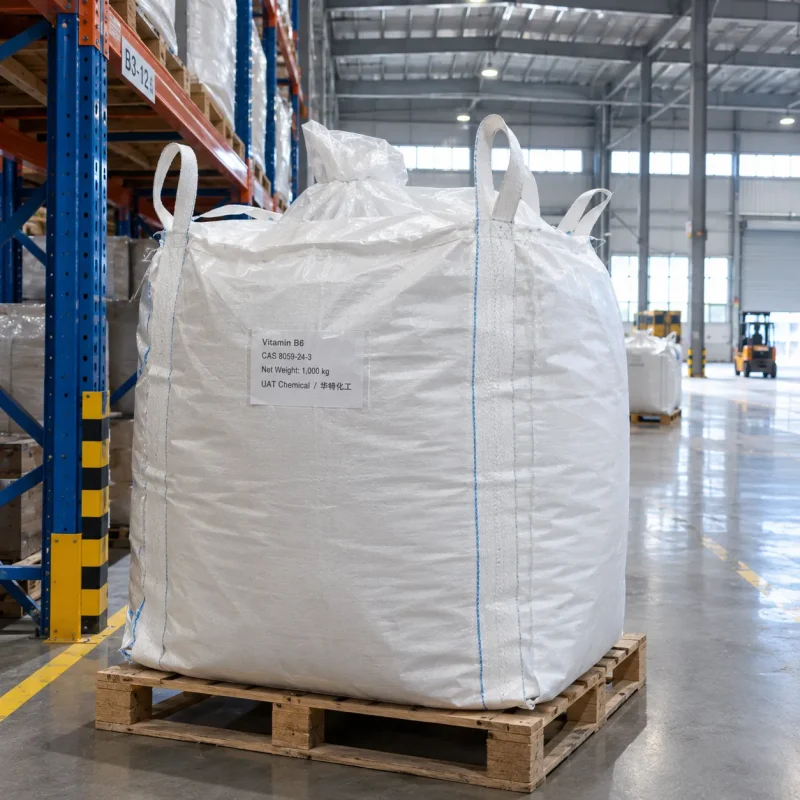
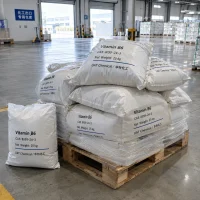
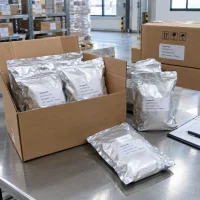
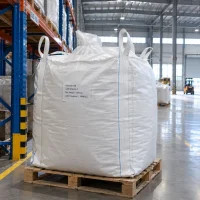
- Packaging: 25 kg fiber drum; 25 kg foil bag; 1000 kg jumbo bag. Custom packaging available.
- Main Uses: Livestock premixes, aquafeed, pet food nutrition fortification
Vitamin B6: Core Nutritional Functions
Vitamin B6, provided in the form of pyridoxine hydrochloride, serves as a cofactor for more than 100 enzymatic reactions in animal organisms. It plays a central role in transamination, decarboxylation and deamination of amino acids, supports the synthesis of neurotransmitters such as serotonin and dopamine, maintains normal erythropoiesis and hemoglobin production, and regulates both humoral and cellular immune responses.
Feed-grade Vitamin B6 from UATChem is produced via refined crystallization processes with tight control over impurities and residual moisture. The product exhibits good flowability and uniform particle size, allowing even dispersion in vitamin premixes, concentrates and complete feeds. It retains most of its bioactivity through standard feed pelleting and conditioning processes.
Key Applications Across Animal Species
Poultry and swine production
Supports normal growth and development in chicks and piglets, and prevents deficiency symptoms such as growth retardation, dermatitis, convulsions and reduced laying rate. Supplementation during stress periods — including transfer, high temperature and vaccination — helps maintain feed intake and production performance.
Ruminant nutrition
Added to calf, beef cattle and dairy cow rations to support rumen microbial metabolism and protein utilization. It improves energy metabolism and immune status during early lactation, and helps maintain reproductive performance in breeding herds.
Aquaculture feeds
Incorporated into compound feeds for fish, shrimp and crustaceans to promote growth, improve feed conversion ratio, and enhance stress tolerance and survival rate under high-density farming and water quality fluctuation conditions.
Pet food formulations
Used in canine and feline diets and treats to support skin health, coat condition and normal nervous system function. It is suitable for junior, senior and stress-phase pet nutrition formulas.
Feed Grade Specifications
| Parameter | Standard Specification |
|---|---|
| Molecular Formula | C₈H₁₁NO₃·HCl |
| Molecular Weight | 205.64 g/mol |
| Appearance | White to off-white crystalline powder |
| Assay (dry basis) | ≥ 98.0% |
| Loss on Drying | ≤ 0.5% |
| Residue on Ignition | ≤ 0.1% |
| pH (10% Aqueous Solution) | 2.4 – 3.0 |
| Heavy Metals (as Pb) | ≤ 10 ppm |
| Arsenic | ≤ 3 ppm |
Storage, Packaging & Handling
Store in tightly sealed containers in a cool, dry place at 15–25 °C. Protect from direct sunlight, high humidity and strong alkaline substances to prevent activity degradation and caking.
Dust may cause respiratory and eye irritation. Wear dust masks and safety goggles during bulk handling operations.
UATChem offers Vitamin B6 in 25 kg fiber drums with PE liners, 25 kg aluminum foil bags and 1000 kg bulk jumbo bags. Custom packaging and particle size grades are available on request. Classified as Non-DG for standard ocean freight. Verify assay and moisture content upon receipt.
Common Technical Questions
Q: Is Vitamin B6 stable during feed pelleting?
A: Feed-grade pyridoxine hydrochloride retains over 90% activity at standard pelleting temperatures of 70–85 °C. For high-temperature conditioning above 95 °C, post-spray application or slight over-dosage compensation is recommended.
Q: What is the typical inclusion rate in broiler and weanling pig diets?
A: Typical inclusion is 3–8 g per ton of complete feed for broilers, and 5–12 g per ton for weanling pigs. Adjust dosage based on basal diet composition, production stage and stress level.
Q: Can it be premixed with other vitamins and trace minerals?
A: Yes, it is compatible with most B-group vitamins and trace minerals in dry premixes. Avoid prolonged contact with strong alkalis and high-moisture ingredients to prevent activity loss.
Related products
Ready to Source? Talk to Our Engineers
Industrial Chemical Raw Materials, Factory-Direct — Quote Within 1 Hour
Stable high-purity supply, flexible packaging and complete compliance documentation for your formulations — exporting worldwide since 2006.
- 1000+Products
- 200+QC Protocols
- 7–15Days Delivery
- Factory-Direct Pricing
- COA / TDS / SDS Included
- Free Samples for Testing
- ISO 9001 Certified