
Red Iron Oxide (Ferric Oxide) CAS 1309-37-1
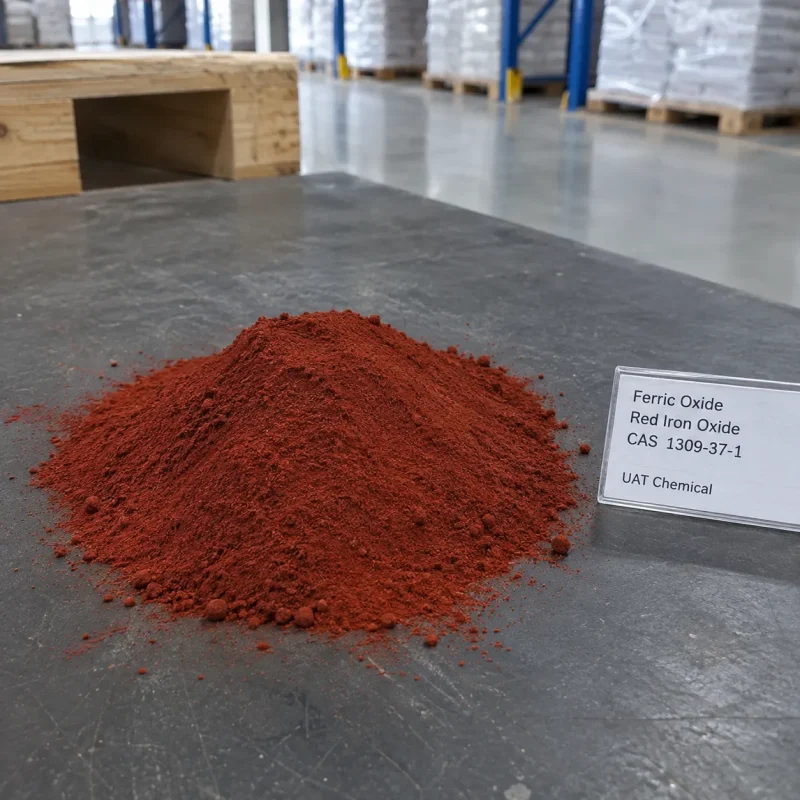
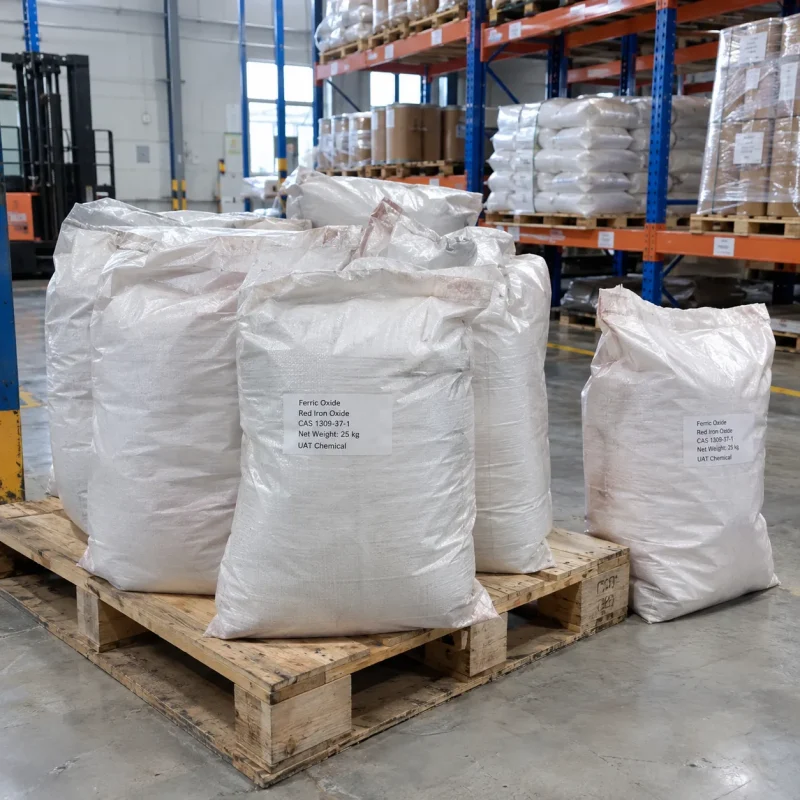
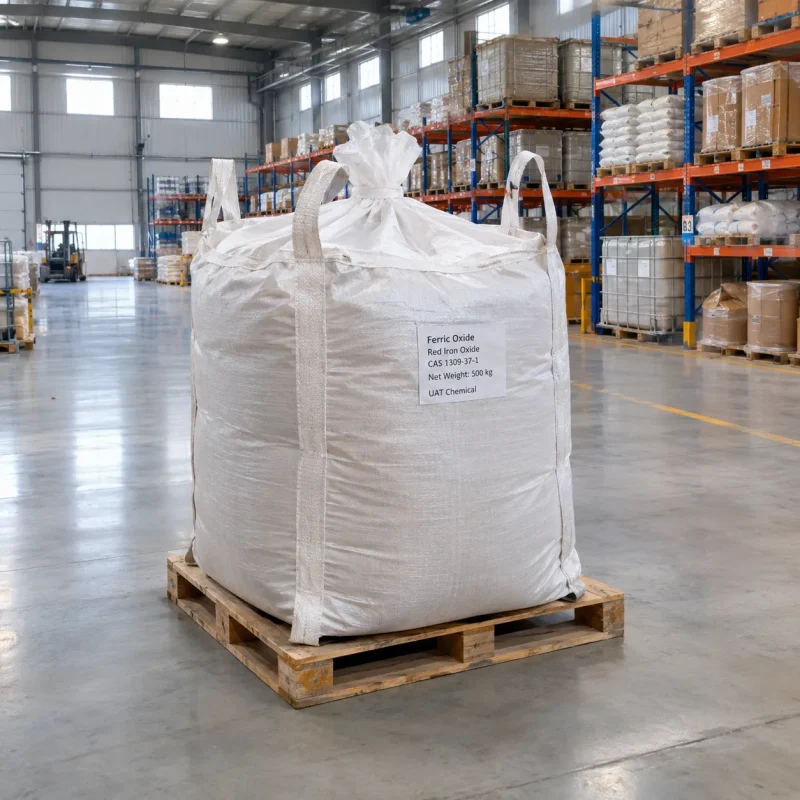
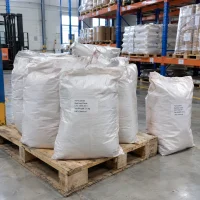
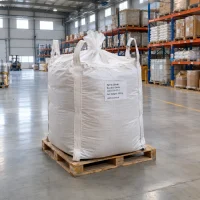
Ferric Oxide (Red Iron Oxide) (Fe2O3, CAS 1309-37-1) is the red pigment known as Pigment Red 101 — the same chemistry as the mineral hematite, calcined or milled into a stable powder that resists alkali, UV and heat. It colors concrete, coatings, plastics, ceramics and rubber, and replaces lead- and cadmium-based reds in most applications. We supply 96% min grades in 25 kg woven bags and 500 kg FIBC bulk bags; shade cards and match samples go out with every inquiry.
- CAS: 1309-37-1
- EC Number: 215-168-2
- Color Index: Pigment Red 101 / C.I. 77491
- Synonyms: Iron(III) Oxide; Diiron Trioxide; Red Iron Oxide
- Molecular Formula: Fe2O3
- Molecular Weight: 159.69
- Appearance: Red powder
- Fe2O3 Content: 96.0% min
- Shade: Red
- Packaging: 25 kg woven bag; 500 kg FIBC bulk bag, custom packing available
Product Overview
Red iron oxide is the alpha crystalline form of iron(III) oxide, identical in chemistry to the mineral hematite. Synthetic material is precipitated and calcined so particle size and crystal shape can be tuned grade by grade; natural material is milled from iron ore. The alpha lattice is chemically inert, so the pigment holds its lightfastness, weather resistance, alkali tolerance and heat stability, and stands in for lead- and cadmium-based reds without the toxicity.
Why the Red Varies Slightly by Grade
Every grade on this page is red. The only difference is a subtle undertone: some batches lean a little yellow, some sit neutral, and some lean a little blue, like red paints that run slightly orange or slightly violet. The undertone comes from particle size and crystal shape, and buyers usually know which red their product calls for. We confirm the undertone against retained standards and send shade cards before you commit, so the red you receive matches the red you approved.
End Uses
- Concrete and cement products. Paving blocks, roof tiles, precast elements, mortar and stucco; stays stable in alkaline cement and resists efflorescence and outdoor fading.
- Paints and protective coatings. Architectural coatings and anti-rust primers; dense inert particles block moisture and slow steel corrosion, while oil absorption sets loading, gloss and hiding power.
- Plastics and rubber. Masterbatch, profiles, films, EPDM granules and rubber goods; fine dispersion prevents specks, and the oxide holds shade through typical processing temperatures.
- Ceramics, glass and specialty uses. Fires into ceramic bodies and glazes, colors glass, and serves in polishing compounds, friction materials and soft ferrite production.
Typical Industrial Grade Specifications
| Property | Typical Value |
|---|---|
| Fe2O3 Content | 96.0% min |
| Shade | Red (undertone by grade) |
| 325-Mesh Sieve Residue | 0.3% max |
| Oil Absorption | 15 – 25 g/100 g |
| Water-Soluble Matter | 0.3% max |
| Volatile Matter (105 °C) | 1.0% max |
| pH Value | 3 – 7 |
| Relative Tinting Strength | 95 – 105% vs standard |
Typical values for synthetic industrial grades; exact figures follow the COA of each grade, and matched shade cards are available on request.
Storage, Packaging and Ordering
- Keep sealed in original packaging in a dry, ventilated area; protect opened bags from moisture and cross-contamination with black, yellow or high-strength organic pigments.
- Use dust extraction and standard PPE during charging and mixing per the SDS; the material is non-hazardous general cargo.
- Packaging: 25 kg woven bags and 500 kg FIBC bulk bags. State target system, shade reference, grade, quantity, destination and document needs in your RFQ.
- Industrial pigment grades are not interchangeable with food, pharmaceutical or cosmetic grades, which carry defined restricted-element limits. COA, TDS and SDS with every order; quotes within one working day.
FAQ
Q: Is ferric oxide the same as red iron oxide?
A: Red iron oxide is the alpha (red) form of Fe2O3; ferric oxide is the broader chemical name.
Q: Does the same CAS number mean the same shade?
A: No. CAS fixes identity only; the red undertone varies slightly between grades.
Q: Why is red iron oxide preferred in concrete?
A: Stable in alkaline cement, resistant to UV and weathering, holds its color outdoors.
Q: Can industrial grade go into food or cosmetics?
A: Industrial grade is not food or cosmetic grade; those carry restricted-element limits.
Q: What grades does UATChem supply?
A: 96% min industrial pigment grades in 25 kg woven bags or 500 kg FIBC bulk bags.
Related products
Ready to Source? Talk to Our Engineers
Industrial Chemical Raw Materials, Factory-Direct — Quote Within 1 Hour
Stable high-purity supply, flexible packaging and complete compliance documentation for your formulations — exporting worldwide since 2006.
- 1000+Products
- 200+QC Protocols
- 7–15Days Delivery
- Factory-Direct Pricing
- COA / TDS / SDS Included
- Free Samples for Testing
- ISO 9001 Certified