
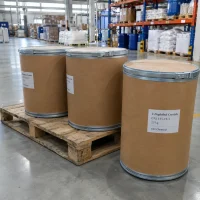

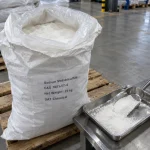
2-Naphthol Crystals CAS 135-19-3
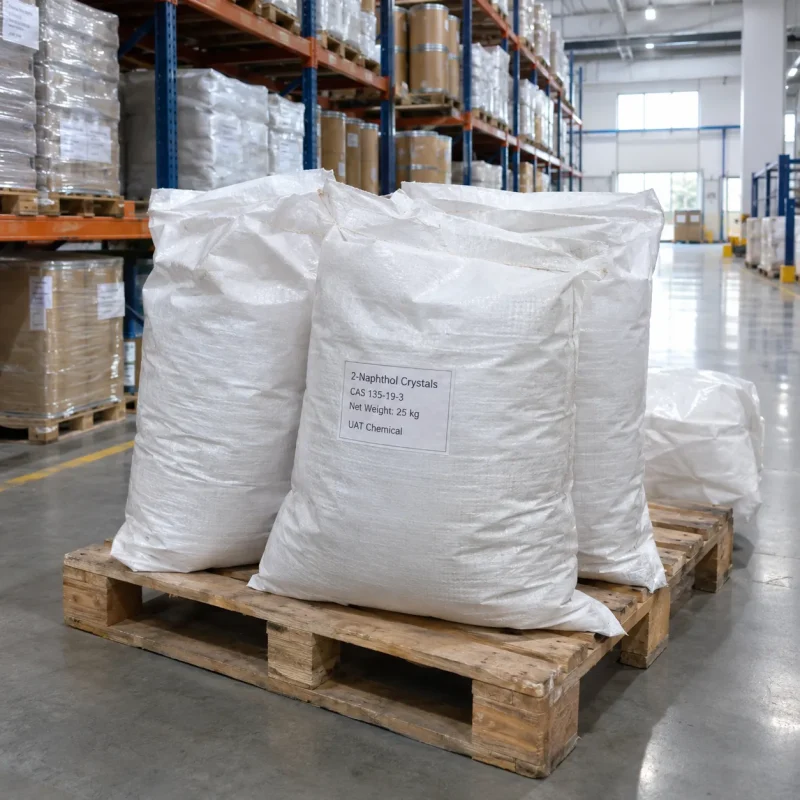
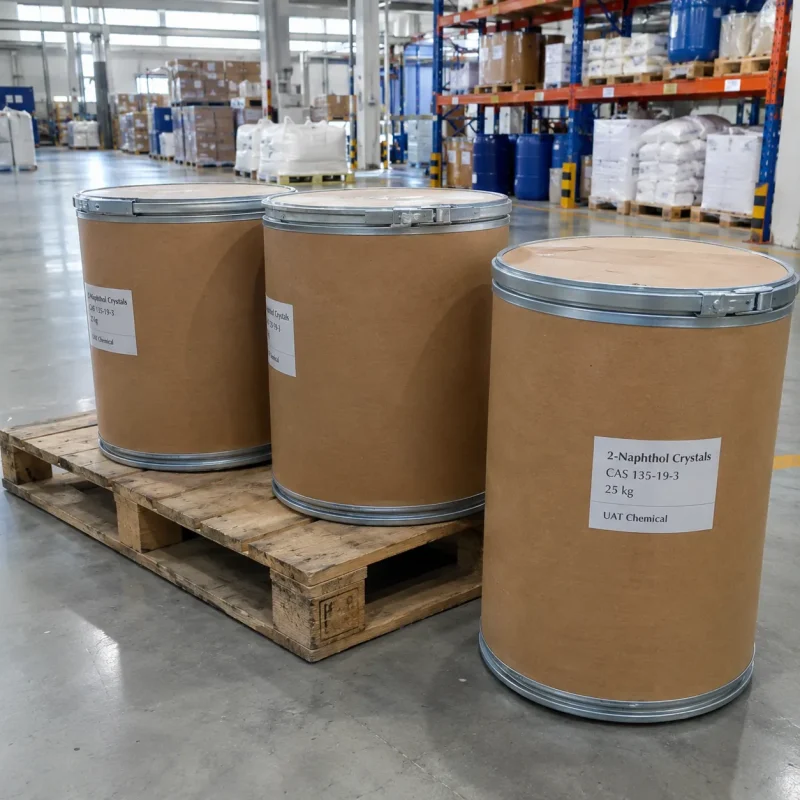
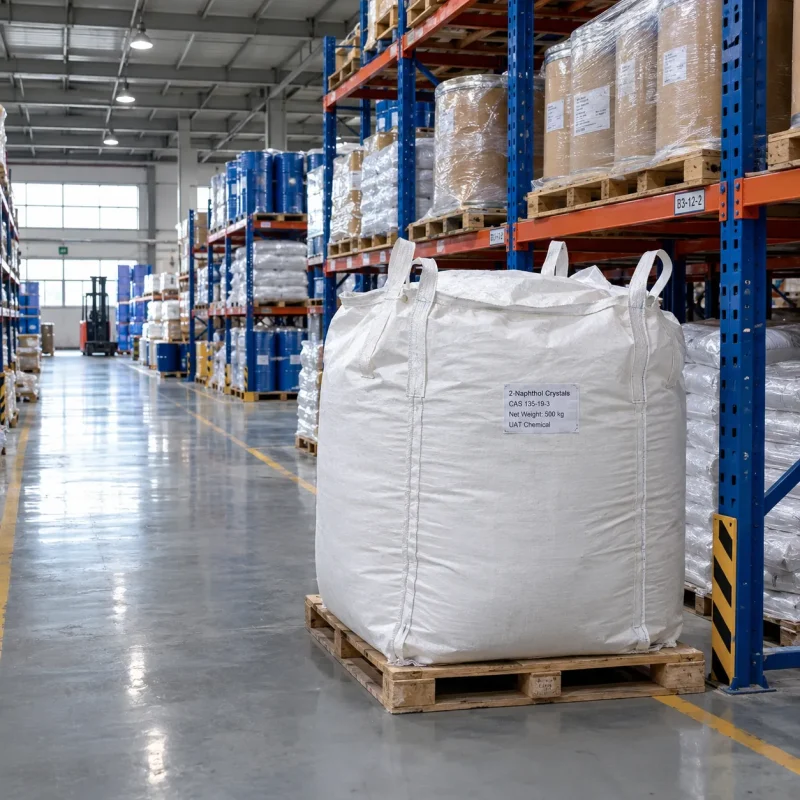
2-Naphthol (CAS 135-19-3), also called beta-naphthol, is a white to off-white crystalline solid with a faint phenolic odor, supplied as crystals, flakes or powder. One of the most widely used naphthalene intermediates, it couples at the ring to build azo dyes and pigments and is converted into rubber antioxidants, pharmaceutical and pesticide intermediates and fragrance ethers. UATChem supplies industrial 2-naphthol for dye and fine chemical synthesis, with refined lots on request. It dissolves in caustic soda and organic solvents and is only slightly soluble in water, and it darkens slowly in light, so packs are kept sealed and dark. Standard packs are 25 kg woven bags or drums and 500 kg FIBC lots; send grade, quantity and destination for a quote with COA and SDS.
- CAS: 135-19-3
- EC Number: 205-182-7
- Synonyms: β-Naphthol; 2-hydroxynaphthalene
- Molecular Formula: C₁₀H₈O
- Molecular Weight: 144.17
- Appearance: White to off-white crystals / flakes
- Melting Point: 121 – 123 °C
- Boiling Point: 285 – 286 °C
- Solubility: Slightly soluble in water; soluble in alkali and organic solvents
- Use: Azo dyes and pigments, rubber antioxidants, pharma / fragrance intermediates
- Packaging: 25 kg woven bag / fiber drum; 500 kg FIBC, custom packing available
What 2-Naphthol Is
2-Naphthol, or beta-naphthol, is a naphthalene ring carrying one hydroxyl group, sold as white to off-white crystals, flakes or powder with a faint phenolic odor. The hydroxyl group forms salts, ethers and esters, while the open ring position takes part in azo coupling, sulfonation and nitration, so the single intermediate feeds a very wide range of downstream products. It dissolves in caustic soda, alcohol and ether and is only slightly soluble in water. Lots slowly darken on exposure to light and air without losing their synthetic value, and material is accepted on assay and the 1-naphthol isomer level rather than color. UATChem supplies industrial and refined 2-naphthol, the beta isomer, distinct from alpha 1-naphthol (CAS 90-15-3).
Dyes, Pigments and Other End Uses
- Dyes and pigments. The azo coupling component behind many azo dyes and organic pigments and an upstream material for naphthol AS coupling agents, 2-hydroxy-3-naphthoic acid, Tobias acid and J acid routes.
- Rubber antioxidants. A raw material for synthetic rubber antioxidants and aging inhibitors used in tires and rubber goods.
- Pharma and agrochemicals. An intermediate for active ingredients such as naproxen and for insecticides, fungicides and preservatives.
- Fragrance and specialty uses. Converted to naphthyl ether fixatives and perfumes, and used in mineral flotation agents, BINOL synthesis, fluorescent probes and preservative applications.
Typical Specifications
Industrial and refined lots differ in assay, 1-naphthol isomer, ash and moisture, and the exact COA values are confirmed per order; the physical constants below identify the material and do not vary by grade.
| Parameter | Typical Value |
|---|---|
| Appearance | White to off-white crystals / flakes |
| Form | Crystals, flakes or powder |
| Melting Point | 121 – 123 °C |
| Boiling Point | 285 – 286 °C |
| Isomer | 2-Naphthol (beta); 1-naphthol (alpha) controlled |
Packaging, Documents and Ordering
- Packed in 25 kg woven bags or fiber drums with liner and in 500 kg FIBC bags; keep material sealed, dry, dark and away from strong oxidizers and food goods, with transport classification shown on the SDS.
- The dust is harmful if swallowed and irritates the eyes, skin and respiratory tract, so gloves, goggles, a dust mask and ventilation are used, and release to waterways is avoided. Every lot carries a COA with assay, 1-naphthol isomer, melting point, ash and moisture, together with SDS, and samples are supported.
- For a quote, UATChem needs the grade (industrial or refined), form (crystals, flakes or powder), quantity, packing and destination port.
FAQ
Q: What is 2-naphthol mainly used for?
A: It couples into azo dyes and pigments and feeds rubber antioxidant, pharma, pesticide and fragrance intermediate routes.
Q: What is the difference between 2-naphthol and 1-naphthol?
A: 2-naphthol (CAS 135-19-3) is the beta isomer and common dye intermediate; 1-naphthol (alpha, CAS 90-15-3) is separate.
Q: Why does 2-naphthol arrive off-white or slightly dark?
A: Crystals slowly darken in light and air, which is normal; accept on assay and isomer level, and store packs sealed and dark.
Related products
Ready to Source? Talk to Our Engineers
Industrial Chemical Raw Materials, Factory-Direct — Quote Within 1 Hour
Stable high-purity supply, flexible packaging and complete compliance documentation for your formulations — exporting worldwide since 2006.
- 1000+Products
- 200+QC Protocols
- 7–15Days Delivery
- Factory-Direct Pricing
- COA / TDS / SDS Included
- Free Samples for Testing
- ISO 9001 Certified