
Tetrachlorophthalic Anhydride CAS 117-08-8
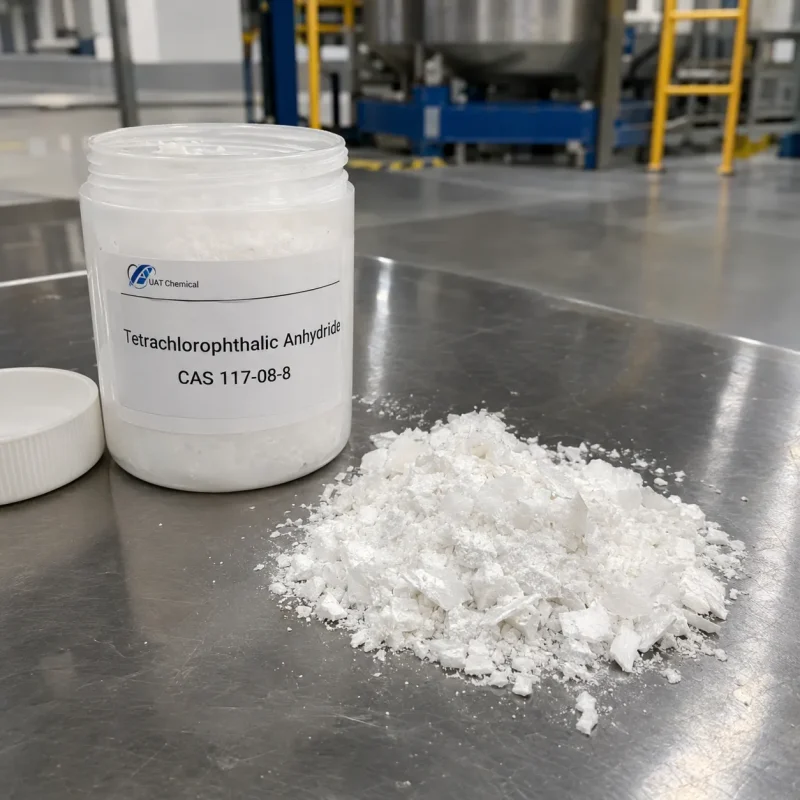
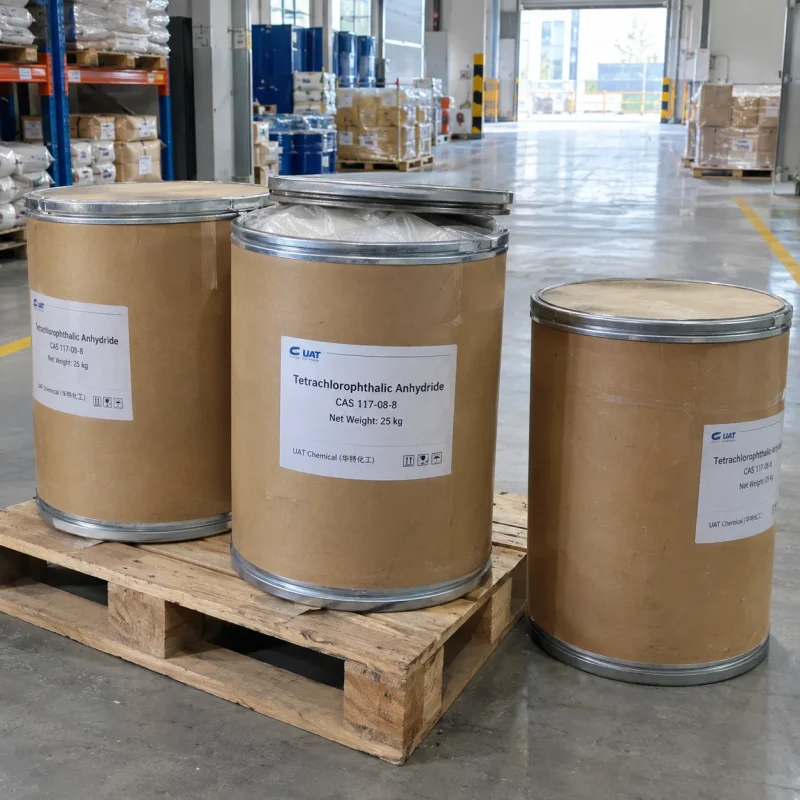
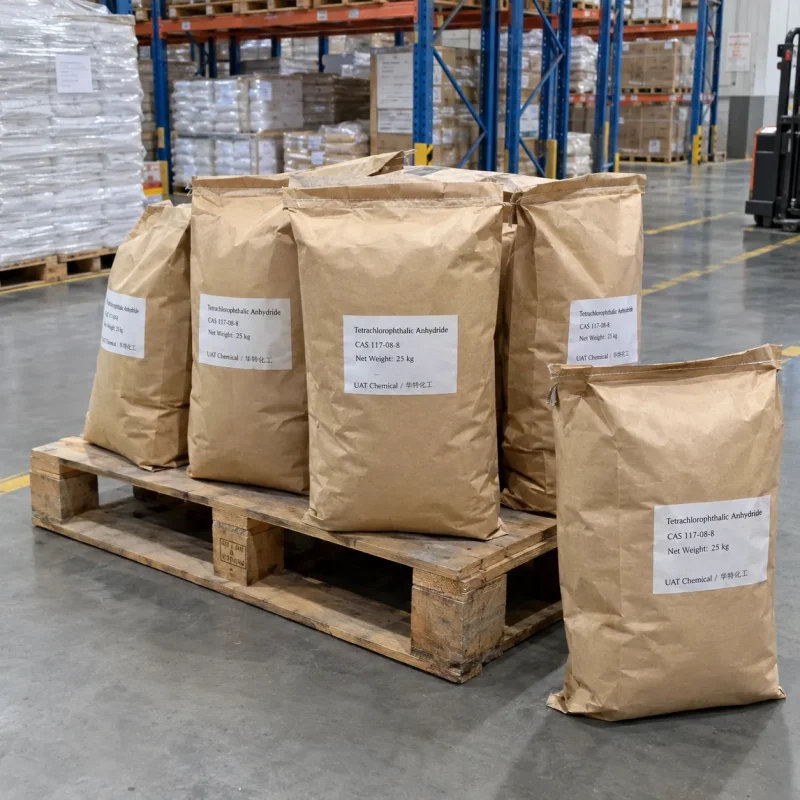
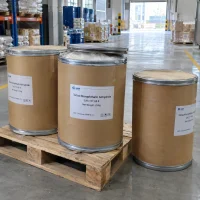
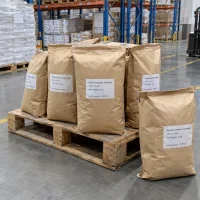
Tetrachlorophthalic Anhydride (TCPA, CAS 117-08-8) is a white to off-white crystalline chlorinated anhydride with a high melting point, nearly insoluble in cold water and soluble in hot organic solvents. The four ring chlorine atoms make it a reactive, halogen bearing monomer esterified into unsaturated polyester, epoxy and alkyd resins for built in flame resistance, rather than a flame retardant simply mixed in. It also serves as an intermediate for dyes, pigments, agrochemicals and plasticizers. TCPA is moisture sensitive and hydrolyzes in hot water, so it is kept dry and sealed. UATChem supplies TCPA crystals and powder in 25 kg paper bags or fiber drums; send the grade, quantity and destination for a quote with COA and SDS.
- CAS: 117-08-8
- EC Number: 204-171-4
- Synonyms: TCPA; 4,5,6,7-tetrachlorophthalic anhydride
- Molecular Formula: C₈Cl₄O₃
- Molecular Weight: 285.90
- Appearance: White to off-white crystals / powder
- Melting Point: 253 – 257 °C
- Boiling Point: About 371 °C
- Solubility: Insoluble in cold water; soluble in hot organic solvents
- Sensitivity: Moisture sensitive; hydrolyzes in hot water
- Use: Reactive flame retardant monomer; dye / plasticizer intermediate
- Packaging: 25 kg paper bag / fiber drum, custom packing available
What Tetrachlorophthalic Anhydride Is
Tetrachlorophthalic anhydride is phthalic anhydride with all four aromatic hydrogens replaced by chlorine, a white to off-white needle crystal or powder that melts above 250 °C. The anhydride group reacts with alcohols and amines to form esters and imides, and the chlorine bound on the ring stays in the finished polymer, so the material works as a reactive rather than additive flame retardant. It is almost insoluble in cold water but hydrolyzes to tetrachlorophthalic acid in hot water or damp air, so dry handling and sealed storage matter. UATChem supplies standard industrial crystals and powder, with assay and moisture confirmed on the COA for each lot.
Flame Retardant Resins and Other Uses
- Reactive flame retardant. Esterified into the backbone of unsaturated polyester, epoxy and alkyd resins to give durable, non-migrating flame resistance in high temperature composites, electronic potting and flame retardant coatings.
- Dyes, pigments and agrochemicals. An intermediate for dyes, organic pigments and pesticide syntheses, and a feed for chlorinated plasticizers and resin modifiers.
- Fine synthesis. The tetrachlorophthaloyl (TCP) group serves as an amine protecting reagent in peptide and pharmaceutical intermediate work.
- Coatings and molding compounds. Used as a chlorinated monomer in flame retardant alkyd and polyester coatings, molding compounds and elastomer formulations.
Typical Specifications
Industrial and higher grades differ in assay and moisture; values are reported on the COA for each lot, and the physical constants below identify the material.
| Parameter | Typical Value |
|---|---|
| Appearance | White to off-white needle crystals / powder |
| Melting Point | 253 – 257 °C |
| Boiling Point | About 371 °C |
| Solubility | Insoluble in cold water; soluble in hot solvents |
| Sensitivity | Moisture sensitive; hydrolyzes in hot water |
| Form | Crystals, flakes or powder |
Packaging, Documents and Ordering
- Packed in 25 kg paper bags or fiber drums with sealed liner on pallets; material is kept strictly dry, sealed, cool and away from strong oxidizers to prevent hydrolysis, with transport classification shown on the SDS.
- The anhydride irritates and may burn the skin, eyes and respiratory tract and may sensitize skin or airways, so gloves, goggles, a dust mask and ventilation are used, and the chlorinated powder is kept out of waterways. Every lot carries a COA with assay, melting point, moisture and free acid, together with TDS and SDS, and samples are supported.
- For a quote, UATChem needs the grade (industrial or refined), form (crystals, flakes or powder), quantity, packing and destination port.
FAQ
Q: What is tetrachlorophthalic anhydride used for?
A: It is a reactive chlorinated monomer for flame retardant polyester and epoxy resins, and a dye and plasticizer intermediate.
Q: Is TCPA an additive or a reactive flame retardant?
A: It is reactive; ring chlorine and the anhydride bond it into cured resin, so the flame resistance does not migrate or bloom.
Q: Why must tetrachlorophthalic anhydride be kept dry?
A: It is moisture sensitive and hydrolyzes in hot water or damp air to tetrachlorophthalic acid, so packs stay sealed and dry.
Related products
Ready to Source? Talk to Our Engineers
Industrial Chemical Raw Materials, Factory-Direct — Quote Within 1 Hour
Stable high-purity supply, flexible packaging and complete compliance documentation for your formulations — exporting worldwide since 2006.
- 1000+Products
- 200+QC Protocols
- 7–15Days Delivery
- Factory-Direct Pricing
- COA / TDS / SDS Included
- Free Samples for Testing
- ISO 9001 Certified