
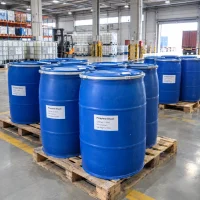
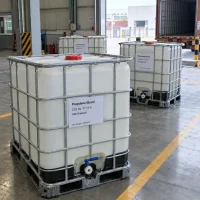
Propylene Glycol CAS 57-55-6
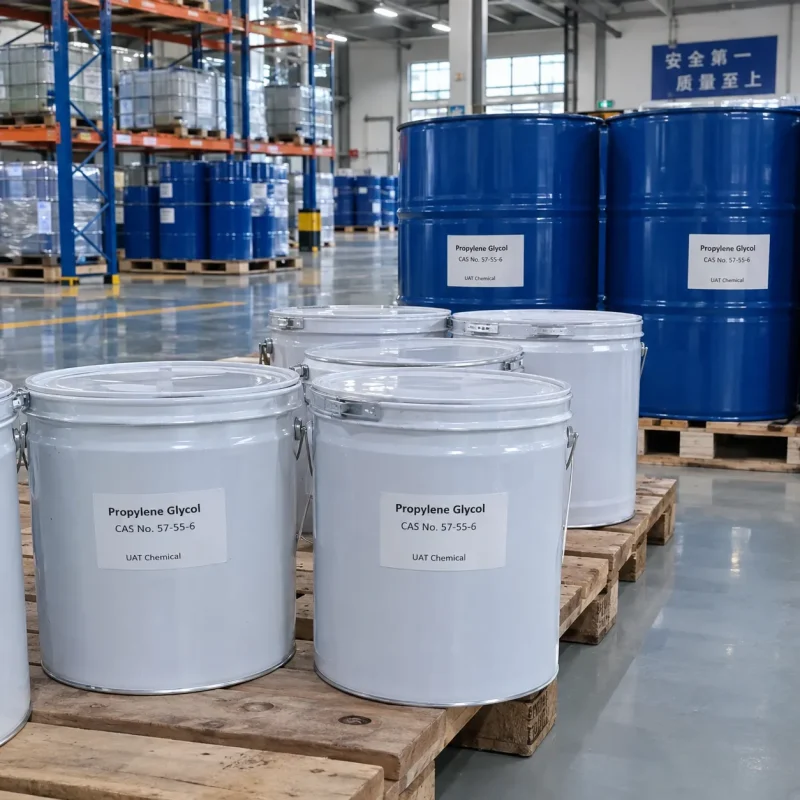
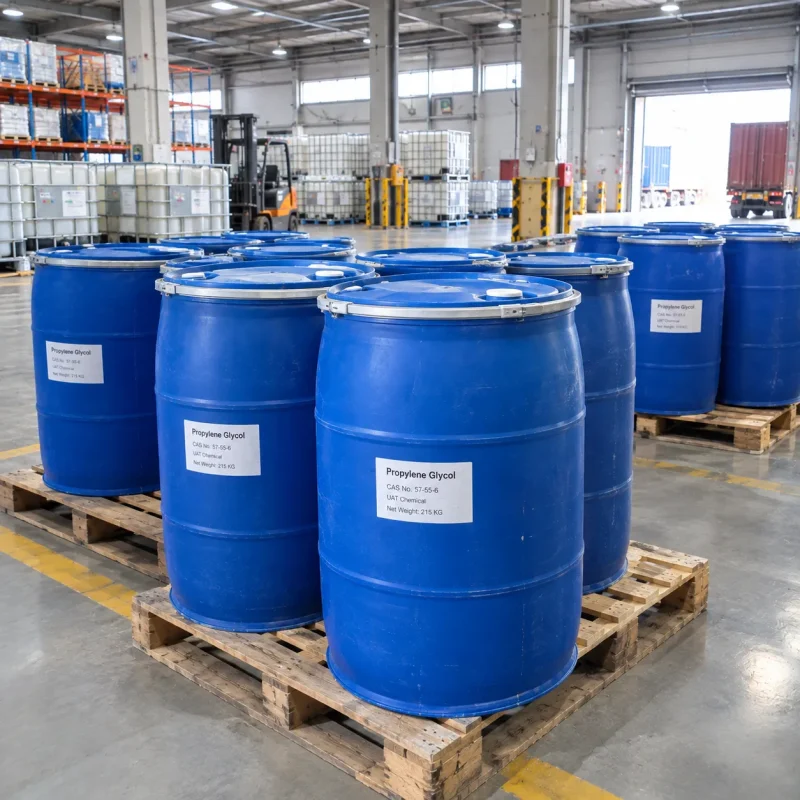
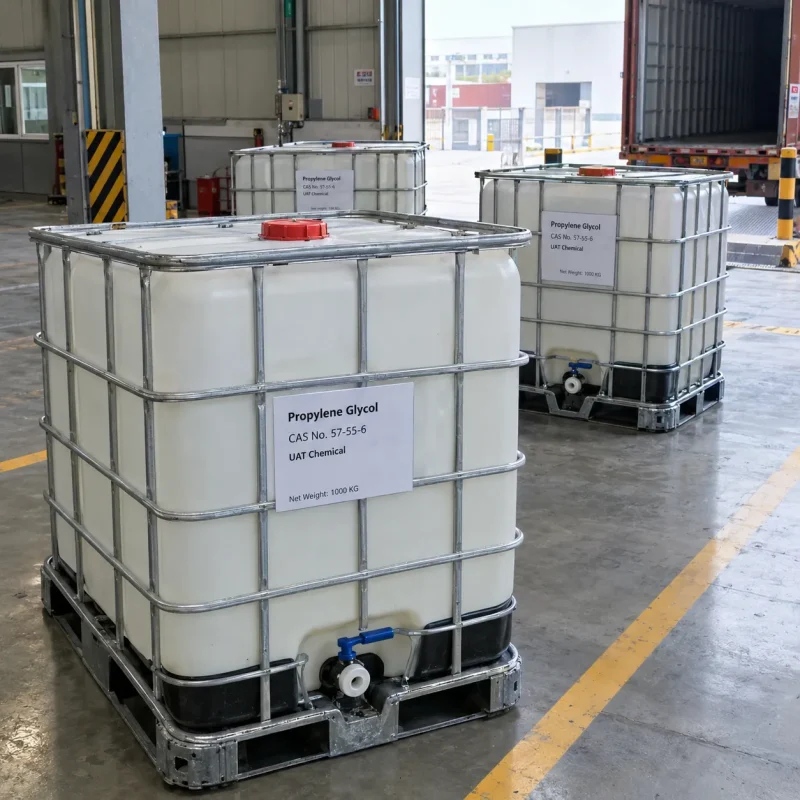
Propylene Glycol (1,2-propanediol, MPG, CAS 57-55-6) is a clear, colorless, viscous liquid that mixes fully with water. It holds moisture, lowers the freezing point of water, and is safe enough for food, drug and skin-contact use, so it shows up in UPR resins, food and beverage, personal care, antifreeze and coatings. UATChem supplies industrial grade at 99.5% min and USP grade at 99.8% min, in 200 kg steel drums, 1000 L IBC totes and bulk tank trucks, with COA, TDS and SDS on every order.
- CAS: 57-55-6
- EINECS: 200-338-0
- Synonyms: 1,2-Propanediol; Monopropylene glycol (MPG); Propane-1,2-diol
- Molecular Formula: C3H8O2
- Molecular Weight: 76.09
- Appearance: Colorless, clear, viscous liquid
- Assay (GC): 99.5% min (industrial) / 99.8% min (USP)
- Specific Gravity (20 °C): 1.035 – 1.037
- Water Content: 0.2% max (industrial) / 0.1% max (USP)
- Packaging: 200 kg steel drum / 1000 L IBC / bulk tank truck
About Propylene Glycol (MPG)
Propylene glycol is the smallest commercial humectant diol, with two hydroxyl groups on a three-carbon chain. Those groups give full miscibility with water and most organic solvents, hold moisture against drying, and lower the freezing point of water, three properties behind most of its end uses. Low acute toxicity and GRAS standing for the USP grade open food, beverage and pharmaceutical channels that the related ethylene glycol cannot enter.
Where MPG Is Used
- Unsaturated polyester resins. The largest industrial outlet: reacted into UPR for fiberglass-reinforced plastics, artificial stone and castings, where a steady 99.5% feed keeps resin color and gel time repeatable.
- Food and beverage. USP/FCC-grade humectant, solvent and carrier for flavour extracts and colors; keeps baked goods, confectionery and pet food soft and stable against drying.
- Pharmaceutical and personal care. Solvent, humectant and co-solvent in oral liquids, topical creams, toothpastes and lotions. It dissolves actives and stabilizes emulsions and suspensions.
- Heat transfer and antifreeze. A low-toxicity circulating fluid for closed-loop HVAC, process chillers and food-plant systems where a leak could contact product; gentler on metals than salt brines.
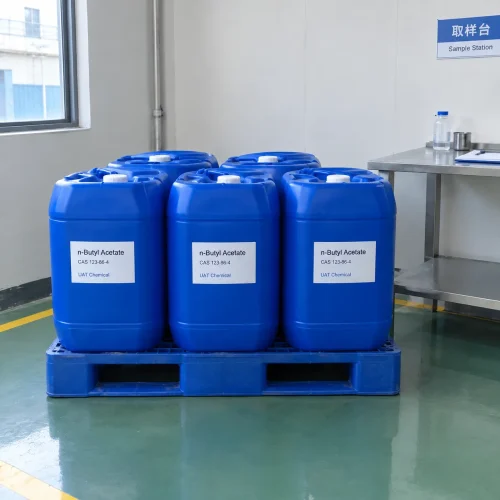
- Coatings, inks and formulations. Coalescent and slow-drying aid that levels film and gloss and lifts freeze-thaw stability, often sharing coating formulas with faster esters such as n-Butyl Acetate CAS 123-86-4 to balance the drying curve.
Industrial and USP Grades
Choose by end use first. USP grade carries the pharmacopeia monograph limits that food, drug and skin-contact work requires; industrial grade suits resin, coating and loop applications where those limits do not apply. Food-grade and custom purity limits can be produced on request.
Propylene glycol vs ethylene glycol. Antifreeze buyers weigh the two every project. Ethylene glycol transfers heat slightly better and reaches a marginally lower freeze point per concentration, but it is acutely toxic and a hazard where leakage can reach food, feed, drinking water or livestock. Propylene glycol carries low acute toxicity and GRAS standing, which is why breweries, dairies, food plants and pharmaceutical sites specify it despite a small efficiency trade-off. Neither should run bare in long-term loops. Oxidation turns the fluid acidic, so formulated grades include corrosion inhibitors.
| Test Parameter | Industrial Grade | USP Grade |
|---|---|---|
| Assay (GC) | 99.5% min | 99.8% min |
| Water Content | 0.2% max | 0.1% max |
| Color (APHA) | 10 max | 5 max |
| Acidity (as Acetic Acid) | 0.01% max | 0.005% max |
| Heavy Metals (as Pb) | 10 ppm max | 2 ppm max |
| Specific Gravity at 20 °C | 1.035 – 1.037 | |
Handling, Hygroscopicity and Packaging
- MPG is strongly hygroscopic. An opened drum absorbs atmospheric water and drifts out of the water-content limit. Reseal promptly and blanket bulk tanks with dry air or nitrogen.
- Compatible with PE, PP, EPDM and butyl rubber seals; test natural rubber and some silicones, which may swell.
- Packaging: 200 kg steel drums, 1000 L IBC totes and bulk tank trucks for continuous plants; private labelling available.
- Store sealed, cool and away from oxidizers; 24-month shelf life. COA, TDS and SDS on every shipment; samples available; quotes within one working day. State the grade (industrial or USP) and quantity in your RFQ.
FAQ
Q: How do I choose between industrial and USP grade?
A: USP for food, drug and skin-contact use; industrial for resins, coatings and loops.
Q: Is propylene glycol safer than ethylene glycol?
A: Yes. Low acute toxicity and GRAS status are why it is chosen where leaks could reach food.
Q: Why must drums stay sealed?
A: MPG is strongly hygroscopic and absorbs air moisture, pushing water out of spec.
Q: What is propylene glycol’s biggest industrial use?
A: Unsaturated polyester resins for FRP, artificial stone and castings take the largest share.
Q: Does PG corrode steel piping?
A: Pure neutral PG does not; oxidized fluid turns acidic, so closed loops run inhibitors.
Related products
Ready to Source? Talk to Our Engineers
Industrial Chemical Raw Materials, Factory-Direct — Quote Within 1 Hour
Stable high-purity supply, flexible packaging and complete compliance documentation for your formulations — exporting worldwide since 2006.
- 1000+Products
- 200+QC Protocols
- 7–15Days Delivery
- Factory-Direct Pricing
- COA / TDS / SDS Included
- Free Samples for Testing
- ISO 9001 Certified