
Polymaleic Acid CAS 26099-09-2
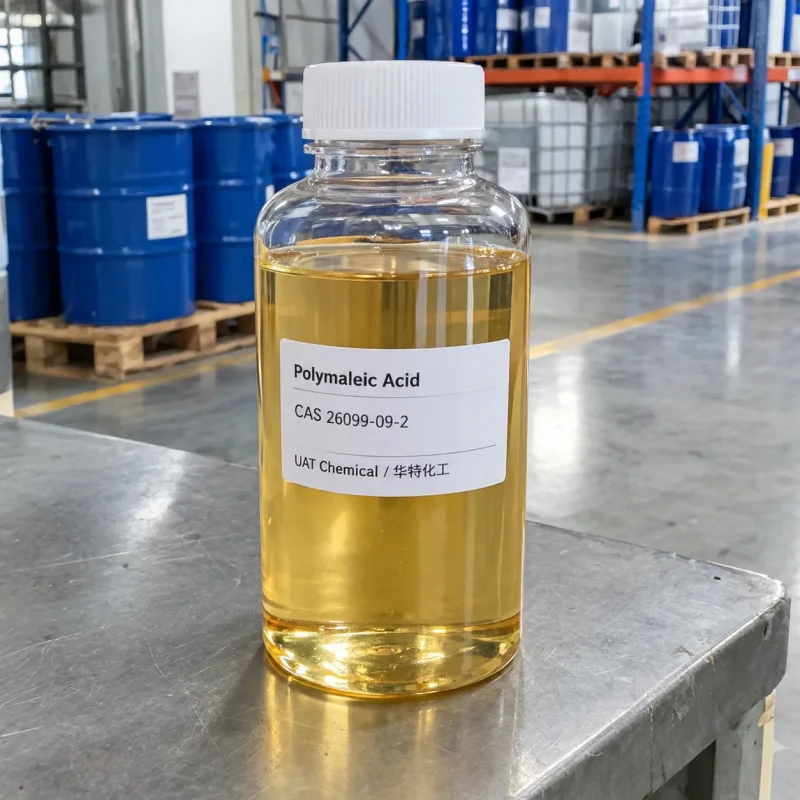
Polymaleic Acid, sold in water treatment as HPMA or hydrolyzed polymaleic anhydride, is a low-molecular-weight polycarboxylic polymer that keeps hard water from laying down scale. It arrives as a clear, acidic, yellow to reddish-brown aqueous liquid that mixes with water in any proportion and keeps working under the high heat of boilers and thermal desalination, where ordinary acrylic antiscalants start to fail. At a few parts per million it ties up calcium, disrupts crystal growth and is commonly blended with organic phosphonates and zinc salts. UATChem supplies water-treatment-grade HPMA as a liquid in drums and IBCs, with solids content and test data confirmed on each COA.
- CAS: 26099-09-2
- Synonyms: HPMA; hydrolyzed polymaleic anhydride; PMA
- Type: Low-molecular-weight polycarboxylic acid polymer
- Polymer Unit: C₄H₄O₄ (maleic acid)
- Relative Molecular Mass: about 400 to 800
- Appearance: Clear yellow to reddish-brown aqueous liquid
- Solubility: Miscible with water
- Density (20 °C): about 1.19 to 1.22 g/cm³
- pH (10 g/L in water): about 2 to 3
- Thermal Stability: effective above 300 °C
- Main Uses: Cooling water, boiler and desalination scale inhibition
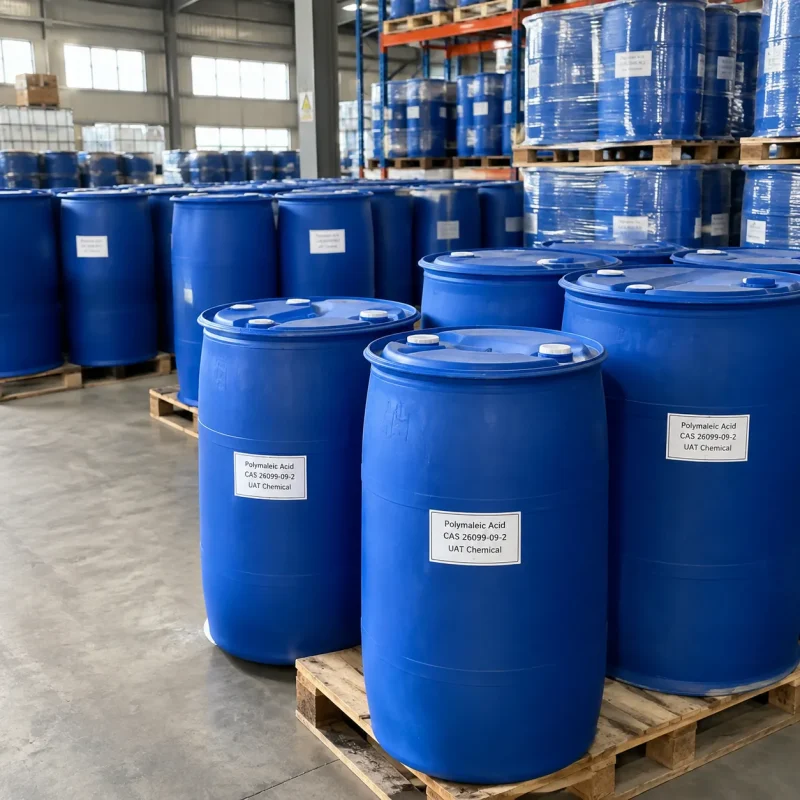
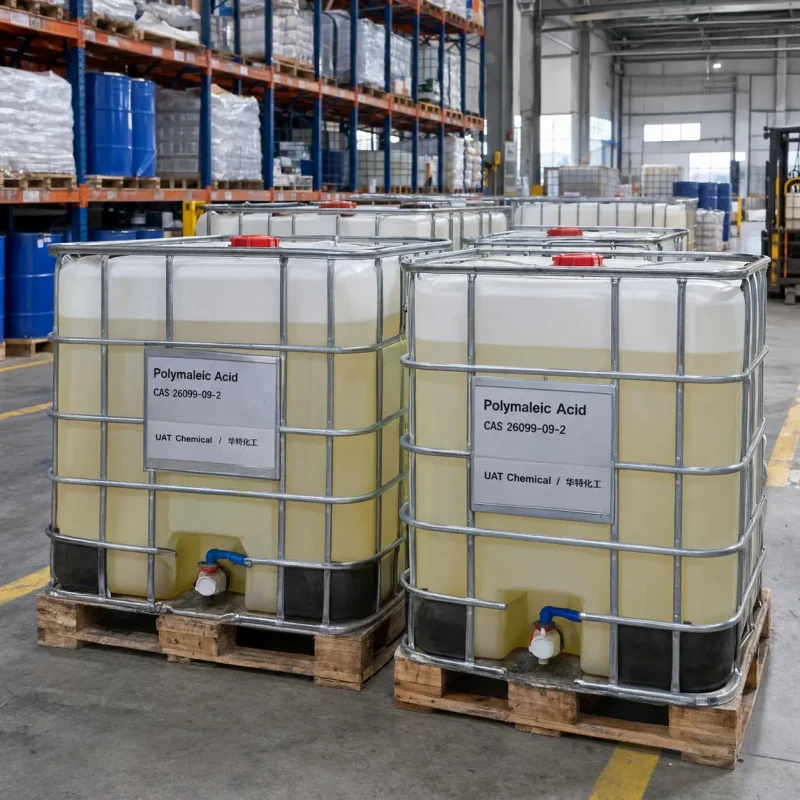
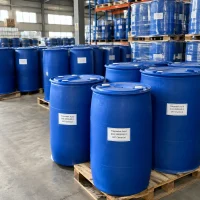
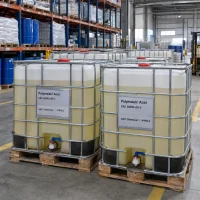
- Packaging: 25/30 kg drum; 200/250 kg drum; 1000 kg IBC
What Polymaleic Acid Is
Polymaleic acid is a short-chain polymer built from maleic acid, which comes from hydrolyzing maleic anhydride, so the trade sells it as HPMA. The chain carries many carboxylic acid groups that bind calcium and magnesium and distort scale crystals as they form, so a low dose stops hard, adherent scale before it builds up. The property that sets HPMA apart from simpler polyacrylate antiscalants is heat tolerance, as it keeps working past 300 °C and in alkaline, high-hardness water. Most of the material we move is the ready-to-use aqueous liquid, and it sells as often into formulated blends as it does as a standalone dose.
Where It Is Used
- Circulating cooling water. Industrial cooling systems dose it against calcium carbonate and sulfate scale, usually blended with phosphonates and zinc salts that add corrosion control.
- Boilers and thermal desalination. Low-pressure boilers, MSF desalination units, steam locomotives, oilfield water and crude-oil handling rely on it because it stays active above 300 °C and does not carry over with steam.
- Formulated treatment blends. It serves as the polycarboxylate backbone of all-in-one scale and corrosion inhibitors, paired with HEDP, ATMP or PBTCA and zinc.
- Textile and other work. It also serves as a chelating dispersant and leveling aid in dyeing, and in smaller volumes in cement additives, low-phosphorus detergents and saline-soil treatment.
HPMA handles scale on the recirculating and boiler-water side. For flocculation, clarification and sludge dewatering in the same water system, teams use PolyDADMAC powder; the two serve different stages and are not dosed together.
Typical Specifications
The table covers the liquid water-treatment grade we stock. Solids content, pH and color move slightly between lots and are printed on the COA, so formulations can be set against real figures.
| Parameter | Value |
|---|---|
| Appearance | Clear yellow to reddish-brown aqueous liquid |
| Type | Low-molecular-weight polycarboxylic polymer |
| Relative Molecular Mass | about 400 to 800 |
| Solids Content | Water-treatment grade, reported on COA |
| Density (20 °C) | about 1.19 to 1.22 g/cm³ |
| pH (10 g/L in water) | about 2 to 3 |
| Solubility | Fully miscible with water |
| Thermal Stability | Effective above 300 °C |
Storage, Packaging and Ordering
- Keep the liquid in sealed plastic or plastic-lined drums and IBCs in a cool, ventilated place, off bare carbon steel and away from strong alkalis and oxidizers. As a water-based product it should be protected from freezing in winter, and mild warming restores flow if it thickens in the cold.
- The neat liquid is strongly acidic, so wear goggles and gloves, avoid skin and eye contact and rinse after any splash. It is low in toxicity, but spills are slippery and should be contained and flushed with water.
- UATChem packs 25 kg and 30 kg drums, 200 kg and 250 kg drums and 1000 kg IBCs, with private-label or blend packing on request. COA and SDS accompany every order, and the SDS gives the shipping classification for your route. Send the target system, packing and quantity for a quote.
FAQ
Q: What is HPMA used for?
A: It stops carbonate and sulfate scale in cooling water, boilers and desalination, blended with phosphonates and zinc salts.
Q: Why choose HPMA over a normal antiscalant?
A: It stays active past 300 °C in alkaline, hard water, fitting boilers and desalination where ordinary polyacrylates fade.
Q: How is it supplied and packed?
A: It ships as an aqueous liquid in 25 kg or 30 kg drums, 200 kg or 250 kg drums and 1000 kg IBCs, with COA and SDS.
Related products
Ready to Source? Talk to Our Engineers
Industrial Chemical Raw Materials, Factory-Direct — Quote Within 1 Hour
Stable high-purity supply, flexible packaging and complete compliance documentation for your formulations — exporting worldwide since 2006.
- 1000+Products
- 200+QC Protocols
- 7–15Days Delivery
- Factory-Direct Pricing
- COA / TDS / SDS Included
- Free Samples for Testing
- ISO 9001 Certified