
Rhamnolipid CAS 869062-42-0
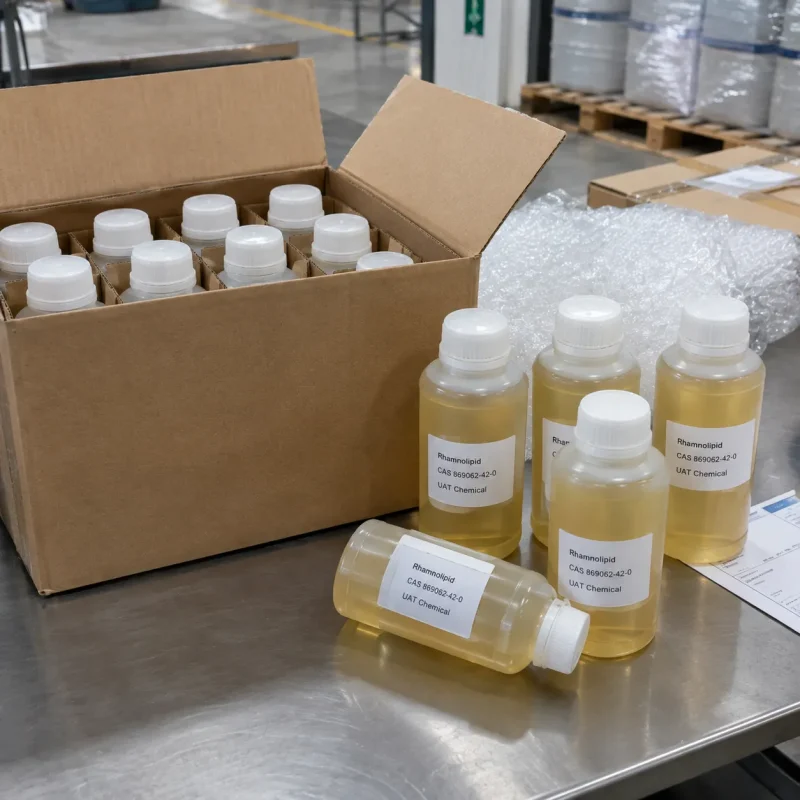
Rhamnolipid (CAS 869062-42-0) is a fermentation derived glycolipid biosurfactant supplied as a yellow to brown viscous liquid. Made by Pseudomonas aeruginosa, it blends mono and di rhamnolipids to emulsify, wet and solubilize oils. Biodegradable, mild on skin and tolerant of salt and heat, it fits green personal care and cleaning, agricultural tank mixes, oilfield work and soil remediation. UATChem supplies it in plastic bottles, drums and 1000 kg IBCs, with COA, TDS, SDS and samples on request.
- CAS: 869062-42-0
- Type: Fermentation derived glycolipid biosurfactant (anionic)
- Source: Pseudomonas aeruginosa fermentation
- Appearance: Yellow to brown viscous liquid
- Main Use: Personal care, cleaning, agriculture, oilfield
- Available Grades: Cosmetic / industrial liquid
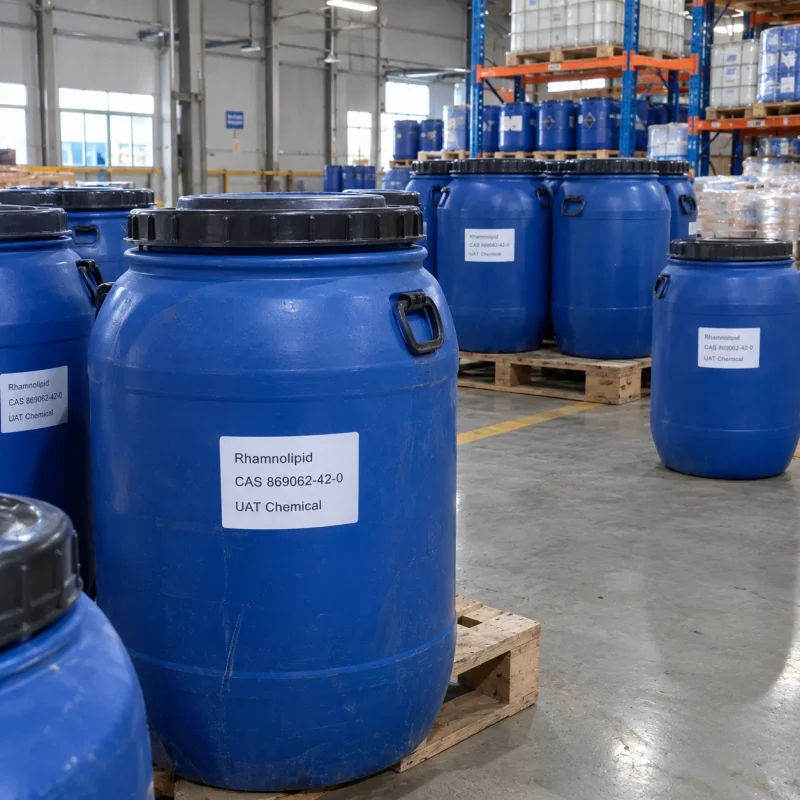
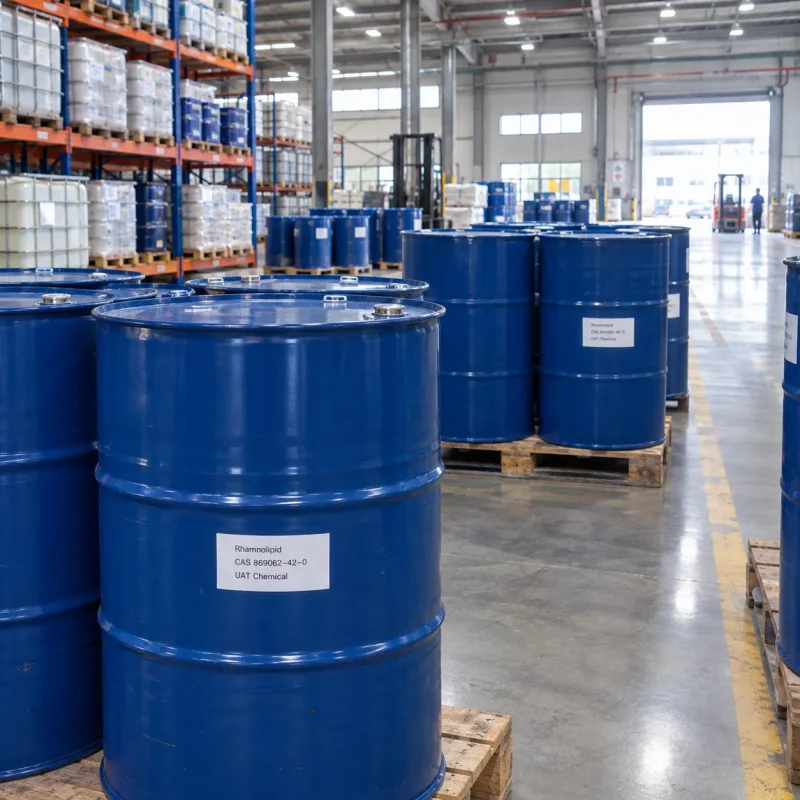
- Packaging: Plastic bottle, plastic or steel drum
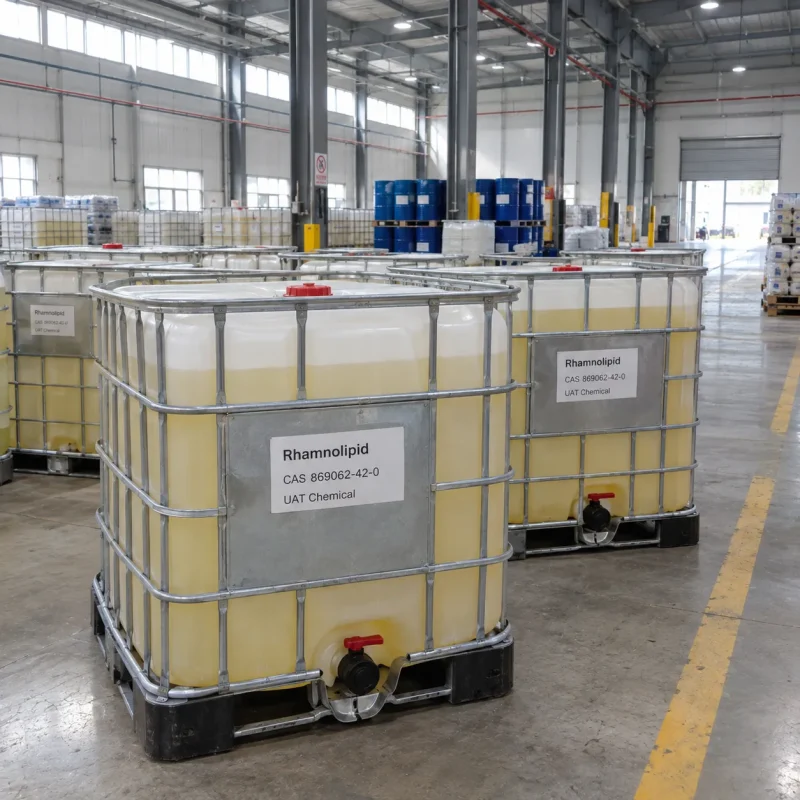
- Bulk Shipment: 1000 kg IBC
- Documents: COA, TDS and SDS on request
- Storage: Sealed, cool, avoid freezing and heat
- Samples: Available on request
What Rhamnolipid Is
Rhamnolipid is a microbial glycolipid biosurfactant made mainly by Pseudomonas aeruginosa fermentation. Commercial product is a mixture of mono and di rhamnolipid homologues, so it has no single molecular formula or molecular weight. The amber to brown liquid lowers surface tension, emulsifies oil and wets surfaces, and breaks down readily. UATChem supplies cosmetic and industrial liquid grades, with active content and pH on the COA and TDS.
Personal Care, Cleaning, Agriculture and Oilfield Uses
- Personal care. It goes into mild facial cleansers, body washes, shampoos, hand washes and makeup removers, where low irritation and a skin friendly profile matter, and it pairs well with other green surfactants such as decyl glucoside (APG).
- Home and industrial cleaning. It lifts grease and oily soil in dish liquids, hard surface cleaners and green household and industrial cleaners built around bio based and readily biodegradable claims.
- Agriculture. It works in spray tank mixes to wet and spread sprays on leaves, supports biopesticide and foliar fertilizer performance, and is used for its antimicrobial and soil conditioning effects.
- Oilfield and remediation. It is used in enhanced oil recovery and crude oil emulsification, and to wash and bioremediate oil sludge, spill sites and petroleum contaminated soil.
Typical Specifications
Rhamnolipid is a fermentation mixture rather than one pure molecule, so there is no single molecular formula or molecular weight. Active content, pH, density and the mono and di rhamnolipid profile vary by grade and are shown on the COA and TDS; the table below identifies the material.
| Parameter | Typical Value |
|---|---|
| CAS | 869062-42-0 |
| Type | Glycolipid biosurfactant (anionic) |
| Source | Pseudomonas aeruginosa fermentation |
| Composition | Mixture of mono and di rhamnolipid homologues |
| Appearance | Yellow to brown viscous liquid |
| Solubility | Dispersible / soluble in water |
| Properties | Emulsifying, wetting, solubilizing, biodegradable |
| Grades | Cosmetic / industrial liquid |
Packaging, Documents and Ordering
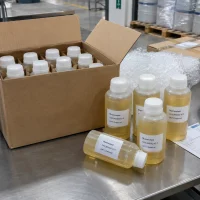
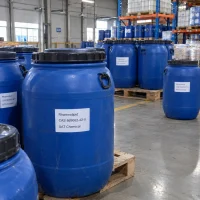
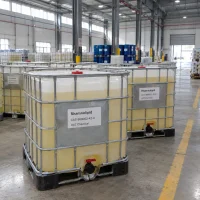
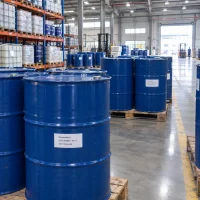
- Small and sample orders ship in plastic bottles in cartons, regular orders in blue plastic or steel drums, and bulk volumes in 1000 kg IBC totes, matching the photos. Keep containers sealed and cool, protected from freezing and long heat exposure.
- Rhamnolipid is supplied as a liquid concentrate, with a COA, TDS and SDS for every lot and active content, pH and density reported on the COA and TDS.
- Samples are available for evaluation. To quote, UATChem needs the grade, quantity, packing and destination port. Supporting documents for cosmetic or industrial use can be discussed based on the application.
FAQ
Q: What is rhamnolipid used for?
A: Rhamnolipid is a biodegradable biosurfactant for personal care, cleaners, agriculture, oilfield work and soil remediation.
Q: Is rhamnolipid a liquid or powder?
A: UATChem supplies rhamnolipid as a yellow to brown liquid in bottles, drums and IBCs; color varies between fermentation lots.
Q: Is rhamnolipid natural and biodegradable?
A: Made by microbial fermentation, it is readily biodegradable and mild on skin, suiting green cleaning and personal care lines.
Q: What does rhamnolipid work well with?
A: It pairs with green surfactants like alkyl polyglucosides in cleansers and handles salt and pH shifts in oilfield work.
Related products
Ready to Source? Talk to Our Engineers
Industrial Chemical Raw Materials, Factory-Direct — Quote Within 1 Hour
Stable high-purity supply, flexible packaging and complete compliance documentation for your formulations — exporting worldwide since 2006.
- 1000+Products
- 200+QC Protocols
- 7–15Days Delivery
- Factory-Direct Pricing
- COA / TDS / SDS Included
- Free Samples for Testing
- ISO 9001 Certified