
Triclosan CAS 3380-34-5
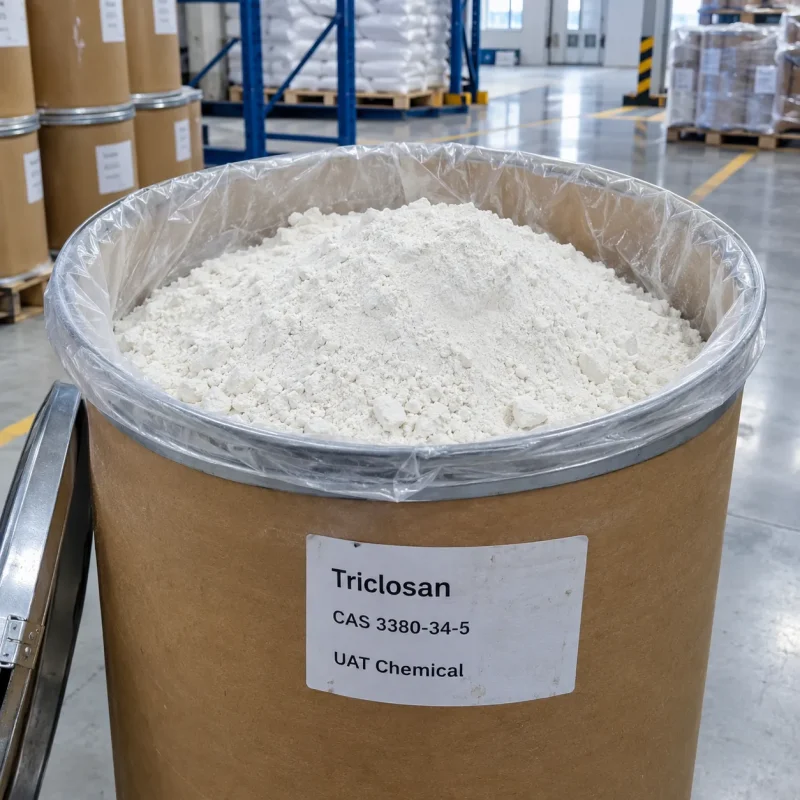
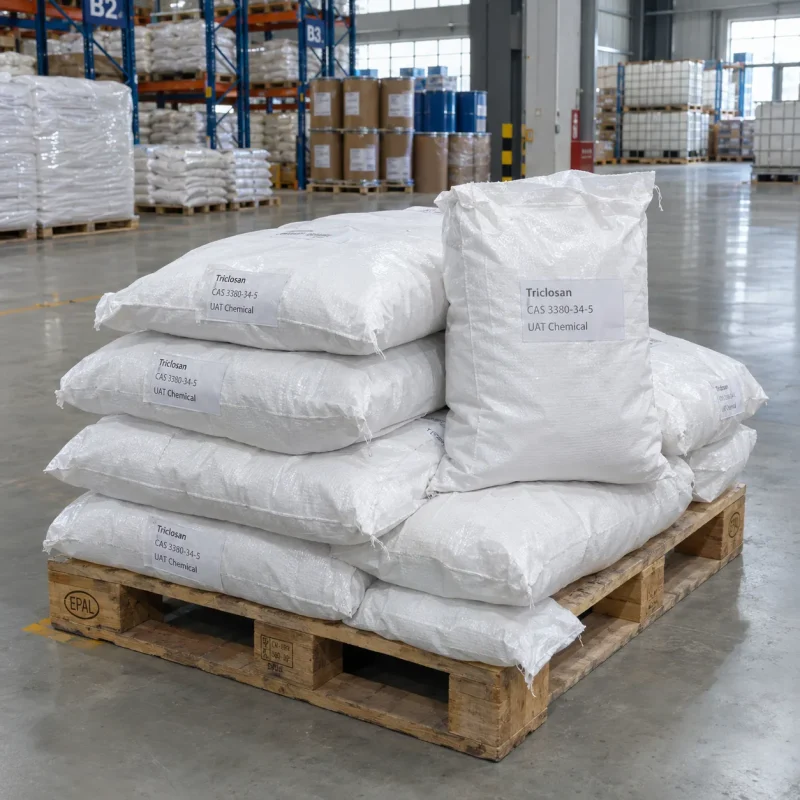
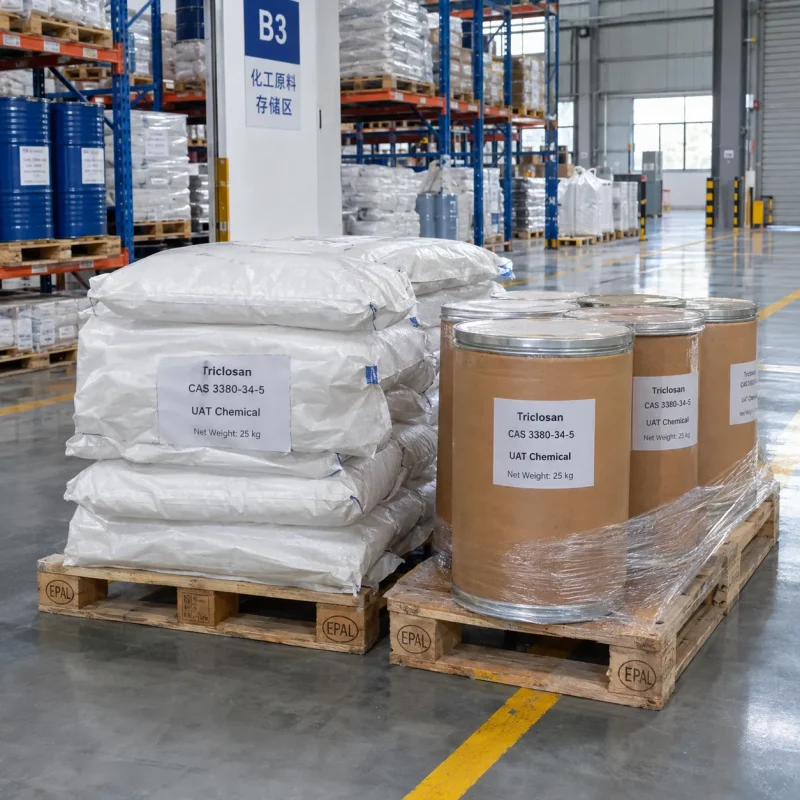
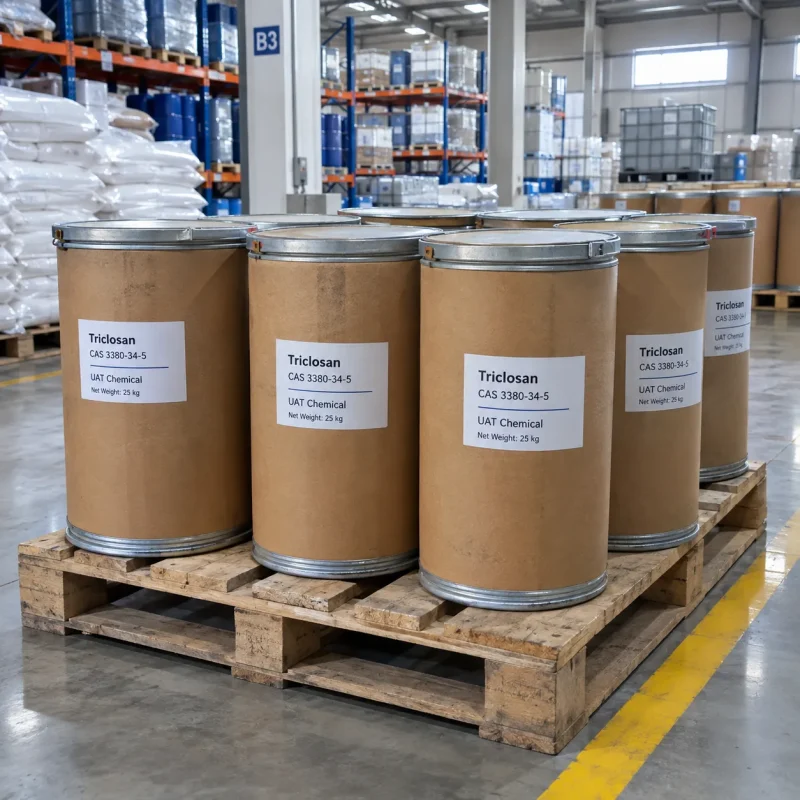
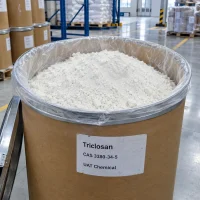
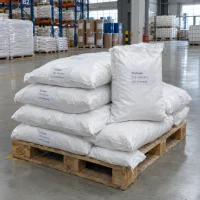
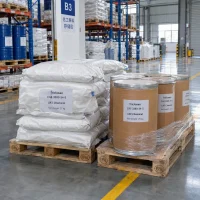
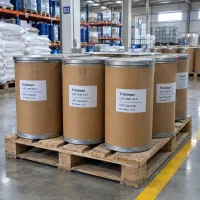
Triclosan (CAS 3380-34-5) is a chlorinated diphenyl ether with a phenolic hydroxyl group, a white crystalline powder with a mild aromatic note that melts in the mid fifties. It is only slightly soluble in water but dissolves in alcohols, glycols, surfactant solutions and dilute alkali as the phenol forms a salt, and it covers gram positive and gram negative bacteria and fungi. UATChem supplies triclosan for toothpaste and oral care, antibacterial plastics and polymer articles, treated fibers and textiles, and hard surface hygiene lines. Consumer wash products are restricted in some markets while toothpaste and polymer uses continue, so buyers confirm local cosmetic and biocide rules. The low melting crystals can cake in heat, so drums stay cool and shaded. Material runs in 25 kg woven bags or fiber drums; send the grade, quantity and destination for a quote with COA and SDS.
- CAS: 3380-34-5
- EC Number: 222-182-2
- Synonyms: Irgasan DP 300; Irgacare MP
- Chemical Name: 5-chloro-2-(2,4-dichlorophenoxy)phenol
- Molecular Formula: C₁₂H₇Cl₃O₂
- Molecular Weight: 289.54
- Appearance: White to off-white crystalline powder
- Melting Point: About 55 – 57 °C
- Solubility: Slightly in water; soluble in alcohols, glycols, dilute alkali
- Type: Diphenyl ether, broad spectrum antibacterial
- Use: Toothpaste, oral care, polymers, textiles, sanitizers
- Packaging: 25 kg woven bag / fiber drum, custom packing available
What Triclosan Is
Triclosan, chemically 5-chloro-2-(2,4-dichlorophenoxy)phenol, joins two aromatic rings through an ether link and carries a phenol group. It arrives as a white to off-white crystalline powder that melts not far above room temperature and is only slightly soluble in water, yet it dissolves readily in alcohols and glycols and in surfactant or dilute alkali solutions once the phenol forms a salt. The broad spectrum activity reaches gram positive and gram negative bacteria and fungi, wider than carbanilide antibacterials that focus on gram positive organisms. UATChem supplies cosmetic, oral care and industrial oriented material, with assay and particle size reported on the COA for each lot.
Oral Care, Polymer and Other Antibacterial Uses
- Toothpaste and oral care. The antibacterial and preservative ingredient in toothpaste, mouthwash and oral care products in markets where the application is permitted.
- Antibacterial polymers. Built into cutting boards, kitchenware, consumer goods, sports equipment, toys and plastic masterbatches for lasting surface protection.
- Fibers and textiles. Used in antimicrobial and odor control finishes for synthetic and acrylic fibers, socks and home textiles.
- Hard surface and institutional. Included in hard surface and institutional hygiene formulations and deodorant products where allowed.
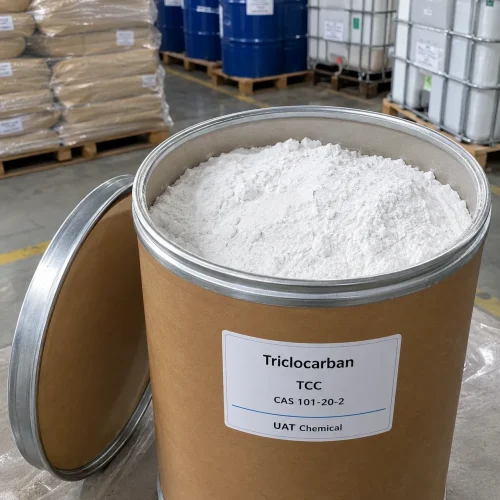
Rules differ by region: consumer rinse off washes are restricted or withdrawn in some markets while toothpaste and polymer applications continue, so local cosmetic and biocide requirements should be confirmed before use. Buyers sourcing solid, soap based antibacterials also use triclocarban; UATChem supplies triclocarban (TCC) as a related option.
Typical Specifications
Oral care, cosmetic and industrial grades differ in assay and particle size; values are reported on the COA for each lot, and the physical constants below identify the material.
| Parameter | Typical Value |
|---|---|
| Appearance | White to off-white crystalline powder |
| Melting Point | About 55 – 57 °C |
| Solubility | Slightly in water; soluble in alcohols, glycols, dilute alkali |
| Type | Diphenyl ether, broad spectrum antibacterial |
| Form | Powder; oral care / cosmetic / industrial grade, COA per lot |
Packaging, Documents and Ordering
- Packed in 25 kg woven bags or fiber drums with liner, palletized and wrapped; the low melting crystals are kept sealed, dry, shaded and temperature controlled in warm weather to avoid caking or melting.
- The dust irritates eyes and the respiratory tract and triclosan is very toxic to aquatic life with environmental and bioaccumulation attention, so release to waterways is avoided and waste follows local rules, with transport classification on the SDS. Every lot carries a COA with assay, particle size and melting point, plus TDS and SDS; compliance for the finished product rests with the buyer under local cosmetic and biocide rules, and samples are supported.
- For a quote, UATChem needs the grade (oral care, cosmetic or industrial), quantity, packing and destination port.
FAQ
Q: What is triclosan used for?
A: It is a broad spectrum antibacterial in toothpaste, oral care, antibacterial plastics, treated fibers and hard surfaces.
Q: Is triclosan soluble in water?
A: Only slightly; it dissolves in alcohols, glycols and dilute alkali as the phenol salts, suiting toothpaste and polymer use.
Q: Is triclosan still allowed in consumer products?
A: Rinse off washes are restricted in some regions, while toothpaste and polymer uses continue; confirm local rules before use.
Related products
Ready to Source? Talk to Our Engineers
Industrial Chemical Raw Materials, Factory-Direct — Quote Within 1 Hour
Stable high-purity supply, flexible packaging and complete compliance documentation for your formulations — exporting worldwide since 2006.
- 1000+Products
- 200+QC Protocols
- 7–15Days Delivery
- Factory-Direct Pricing
- COA / TDS / SDS Included
- Free Samples for Testing
- ISO 9001 Certified