
Chlorhexidine Digluconate (CHG) CAS 18472-51-0
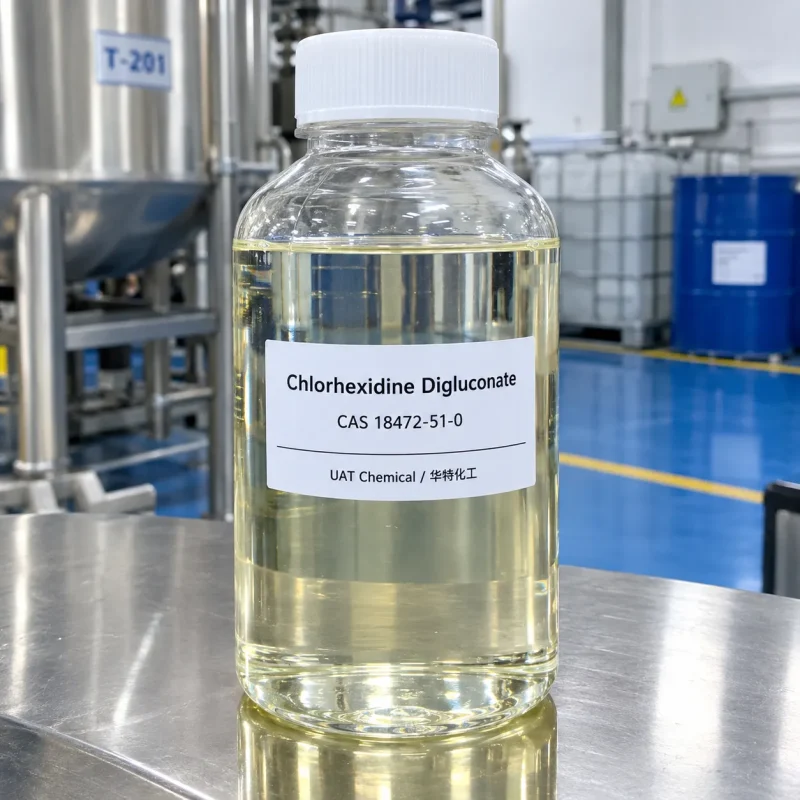
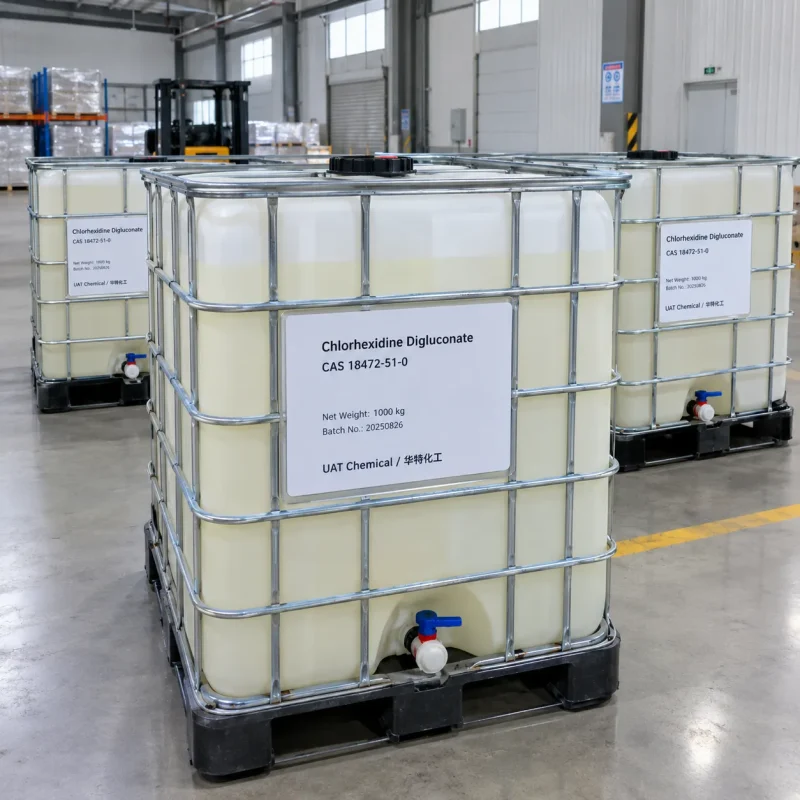
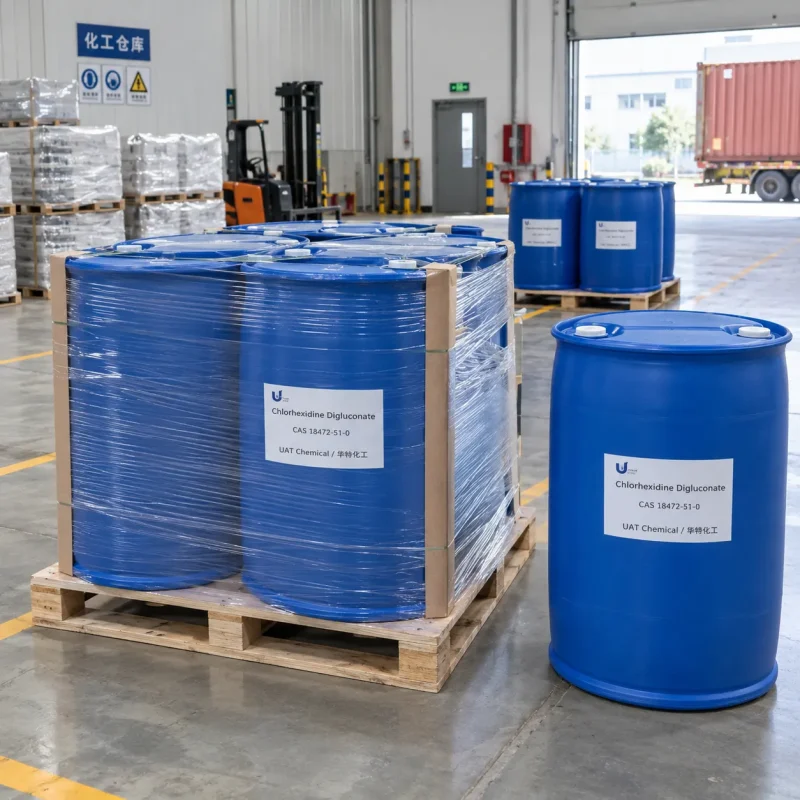
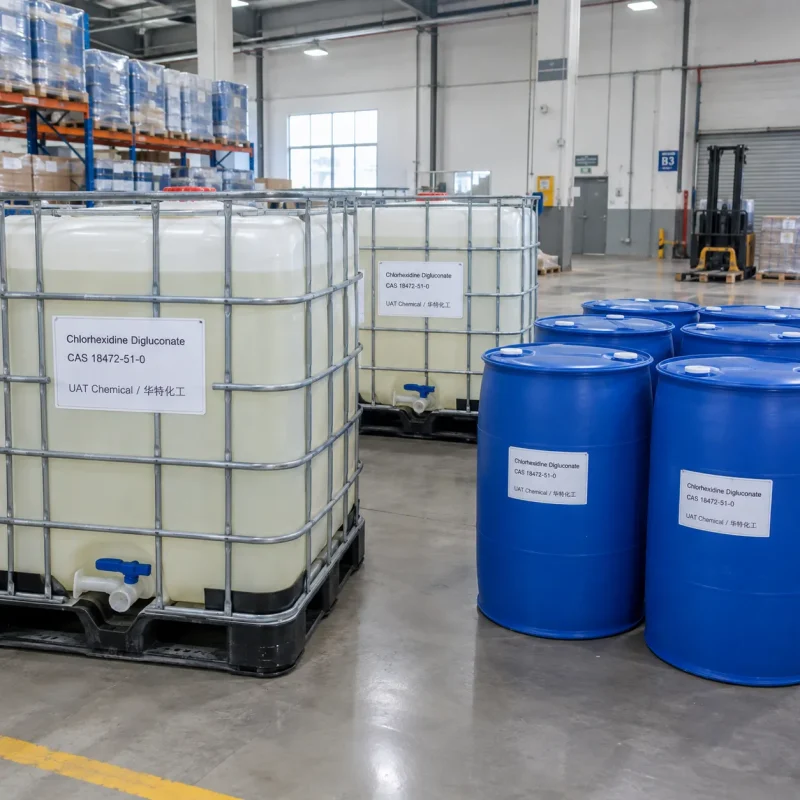
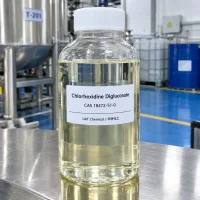
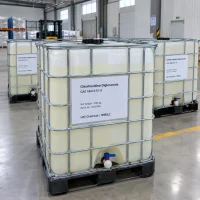
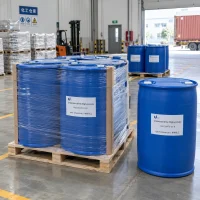
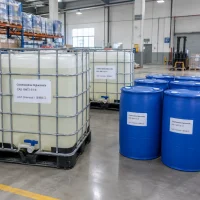
Chlorhexidine digluconate, also called chlorhexidine gluconate or CHG, is a cationic bisbiguanide antiseptic supplied as a concentrated, almost colourless to pale yellow aqueous solution. The digluconate salt is highly water-soluble, while the free base is not, which makes the solution the standard bulk form for skin, hand and oral care antiseptics. UATChem supplies CHG as a bulk liquid concentrate in drums and IBCs for makers of washes, hand scrubs, oral rinses and disinfectant products. Active content and grade are shown on the COA, and the material is a raw material for dilution, not a finished consumer product.
- CAS: 18472-51-0
- EC Number: 242-354-0
- Synonyms: Chlorhexidine gluconate; CHG; chlorhexidine digluconate solution
- Family: Cationic bisbiguanide antiseptic
- Molecular Formula: C₃₄H₅₄Cl₂N₁₀O₁₄
- Molecular Weight: 897.77
- Bulk form: Concentrated aqueous solution (liquid)
- Appearance: Almost colourless to pale yellow, slightly viscous liquid
- Activity: Broad-spectrum; gram-positive and gram-negative bacteria and yeasts
- Handling note: Dilute before use; keep away from anionic soap
- Main use: Skin and hand antisepsis, oral rinses, disinfectant products
- Packaging: HDPE/PP drums; IBC for bulk liquid
About Chlorhexidine Digluconate
Chlorhexidine digluconate is the water-soluble digluconate salt of chlorhexidine, a molecule carrying two biguanide groups. Because the salt dissolves readily in water, it is traded as a ready-to-dilute aqueous solution rather than a solid. The free chlorhexidine base (CAS 55-56-1) is only slightly soluble and is mainly bonded to catheter and device surfaces for slow release, while chlorhexidine acetate (CAS 56-95-1) and dihydrochloride (CAS 3697-42-5) are separate solid salts. In use CHG attaches to bacterial cell surfaces, disrupts the membrane and adsorbs to skin and oral surfaces, giving the long residual action valued in surgical and dental antisepsis. The concentrate is diluted into finished washes, rinses, wipes and sprays.
Applications
The concentrate is formulated into a range of antiseptic and preservative products:
- Skin and hand antisepsis. Surgical scrubs and hand washes, preoperative skin preparation and patient bathing, often combined with alcohol, plus catheter and injection-site care.
- Oral care. Medicated mouthwashes and rinses for gum inflammation, plaque control and post-dental care.
- Wounds and surfaces. Wound and mucous membrane rinses, antiseptic wipes and sponges, coated dressings and ready-to-use sprays.
- Preservation and animal care. Preservation of eye drops and aqueous preparations, limited personal-care use within local cosmetic rules, veterinary teat dips and premises disinfection.
Specifications
CHG is cationic, so keep it away from ordinary soap and other anionic surfactants, which bind and inactivate the active; anions such as phosphates, chlorides, carbonates and citrates can also turn the solution cloudy. Medical and pharmaceutical lots can meet USP or Ph.Eur. expectations, with identity, assay and p-chloroaniline reported on the COA.
Typical bulk-solution profile; exact assay and limits depend on grade, and the batch COA governs.
| Parameter | Value |
|---|---|
| Form | Concentrated aqueous solution (water-based liquid) |
| Appearance | Almost colourless to pale yellow, slightly viscous liquid |
| Active content | Standard bulk concentrate, assay reported on the COA |
| pH | About 5.5 to 7.0 |
| Density | About 1.06 g/mL at room temperature |
| Activity | Cationic bisbiguanide, broad-spectrum antibacterial |
| Compatibility | Keep away from anionic soaps, surfactants, certain salts and cork |
Packaging and Storage
The bulk solution ships in HDPE or polypropylene drums and IBCs, with small development orders in sealed bottles or jerricans. Storage and handling are straightforward for a cationic, light-sensitive liquid:
- Keep sealed, cool and away from light; the protected solution stays clear and colourless.
- Use HDPE, polypropylene or glass; never use cork bungs or cork-lined caps.
- Store apart from soap, anionic products and hypochlorite or iodine cleaners.
- The concentrate irritates eyes and skin; wear gloves and eye protection. SDS and COA are supplied.
Frequently Asked Questions
Q: Do you supply the liquid solution or a solid powder?
A: We supply the aqueous concentrate; base, acetate and hydrochloride are separate solid salts with different CAS numbers.
Q: Why should CHG not be mixed with ordinary soap?
A: CHG is cationic; anionic soap and surfactants bind it and cancel activity. Formulate with compatible nonionic systems.
Q: Is this a finished hand wash or mouthwash?
A: No, we supply the bulk concentrate for dilution; finished washes and rinses are the buyer’s responsibility.
Related products
Ready to Source? Talk to Our Engineers
Industrial Chemical Raw Materials, Factory-Direct — Quote Within 1 Hour
Stable high-purity supply, flexible packaging and complete compliance documentation for your formulations — exporting worldwide since 2006.
- 1000+Products
- 200+QC Protocols
- 7–15Days Delivery
- Factory-Direct Pricing
- COA / TDS / SDS Included
- Free Samples for Testing
- ISO 9001 Certified