
Butanone Oxime (MEKO) CAS 96-29-7
Butanone Oxime, better known as MEKO or methyl ethyl ketoxime, is a clear, colorless to pale-yellow oxime liquid that protects coatings during storage and controls polyurethane curing. In a sealed can of alkyd or oil-based paint it stops a skin forming on the surface, and in one-component polyurethane systems it temporarily caps the isocyanate until heat releases it in the curing oven. The liquid stays pourable at ordinary winter temperatures and mixes freely with alcohols and the usual paint solvents. UATChem supplies high-purity MEKO in steel drums and IBCs for paints, inks, sealants and adhesives, with assay, moisture and color shown on the lot COA.
- CAS: 96-29-7
- EC Number: 202-496-6
- Synonyms: MEKO; methyl ethyl ketoxime; 2-butanone oxime
- Molecular Formula: C₄H₉NO
- Molecular Weight: 87.12
- Appearance: Clear colorless to pale-yellow liquid
- Grade: High-purity industrial; assay, moisture and color reported on COA
- Density (20 °C): about 0.92 g/mL
- Boiling Point: about 152 °C
- Melting Point: about −30 °C
- Flash Point: about 60 °C (closed cup)
- Solubility: Miscible with alcohols and solvents; partly soluble in water
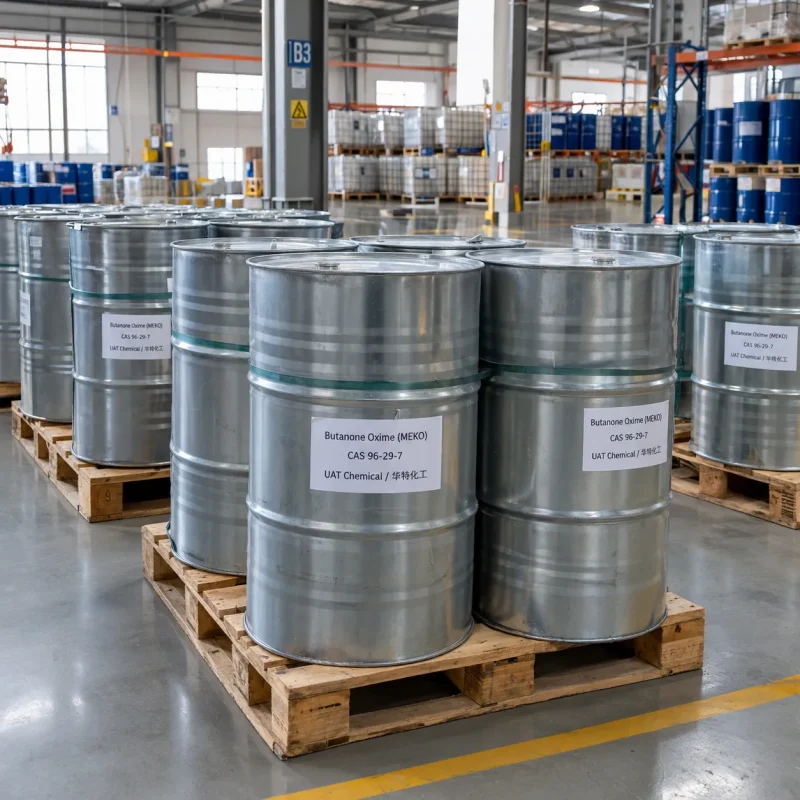
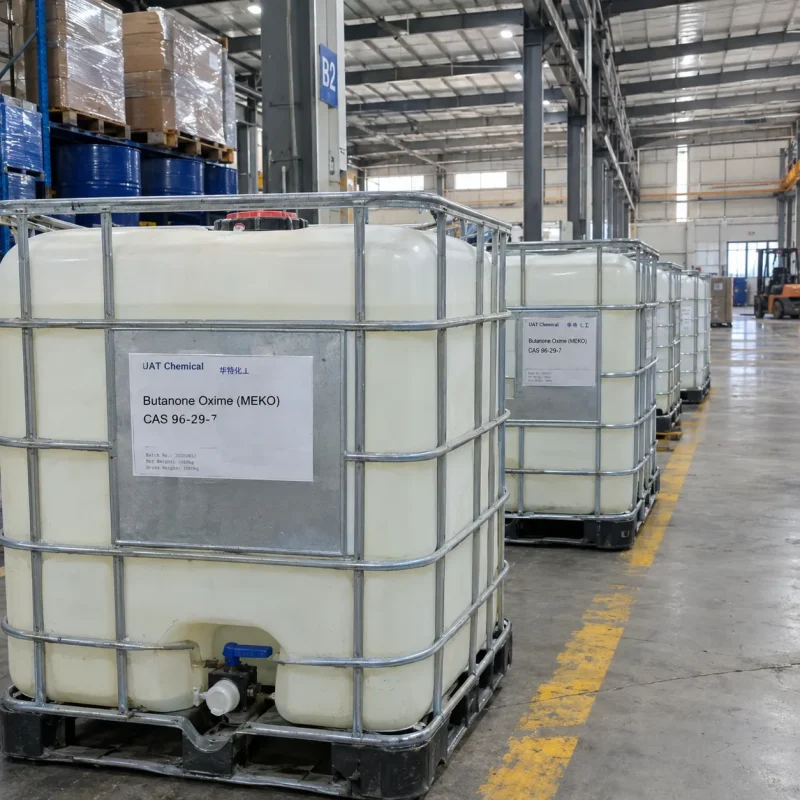
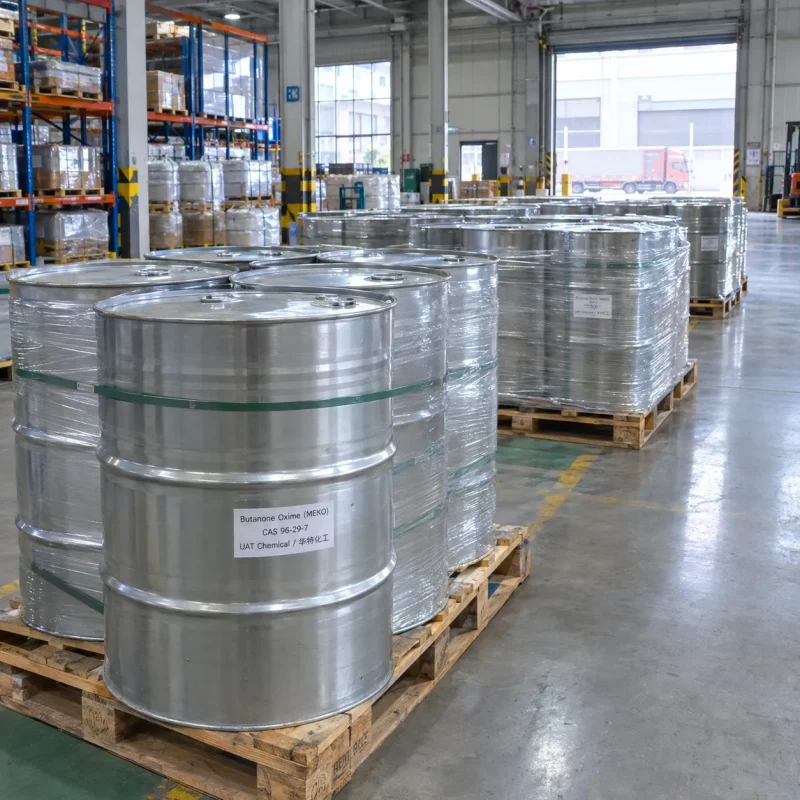
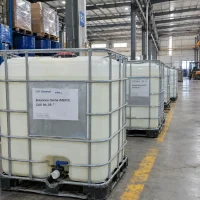
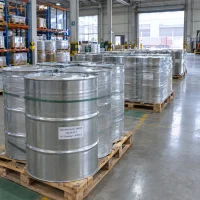
- Packaging: 25 kg drum; 180/190 kg steel drum; 950 kg IBC
Product Overview
Butanone oxime is a ketoxime, a family of nitrogen-bearing liquids that temporarily lock reactive chemistry and then leave on heating or exposure to air. That temporary action is the whole value of MEKO in coatings: it holds back oxidation in a sealed can and lets the film dry normally once spread, and it blocks isocyanate groups until the stoving cycle begins. A high-assay, dry, near-water-white lot is preferred, because color or water carried in with the oxime shows up in pale paints and clear topcoats. It is a combustible industrial liquid with a musty odor, handled away from oxidizers, strong acids and uncapped isocyanates.
Main Applications
Antiskinning agent for paints and inks
Oxygen and the cobalt or manganese driers in alkyd paint start crosslinking on a partly used can, leaving a rubbery skin that ruins the batch. A tiny MEKO dose binds those drier metals and scavenges the radicals behind the process, keeping the can skin-free through shelf life. Once spread, MEKO evaporates and through-drying, hardness and gloss develop normally across alkyd, PU and phenolic paints, road-marking paints and inks.
Blocking agent for one-component polyurethanes
MEKO reacts reversibly with isocyanate groups, capping TDI, HDI or MDI so a blocked system stays stable as a single pack. In a stoving oven around 130 to 160 °C the oxime deblocks and the freed isocyanate cures the polyol into a tough film, backing automotive electrodeposition primers, one-component and powder coatings and PU adhesives.
- Neutral-cure silicone sealants. Feedstock for the ketoxime silanes used as crosslinkers in oxime-cure RTV silicone.
- Resin and ink storage. Inhibitor that prevents premature gelling and skinning during storage and transport.
- Synthesis and water treatment. Oxime intermediate, and an oxygen scavenger for boiler feedwater in programs that allow it.
Product Data
Typical data for the high-purity liquid grade. Assay, water, color and acidity vary slightly by lot and are printed on the COA.
| Parameter | Value |
|---|---|
| Appearance | Clear colorless to pale-yellow liquid |
| Grade | High-purity industrial liquid |
| Molecular Weight | 87.12 |
| Density (20 °C) | about 0.92 g/mL |
| Boiling Point | about 152 °C |
| Melting Point | about −30 °C |
| Flash Point | about 60 °C (closed cup) |
| UN Classification | UN 1993, Class 3, packing group III |
Packing, Storage and Safety
Packing. MEKO leaves in 25 kg drums, 180 kg or 190 kg galvanized steel drums and 950 kg IBCs; neutral marks, private labels and export palletizing are available for regular orders, with COA and SDS in the consignment.
Storage. Keep containers sealed in a cool, ventilated warehouse away from heat, ignition sources, strong oxidizers, strong acids and uncapped isocyanates. The liquid is combustible and can form hazardous products with strong acids, so segregation matters. It melts near −30 °C, so it stays liquid through ordinary winters without heated storage.
Safety. MEKO irritates skin and eyes and may sensitize after repeated contact; under EU CLP it carries a carcinogenicity classification, so the SDS and local rules govern labeling and content thresholds, and alternative oximes are often evaluated where that label applies. Wear goggles and gloves under ventilation.
Frequently Asked Questions
Q: Will MEKO stop my paint from drying?
A: No. It only stops skinning in the sealed can; once applied it evaporates, the driers work and the film dries normally.
Q: How does it work in one-component polyurethanes?
A: It caps isocyanates in one-component PU and powder coatings, deblocking near 130 to 160 °C to free NCO and cure the film.
Q: Does it freeze in winter?
A: Rarely, with a melting point around −30 °C; drums and IBCs stay pumpable in ordinary cold weather without heating.
Q: How is it packed and shipped?
A: It goes in 25 kg drums, 180 kg or 190 kg steel drums and 950 kg IBCs as a combustible liquid, with COA and SDS.
Related products
Ready to Source? Talk to Our Engineers
Industrial Chemical Raw Materials, Factory-Direct — Quote Within 1 Hour
Stable high-purity supply, flexible packaging and complete compliance documentation for your formulations — exporting worldwide since 2006.
- 1000+Products
- 200+QC Protocols
- 7–15Days Delivery
- Factory-Direct Pricing
- COA / TDS / SDS Included
- Free Samples for Testing
- ISO 9001 Certified