
Disperse Violet 26 CAS 6408-72-6
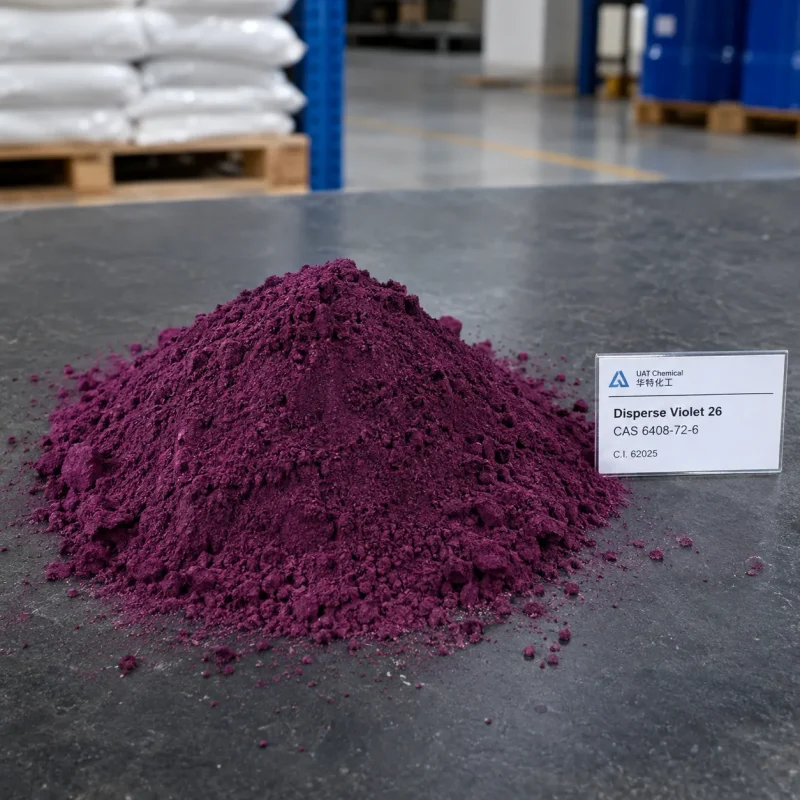
Disperse Violet 26 (CAS 6408-72-6) is an anthraquinone disperse dye, sold as a reddish-brown to dark violet powder. It is the standard choice for bright reddish-violet shades on polyester, dyed at high temperature and pressure, and it also colours engineering plastics and printing inks. We supply it at 100% strength with a shade sample on every lot. Tell us the fibre or resin and the depth you need, and we will confirm the right strength.
- CAS: 6408-72-6
- EC Number: 229-066-0
- Synonyms: C.I. Disperse Violet 26; Disperse Violet H-FRL; C.I. 62025
- Molecular Formula: C₂₆H₁₈N₂O₄
- Molecular Weight: 422.43 g/mol
- Chemical Class: Anthraquinone disperse dye
- Appearance: Reddish-brown to dark violet powder
- Color Strength: 100% ± 3%
- Main Uses: Polyester dyeing, blend printing, engineering plastic coloration, inks
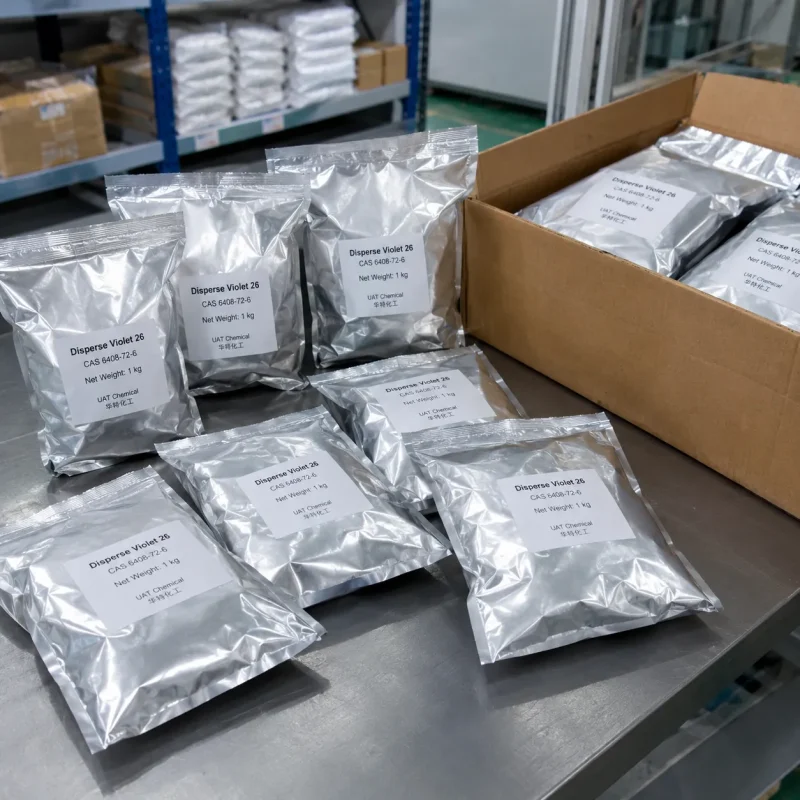
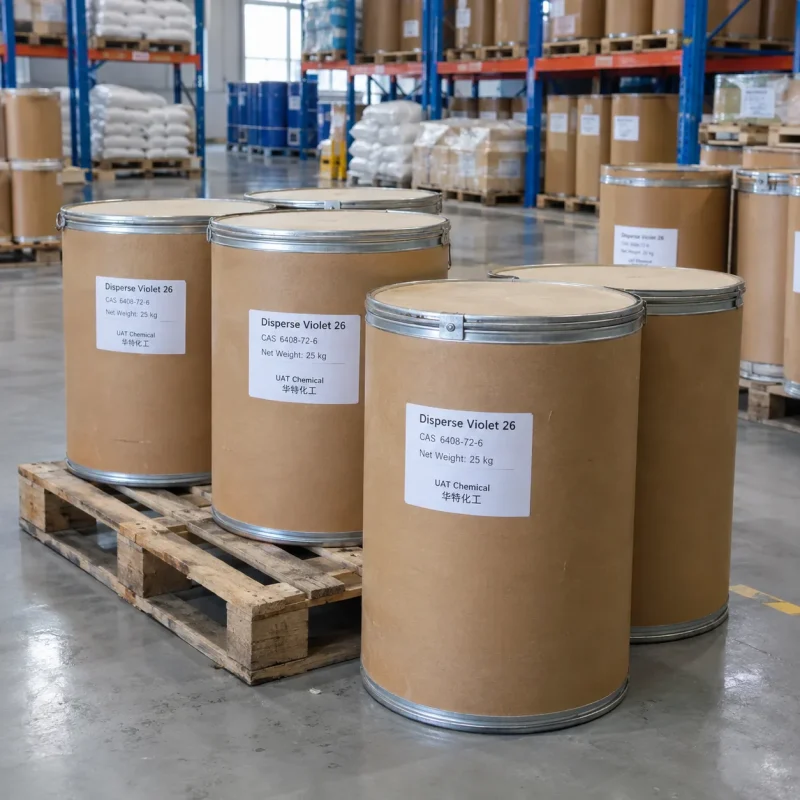
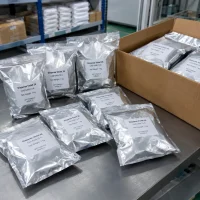
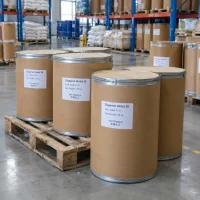
- Packaging: 25 kg fiber drum / kraft bag with PE liner, custom packing available
What Disperse Violet 26 Is
Disperse Violet 26 is an anthraquinone disperse dye that gives a bright reddish-violet shade. Disperse dyes work on polyester because they are barely soluble in water; they are applied as a fine dispersion and penetrate the fibre under high temperature and pressure, where they stay locked in. The same heat stability that suits dyeing also lets this dye colour plastics, which is unusual for a textile dye.
How It Behaves in the Dye Bath
Three things matter when you run this dye. It works in a weakly acidic bath, pH 4.5 to 5.5 with acetic acid, and it is not alkali-resistant, so keep strong alkali out of the recipe. It dyes at 130 °C in high-temperature high-pressure machines, or by thermofixation at 210 to 220 °C on continuous lines. And its sublimation fastness is moderate, 3 to 4, which means it suits apparel and home textiles but not goods that face hot ironing or high-temperature finishing after dyeing.
Where It Is Used
- Polyester fabric. The core use: exhaust dyeing of polyester filament, staple and knit or woven goods in pale to medium reddish-violet shades.
- Polyester-cotton blends. Pairs with vat or reactive dyes so both fibres take colour in the same run, cutting process steps.
- Engineering plastics. Colours PS, ABS, PMMA, PC and PET resins, surviving processing temperatures up to 300 °C for consistent violet parts.
- Inks and specialties. Solvent-based packaging inks, marker pen inks and wax colouring where a heat-stable violet is needed.
Quality Specifications
| Test Item | Standard Specification |
|---|---|
| Appearance | Reddish-brown to dark violet powder |
| Color Strength (vs. standard) | 100% ± 3% |
| Shade (vs. standard) | Similar |
| Moisture Content | ≤ 5.0% |
| Insoluble Matter (in DMF) | ≤ 0.5% |
| Particle Size (90% pass) | ≤ 2 μm (dispersion grade) |
| pH (1% aqueous dispersion) | 5.0 – 7.5 |
| Heavy Metals (as Pb) | ≤ 20 ppm |
Fastness on Polyester
| Fastness Property | Rating (ISO / AATCC scale) |
|---|---|
| Light Fastness | 6 – 7 |
| Sublimation Fastness (180 °C, 30 s) | 3 – 4 |
| Washing Fastness (staining on polyester) | 4 – 5 |
| Washing Fastness (staining on cotton) | 3 – 4 |
| Dry Rubbing Fastness | 4 – 5 |
| Perspiration Fastness | 4 – 5 |
Packaging, Storage and Ordering
- Packed in 25 kg fiber drums or PE-lined kraft bags, with liquid dispersion grades on request. Keep sealed below 30 °C, away from sunlight, strong alkali and oxidizers; the powder absorbs moisture and loses dispersion quality, so reseal opened bags.
- Non-hazardous for normal ocean and land transport. Dye dust irritates the airways and skin, so wear a mask, goggles and gloves in a ventilated area.
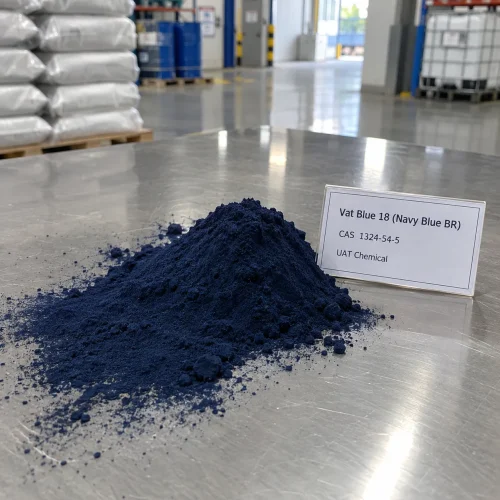
- COA, TDS and SDS come with every shipment, a shade sample is included, and quotes go out within one working day. On polyester-cotton goods it runs with Vat Blue 18 CAS 1324-54-5, which takes the cotton portion in the same bath.
FAQ
Q: What pH should the dye bath be?
A: Keep it at 4.5-5.5 with acetic acid; the dye is not alkali-fast above pH 8.
Q: Can it dye nylon or acetate?
A: It suits triacetate, not nylon or acrylic, where other dye classes give better results.
Q: Can it run with vat dyes on blends?
A: Yes, in one bath for solid shades, or print it alongside reactive dyes on blends.
Related products
Ready to Source? Talk to Our Engineers
Industrial Chemical Raw Materials, Factory-Direct — Quote Within 1 Hour
Stable high-purity supply, flexible packaging and complete compliance documentation for your formulations — exporting worldwide since 2006.
- 1000+Products
- 200+QC Protocols
- 7–15Days Delivery
- Factory-Direct Pricing
- COA / TDS / SDS Included
- Free Samples for Testing
- ISO 9001 Certified