
Tannic Acid CAS 1401-55-4
Tannic Acid (CAS 1401-55-4) is a natural polyphenol powder, the gallotannin extracted from Chinese gallnuts, oak bark and sumac. Its one defining trick is grabbing proteins and pulling them out of solution, which is why it clears wine and beer, works as an astringent in medicines, tans leather and removes heavy metals from water. We supply food, industrial and USP grades in 25 kg drums and bags. Tell us the application and the standard you need to meet, and we will point you to the right grade.
- CAS: 1401-55-4
- EC Number: 215-753-2
- Synonyms: Tannin; gallotannic acid; gallotannin; Chinese tannin
- Molecular Formula: C₇₆H₅₂O₄₆
- Molecular Weight: 1701.2 g/mol
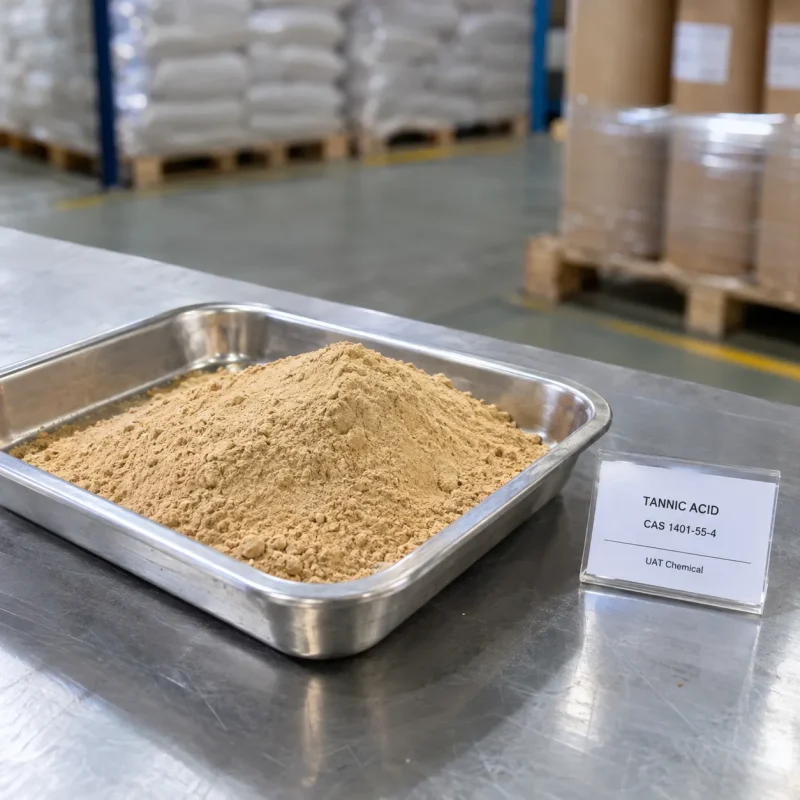
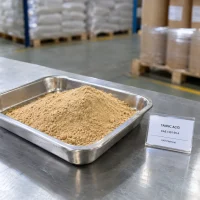
- Appearance: Light yellow to light brown powder
- Tannin Content: ≥ 93 – 98% (food); ≥ 90% (USP); ≥ 78 – 86% (industrial)
- Solubility: Freely soluble in water and ethanol
- Main Uses: Beverage clarification, pharma astringent, leather tanning, water treatment
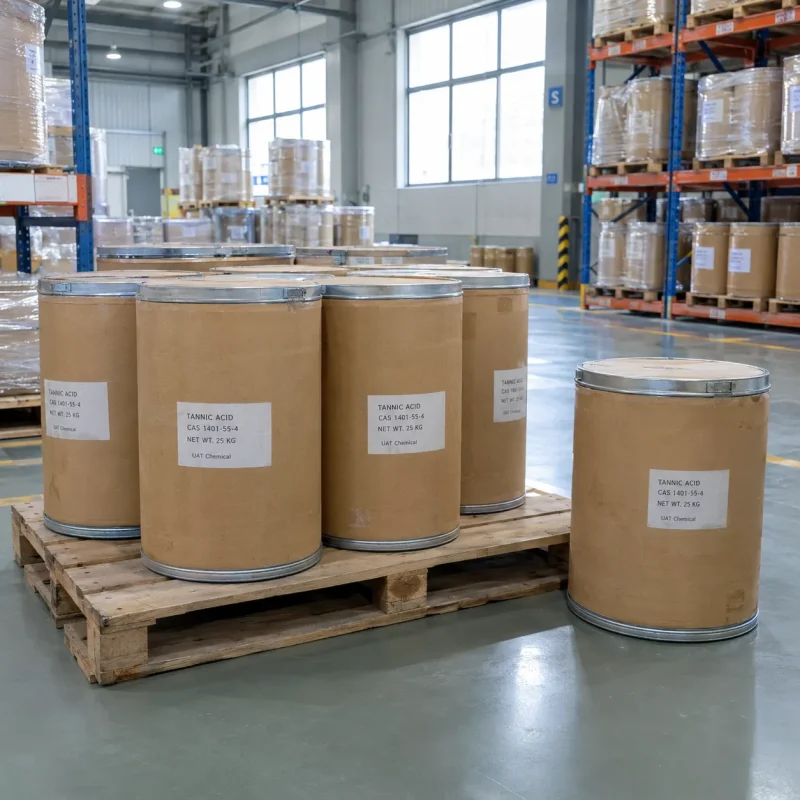
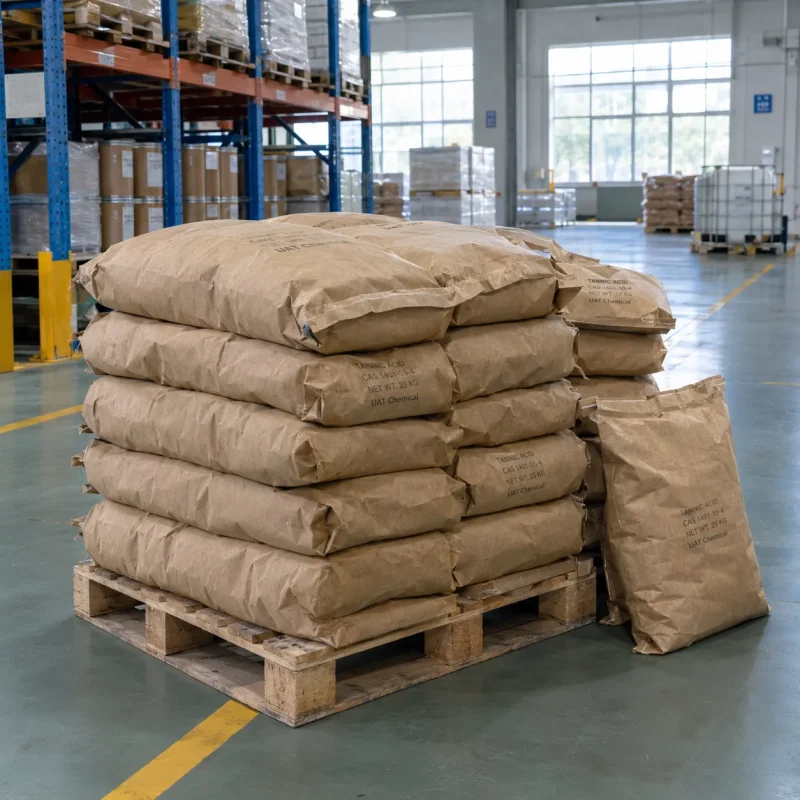
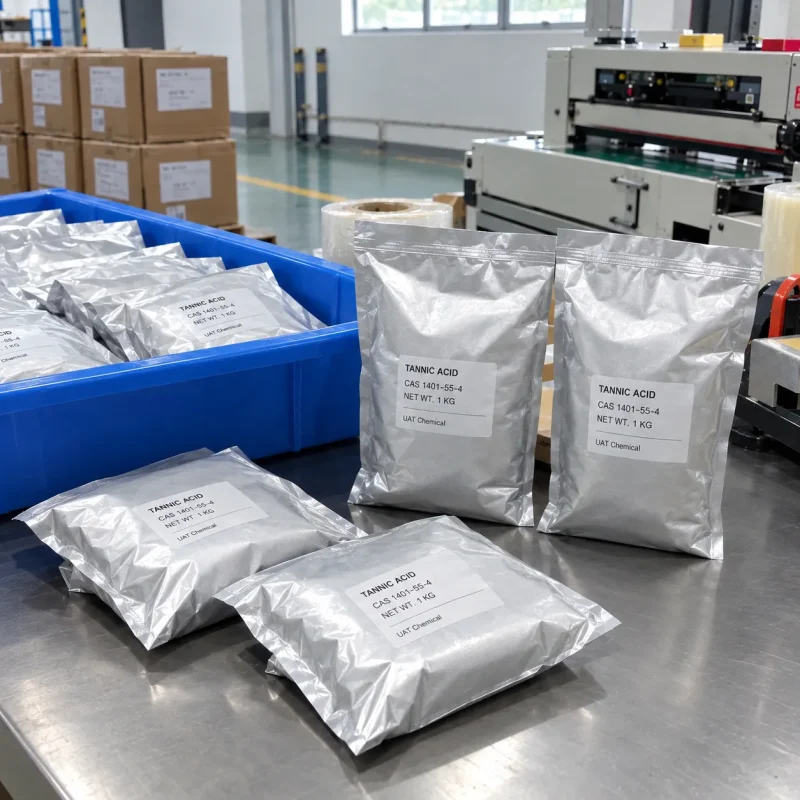
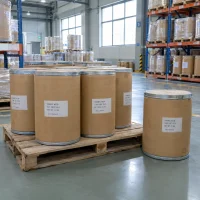
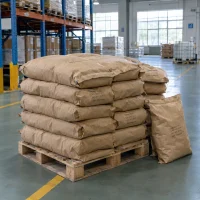
- Packaging: 25 kg fiber drum / kraft bag with PE liner, custom packing available
What Tannic Acid Is
Tannic acid is not one pure molecule; it is a natural mixture of gallotannins, built from a sugar core surrounded by gallic acid units. It comes from plant sources, mainly Chinese gallnuts, oak bark and sumac. Tannic acid binds proteins and pulls them out of solution, the same reaction that gives tea and red wine their drying, astringent mouthfeel. That single property, plus its ability to grab metal ions, explains almost everything it is used for.
Food Grade, Industrial Grade or USP?
The three grades differ in tannin content, colour and, most importantly, heavy-metal limits. Food grade is the cleanest for wine, beer and juice processing. USP grade is made for pharmaceuticals, with tight purity controls for topical and oral use. Industrial grade is the economical workhorse for leather, water treatment and general chemical use, where cosmetic purity is not needed. If you are unsure which standard applies, tell us the country you ship to and the end use, and we will recommend the compliant grade.
Where Tannic Acid Is Used
- Wine, beer and juice. The classic fining agent: it binds haze-forming proteins and lets them settle out, leaving a clear, stable beverage, typically dosed at 5 – 50 g/hL.
- Pharmaceutical and cosmetics. Astringent in haemorrhoid ointments, anti-diarrheal formulations, mouthwashes and skin toners, where it tightens tissue and calms irritation.
- Leather. The oldest use of all. It penetrates raw hide and cross-links the collagen, turning animal skin into stable, water-resistant vegetable-tanned leather for belts, soles and saddlery.
- Water and industry. Chelates heavy metals such as lead, copper and cadmium in wastewater, a starting material for gallic acid and pyrogallol, a component of iron gall ink, a dye mordant and a boiler water treatment.
Specifications at a Glance
| Parameter | Food Grade | Industrial Grade | USP / Pharma Grade |
|---|---|---|---|
| Tannin Content | ≥ 93 – 98% | ≥ 78 – 86% | ≥ 90% |
| Appearance | Light yellow powder | Light brown powder | Light yellow powder |
| Loss on Drying | ≤ 9.0% | ≤ 9.0% | ≤ 9.0% |
| Water Insolubles | ≤ 0.5% | ≤ 0.6% | ≤ 0.5% |
| Residue on Ignition | ≤ 1.0% | ≤ 1.5% | ≤ 1.0% |
| Heavy Metals (as Pb) | ≤ 20 ppm | ≤ 40 ppm | ≤ 30 ppm |
| Arsenic | ≤ 3 ppm | ≤ 5 ppm | ≤ 3 ppm |
Handling, Storage and Ordering
- Keep bags sealed below 30 °C, away from light, oxidizers and alkaline materials; the powder absorbs moisture and darkens on exposure. Prepare solutions fresh, because the dissolved product slowly oxidizes and deepens in colour.
- Use stainless steel or plastic vessels, not iron. Tannic acid reacts with iron to form blue-black tannate, and the powder stains skin and fabric brown, so wear gloves and an apron when handling.
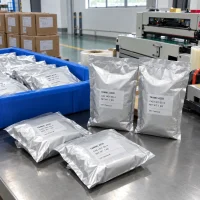
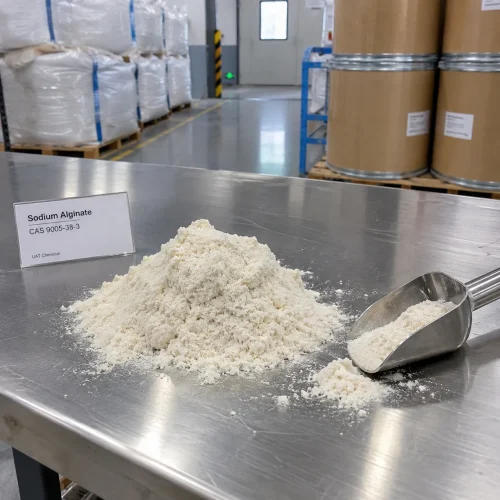
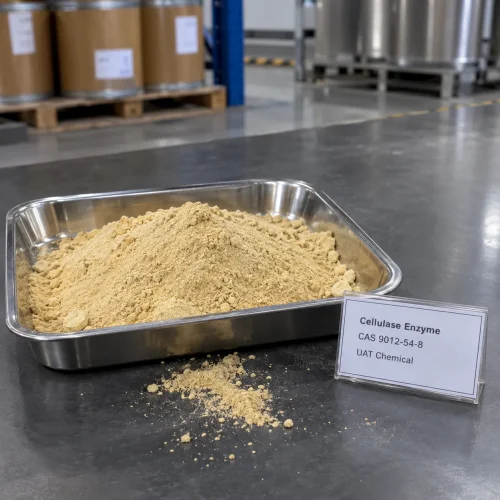
- Non-hazardous for normal transport; dust can irritate the eyes and airways, so wear a mask and goggles when emptying bags. Packed in 25 kg fiber drums or PE-lined kraft bags, with samples, COA, TDS and SDS on every order. It sits alongside other natural extracts and processing aids such as Sodium Alginate CAS 9005-38-3 and Enzyme Cellulase CAS 9012-54-8.
FAQ
Q: What is the difference between tannic acid and tannin?
A: Tannin is the broad polyphenol family; tannic acid is the gallotannin grade in trade.
Q: How is tannic acid used in wine?
A: It is added to bind haze proteins so they drop out, leaving clear, stable wine.
Q: Why does tannic acid turn things black?
A: It reacts with iron to form blue-black iron tannate, the basis of old ink.
Related products
Ready to Source? Talk to Our Engineers
Industrial Chemical Raw Materials, Factory-Direct — Quote Within 1 Hour
Stable high-purity supply, flexible packaging and complete compliance documentation for your formulations — exporting worldwide since 2006.
- 1000+Products
- 200+QC Protocols
- 7–15Days Delivery
- Factory-Direct Pricing
- COA / TDS / SDS Included
- Free Samples for Testing
- ISO 9001 Certified