
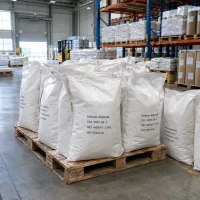
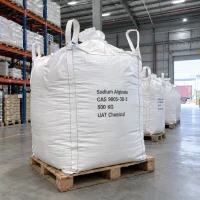
Sodium Alginate CAS 9005-38-3
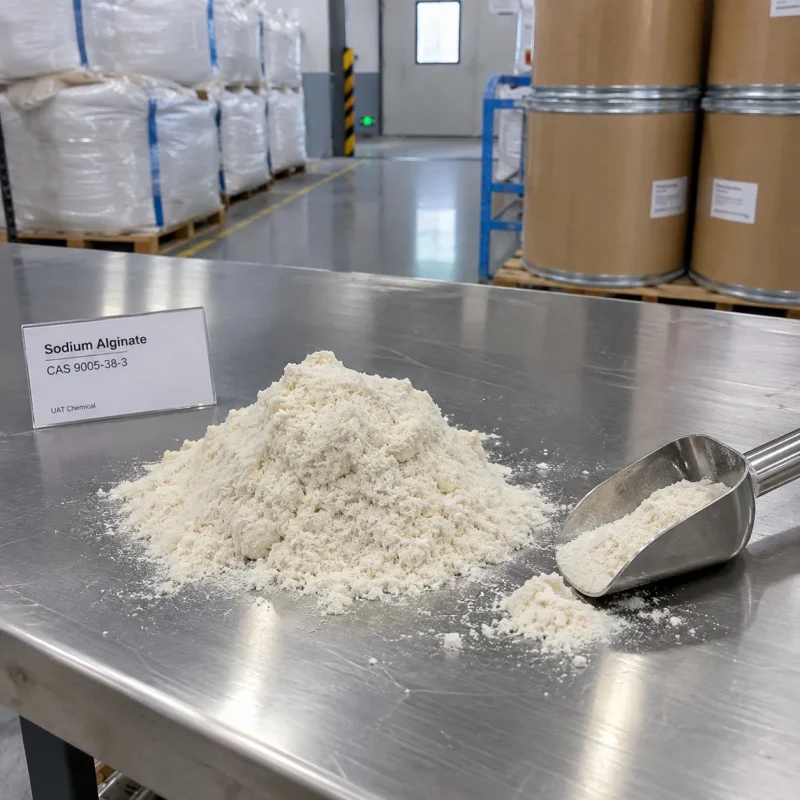
Sodium Alginate (CAS 9005-38-3) is a natural gum extracted from brown seaweed, sold as a white to pale yellow powder. It thickens, stabilizes and gels in cold water, which makes it a standard food additive (E401), a binder in tablets, a thickener in reactive dye printing, and the base of alginate gels and films. We supply food, pharmaceutical and textile grades across a low to extra-high viscosity range in 25 kg bags. Tell us the grade and target viscosity, and we will match the lot.
- CAS: 9005-38-3
- EC Number: 618-415-6
- Synonyms: Algin; alginic acid sodium salt; kelp gum
- Source: Brown seaweed extract
- Appearance: White to pale yellow powder / granules
- Viscosity (1%, 20 °C): 50 to 1000+ mPa·s, multiple grades
- pH (1% solution): 6.0 to 8.0
- Main Uses: Food thickening and gelling, pharmaceutical binder, textile printing
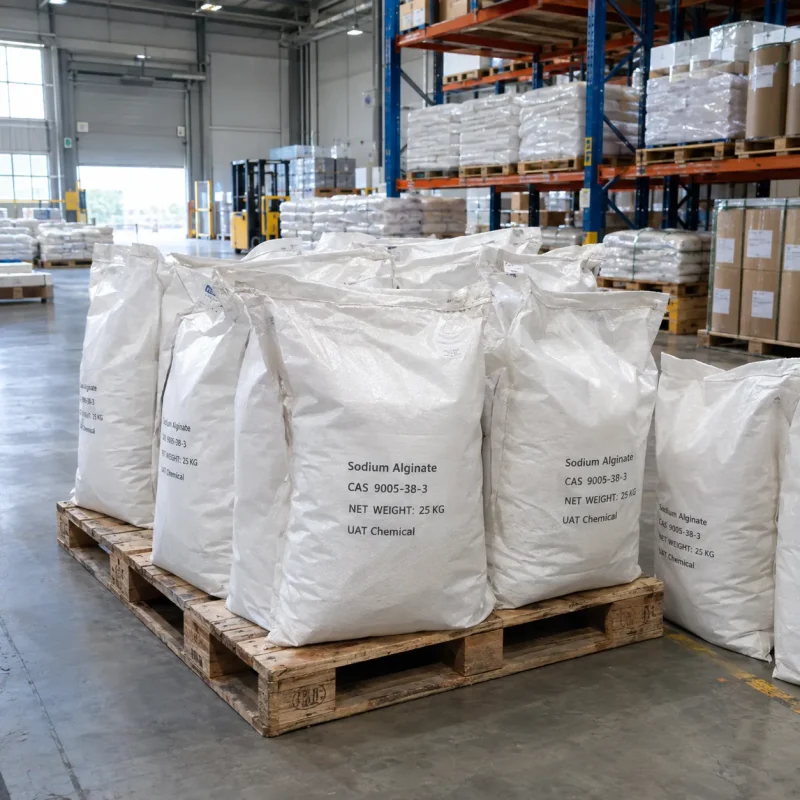
- Packaging: 25 kg kraft bag with PE liner; fiber drum, custom packing available
What Sodium Alginate Is
Sodium alginate is the sodium salt of alginic acid, a natural polysaccharide harvested from brown seaweed. It dissolves in cold water to make a smooth, viscous solution, and it forms a firm gel in the presence of calcium without any heating. Because it is natural, edible and easy to work with, it has become a common seaweed gum in food, pharmaceuticals and technical industries.
Picking the Right Viscosity Grade
Sodium alginate is bought by viscosity, measured on a 1% solution at 20 °C, and the right range depends entirely on the job. Low viscosity grades pour and pump easily, so they suit textile printing pastes, beverages and high-solids systems. Medium grades do the everyday thickening work in ice cream, sauces and pharmaceutical suspensions. High and extra-high grades build strong gels and films at low dosage, used in restructured foods, wound dressings and industrial binders. Tell us what you are making, and we will suggest the range rather than guess.
Where It Is Used
- Food and beverage. E401 thickener and stabilizer in ice cream, yogurt, sauces and drinks, plus gelling in jellies, restructured fruit and spherification, and a binder in meat and noodles.
- Pharmaceutical. Tablet binder and disintegrant, suspending agent, alginate rafts in reflux formulations, and calcium alginate in wound dressings and cell encapsulation.
- Textile printing. The main thickener for reactive dye pastes on cotton and viscose, giving sharp prints that wash out cleanly.
- Industrial. Binder in paper sizing, foundry molds and electrode coatings, viscosifier in drilling mud, and film material for biodegradable packaging.
Grade Selection by Viscosity
| Viscosity Grade | Range (1%, 20 °C) | Typical Applications |
|---|---|---|
| Low | 50 to 150 mPa·s | Textile printing pastes, beverages, transparent systems |
| Medium | 150 to 500 mPa·s | General food thickening, ice cream, sauces, suspensions |
| High | 500 to 1000 mPa·s | Gelling, restructured foods, wound dressings |
| Extra-high | 1000+ mPa·s | Low-dosage thickening, films, heavy-duty binders |
Quality Specifications
| Test Item | Food Grade (GB/FCC) | Pharmaceutical Grade (USP/CP) |
|---|---|---|
| Appearance | White to pale yellow powder | White to off-white powder |
| Sodium Alginate Content | ≥ 90.0% | ≥ 90.0% |
| Moisture | ≤ 15.0% | ≤ 15.0% |
| Ash (sulfated) | 18.0 to 27.0% | 18.0 to 27.0% |
| pH (1% solution) | 6.0 to 8.0 | 6.0 to 8.0 |
| Lead (Pb) | ≤ 5 ppm | ≤ 2 ppm |
| Arsenic (As) | ≤ 3 ppm | ≤ 2 ppm |
Dissolving, Storage and Ordering
- The powder is hygroscopic and hydrates fast, so add it slowly to vigorously stirred soft water, or pre-blend with sugar or salt, to stop lumps. Hard water with high calcium causes early gelling, so use softened or deionized water for the cleanest solution.
- Keep bags sealed below 25 °C in a dry store, away from sun, strong acids and calcium-rich materials; shelf life is about 24 months. The powder is non-hazardous for normal transport and dust can irritate airways, so wear a mask when emptying bags.
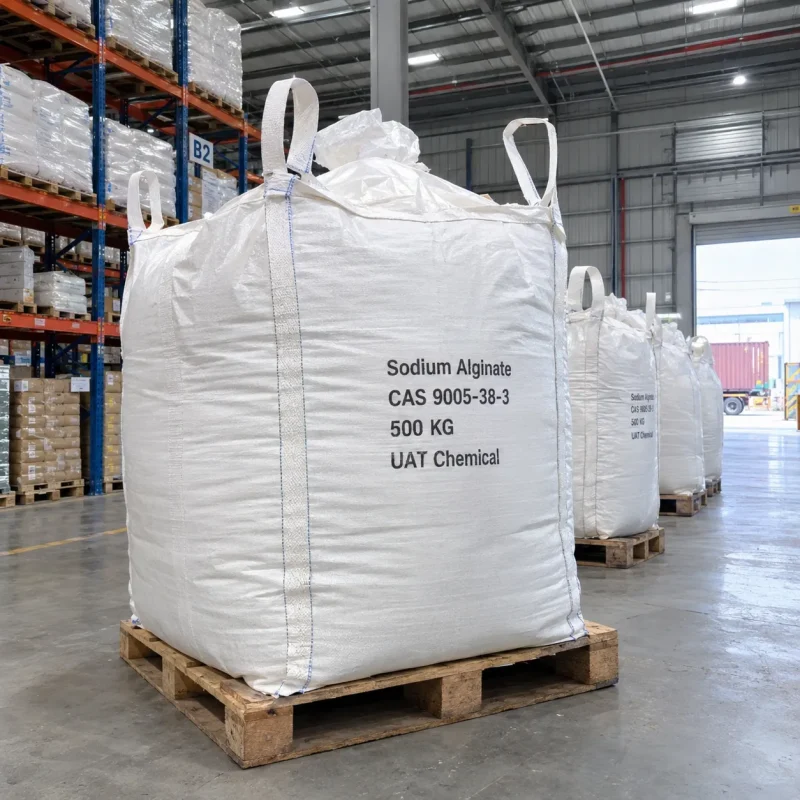
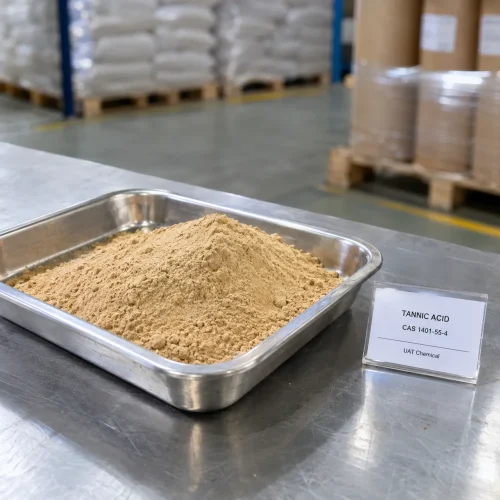
- Packaging: 25 kg PE-lined kraft bags or fiber drums, with bulk bags on request. COA, TDS and SDS come with every order, samples are available, and quotes go out within one working day. Related natural gum and textile lines: Tannic Acid CAS 1401-55-4.
FAQ
Q: How do I choose the viscosity grade?
A: By viscosity: low for printing and drinks, medium for food, high for gels and films.
Q: Is it a natural product?
A: Yes. It comes from brown seaweed, carries E401 and GRAS, and is a natural food thickener.
Q: How should it be dissolved?
A: Dissolve slowly in soft water while stirring; avoid hard water, whose calcium sets it early.
Related products
Ready to Source? Talk to Our Engineers
Industrial Chemical Raw Materials, Factory-Direct — Quote Within 1 Hour
Stable high-purity supply, flexible packaging and complete compliance documentation for your formulations — exporting worldwide since 2006.
- 1000+Products
- 200+QC Protocols
- 7–15Days Delivery
- Factory-Direct Pricing
- COA / TDS / SDS Included
- Free Samples for Testing
- ISO 9001 Certified