
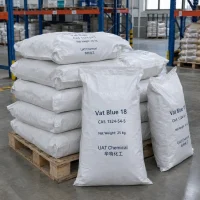
Vat Blue 18 (Navy Blue BR) CAS 1324-54-5
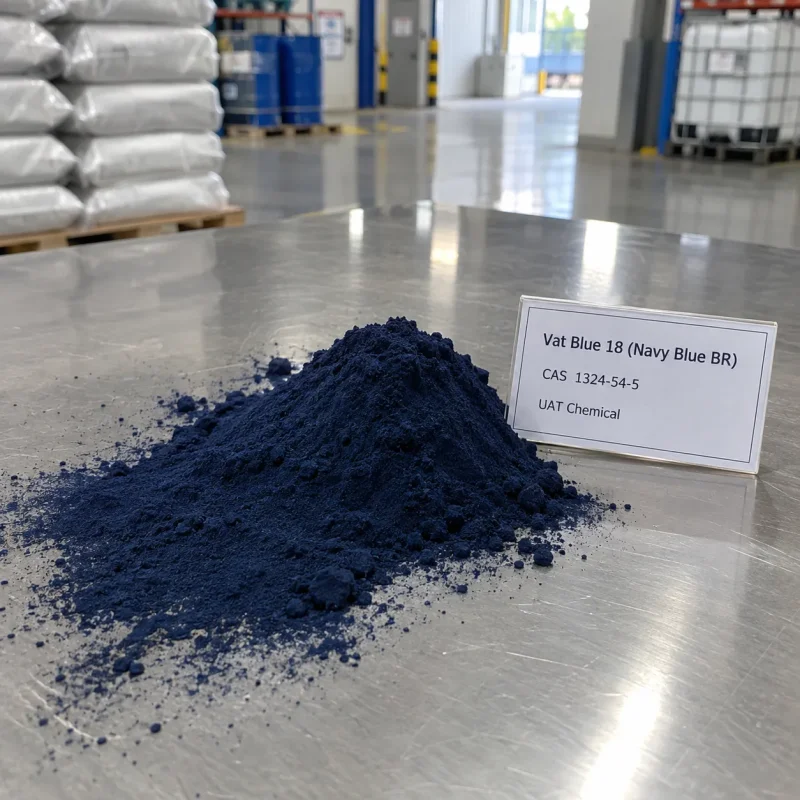
Vat Blue 18, traded as Navy Blue BR (CAS 1324-54-5), is an anthraquinone vat dye supplied as a deep blue to blue-black powder. It dyes cotton, viscose and silk through a reduction and oxidation cycle, and the finished colour stands up to years of washing and sunlight. We supply it at standard strength with a shade sample on every order. Tell us the fibre and the dyeing process, and we will confirm the strength and lot.
- CAS: 1324-54-5
- EC Number: 215-378-4
- Synonyms: C.I. Vat Blue 18; Vat Navy Blue RA; Navy Blue FB
- Molecular Formula: C₃₄H₁₃Cl₃O₂
- Chemical Class: Anthraquinone vat dye
- Appearance: Deep blue to blue-black powder
- Shade: Reddish navy blue, similar to standard
- Standard Strength: 100% ± 3%
- Main Uses: Cotton dyeing and printing, viscose and silk dyeing
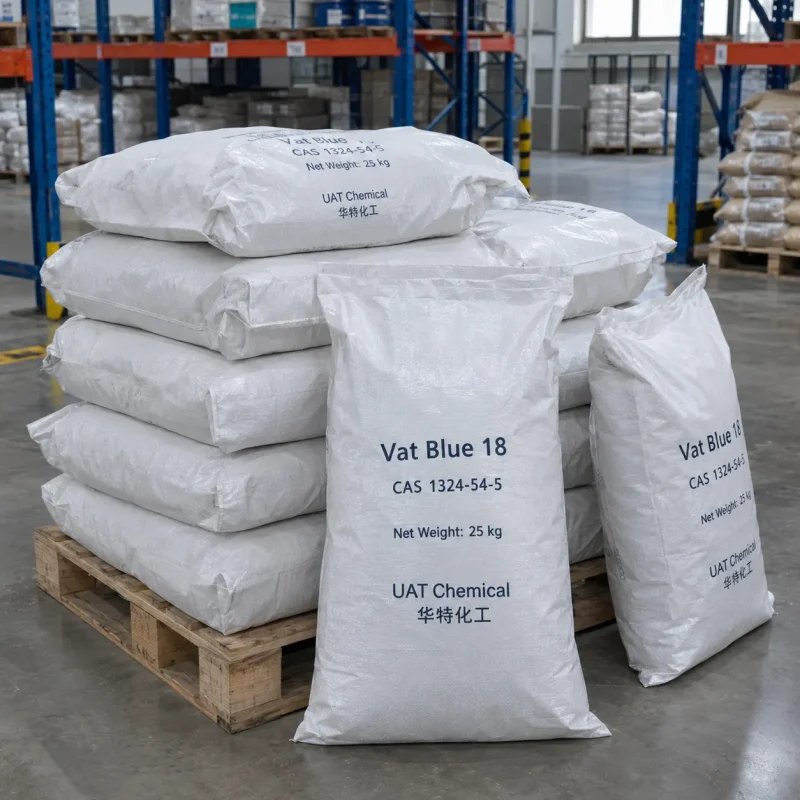
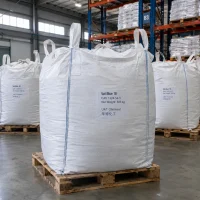
- Packaging: 25 kg fiber drum / kraft bag with PE liner, custom packing available
What Vat Blue 18 Is
Vat Blue 18 is a vat dye, the class that does not dissolve in water in its finished form. The dye is first converted into a soluble form with reducing chemicals, it enters the cotton fibre in that state, and oxidation then locks the colour back inside the fibre as an insoluble pigment. That is why vat-dyed goods keep their colour through hard washing and long sun exposure.
Strength and Shade, Batch after Batch
Two numbers matter when you buy a vat dye: strength and shade. Our standard is 100% ± 3%, so you can dose it against your existing recipe without reworking the formula. A shade sample travels with every order, and the batch is checked against that standard before dispatch, which keeps navy blue from drifting between lots. If your mill works at a different strength, tell us and we will supply it as a made-to-order strength.
Where It Is Used
- Cotton exhaust dyeing. The main use, for woven and knitted fabric in rope or beam form, giving a level reddish navy.
- Continuous pad-steam dyeing. High-volume runs on cotton and viscose, where speed and repeatability matter.
- Printing. Direct, resist and discharge printing on cotton, with the dye fixed by steaming.
- Viscose, silk and blends. Dyes viscose and silk, and the cotton portion of polyester-cotton blends in a two-bath process.
Quality Specifications
| Test Item | Standard Specification |
|---|---|
| Appearance | Deep blue to blue-black powder |
| Color Strength (vs. standard) | 100% ± 3% |
| Shade (vs. standard) | Similar |
| Moisture Content | ≤ 5.0% |
| Insoluble Matter (in H₂SO₄) | ≤ 0.5% |
| Particle Size (90% pass) | ≤ 3 μm (dispersion grade) |
| pH (1% aqueous dispersion) | 6.0 – 8.0 |
| Heavy Metals (as Pb) | ≤ 20 ppm |
Fastness on Cotton
| Fastness Property | Rating (ISO / AATCC, 1/1 depth) |
|---|---|
| Light Fastness | 7 – 8 |
| Soaping Fastness (95 °C, staining) | 4 – 5 |
| Soaping Fastness (95 °C, shade change) | 4 – 5 |
| Dry Rubbing Fastness | 4 – 5 |
| Wet Rubbing Fastness | 3 – 4 |
| Perspiration Fastness (acid / alkaline) | 4 – 5 |
| Chlorine Bleach Fastness | 3 – 4 |
| Mercerizing Fastness | 4 – 5 |
| Dry Cleaning Fastness | 4 – 5 |
Packaging, Storage and Ordering
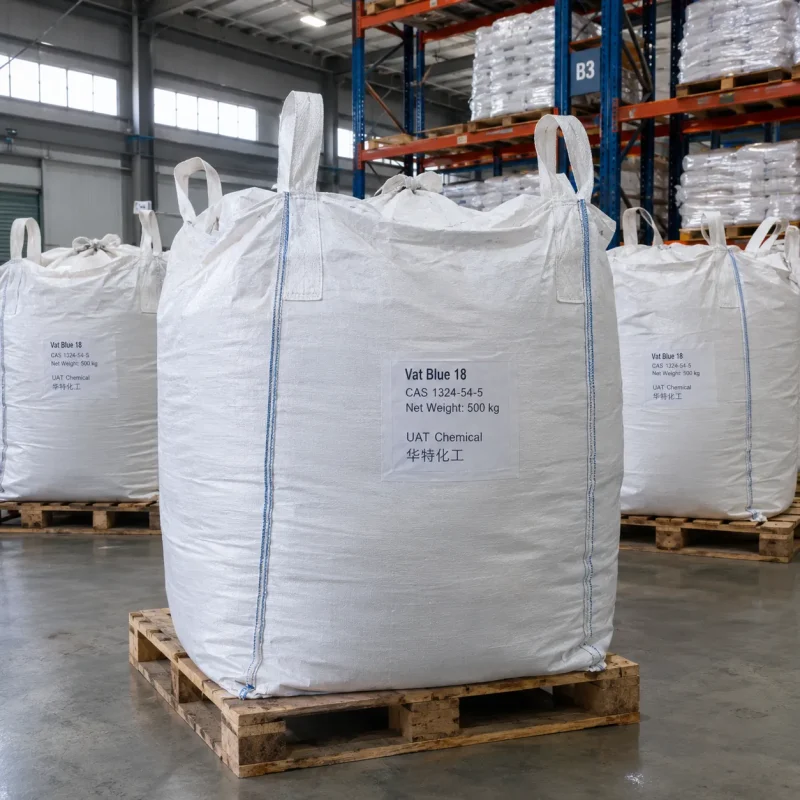
- Packed in 25 kg fiber drums or PE-lined kraft bags, with ultra-fine dispersion grades on request. Keep sealed below 30 °C, away from strong oxidizers, sunlight and humidity; the powder absorbs moisture and loses its dispersion quality, so reseal opened bags.
- Non-hazardous for normal ocean and land transport. Dye dust irritates the airways and skin, so wear a mask, goggles and gloves, and work in a ventilated area.
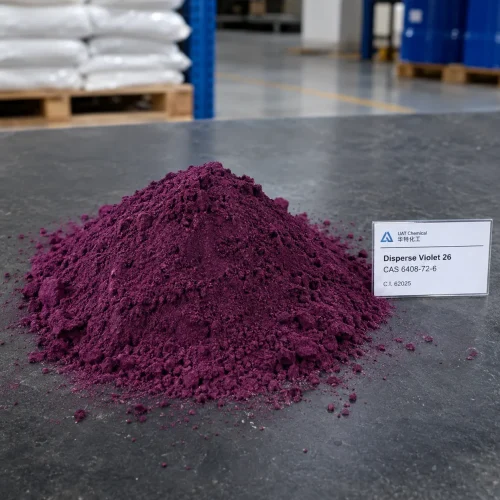
- COA, TDS and SDS come with every shipment, a shade sample is included, and quotes go out within one working day. It partners with Disperse Violet 26 CAS 6408-72-6 in polyester-cotton blends, where the cotton is vat-dyed and the polyester disperse-dyed in a separate bath.
FAQ
Q: What reducing agent is used for Vat Blue 18?
A: Sodium hydrosulfite with caustic soda, typically 2-5 g/L hydrosulfite and 2-4 g/L alkali.
Q: Why does the fabric look greenish right after dyeing?
A: The greenish tint is the leuco form; air or peroxide oxidation develops the navy shade.
Q: Can it dye polyester-cotton blends in one bath?
A: No. Use two baths: vat dye the cotton, then disperse-dye the polyester separately.
Related products
Ready to Source? Talk to Our Engineers
Industrial Chemical Raw Materials, Factory-Direct — Quote Within 1 Hour
Stable high-purity supply, flexible packaging and complete compliance documentation for your formulations — exporting worldwide since 2006.
- 1000+Products
- 200+QC Protocols
- 7–15Days Delivery
- Factory-Direct Pricing
- COA / TDS / SDS Included
- Free Samples for Testing
- ISO 9001 Certified