
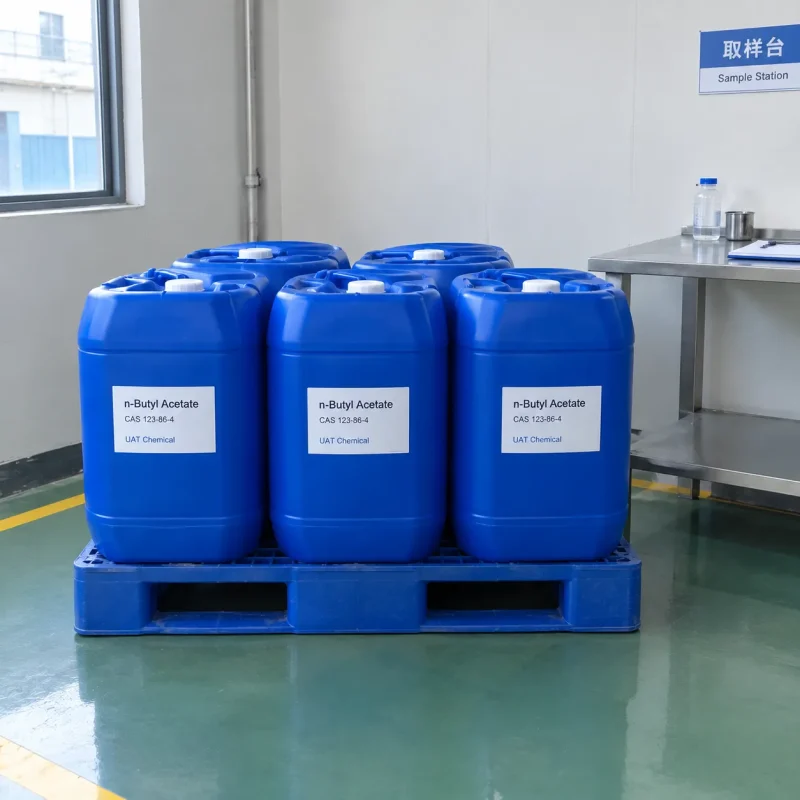
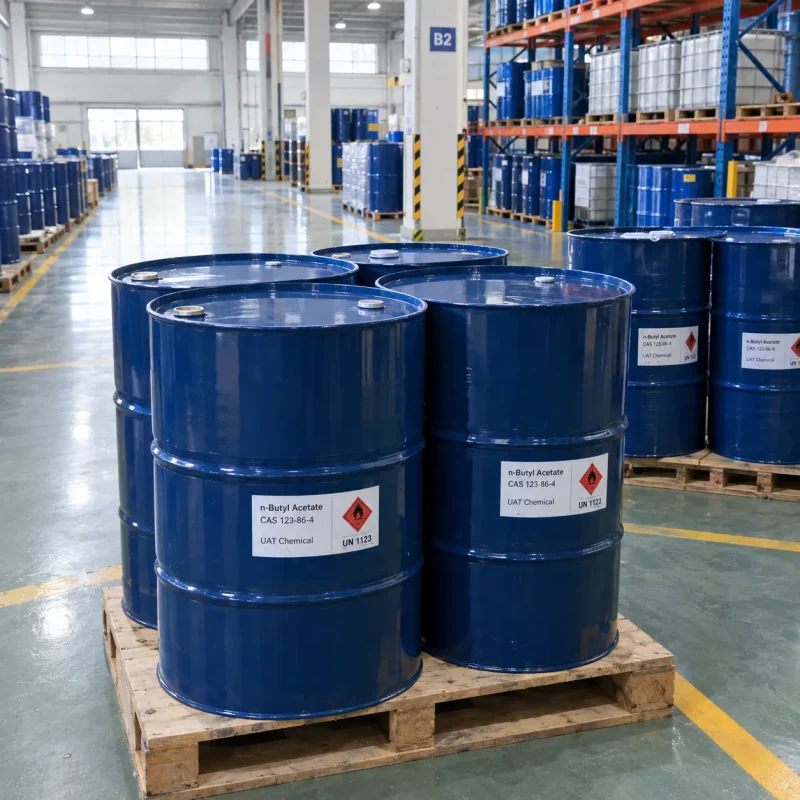
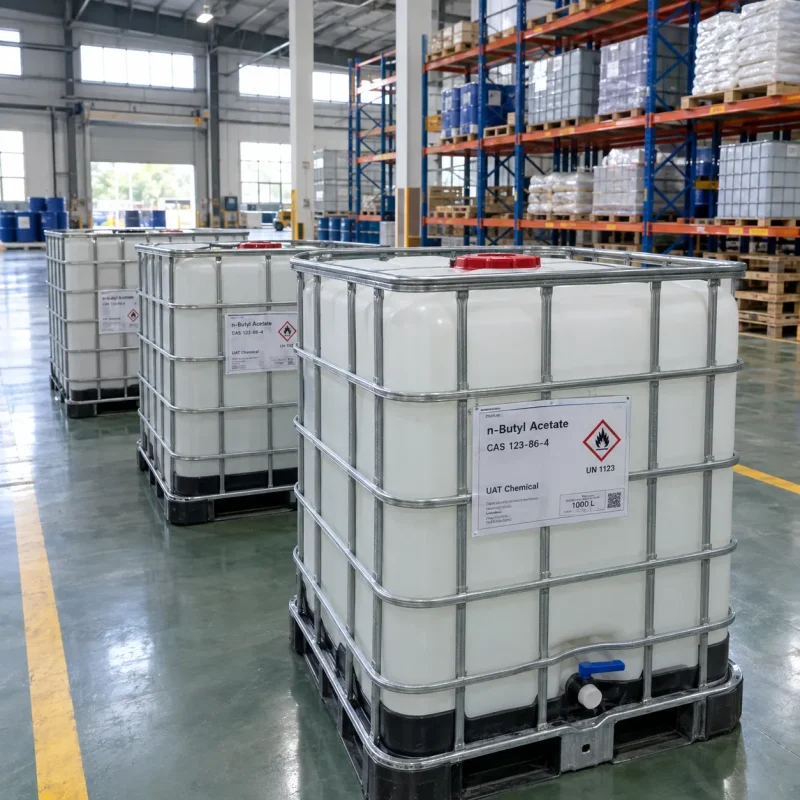
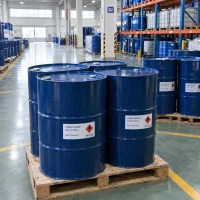
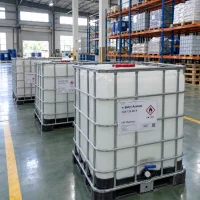
n-Butyl Acetate CAS 123-86-4
n-Butyl acetate (CAS 123-86-4) is a clear, colorless ester solvent used in solvent-based coatings, printing inks and adhesives. Its resin solvency and medium evaporation rate make it useful for adjusting application viscosity and the drying balance of solvent blends.
- Also known as: Butyl acetate; acetic acid n-butyl ester
- Molecular formula: C6H12O2
- Molecular weight: 116.16 g/mol
- Typical boiling range: 124-129 °C at 760 mmHg
- Typical density: Approximately 0.88 kg/L at 20 °C
- Grade selection: Confirm purity, water, alcohol and acidity limits for the intended application.
n-Butyl Acetate for Coatings, Inks and Adhesives
n-Butyl acetate is an ester solvent used to dissolve resins and adjust the application viscosity of solvent-based formulations. It is particularly useful in nitrocellulose lacquers and is also used with acrylic, alkyd and other compatible resins. Its medium evaporation rate gives formulators a way to balance solvent release with the time needed for flow and leveling.
The right choice depends on the binder, the rest of the solvent blend and the drying conditions. A solvent that performs well in one coating or ink may need a different blend ratio on another production line.
Applications
Paints and Coatings
In wood finishes and industrial coatings, n-butyl acetate acts as an active solvent for film-forming resins, including nitrocellulose, cellulose acetate butyrate, acrylics and alkyds. Solvent selection affects application viscosity and how the film develops during drying. Check resin solubility and film appearance with the complete formulation; adding this solvent alone does not guarantee freedom from blushing or orange peel.
Printing Inks
It is used in solvent-based printing inks, including flexographic systems, where resin solvency and solvent release both matter. The blend needs to suit the binder, substrate and press conditions. For a change in solvent supply or composition, compare ink viscosity, drying behavior and residual solvent against the existing formulation.
Adhesives
In compatible solvent-based adhesives, n-butyl acetate can serve as a resin solvent and viscosity-adjusting component. Evaluate the blend under the intended coating and drying conditions rather than selecting it by boiling point alone.
Typical Physical Properties
| Property | Typical Value |
|---|---|
| Appearance | Clear, colorless liquid |
| Molecular formula | C6H12O2 |
| Molecular weight | 116.16 g/mol |
| Boiling range at 760 mmHg | 124-129 °C |
| Density at 20 °C | Approximately 0.88 kg/L |
| Dynamic viscosity at 20 °C | Approximately 0.7 mPa·s |
| Solubility in water at 20 °C | Approximately 0.7% by weight |
These are typical physical properties, not guaranteed product specifications. Use the agreed specification and batch certificate of analysis (COA) for purchasing and acceptance.
Choosing a Solvent Specification
Purity alone is not enough to compare two offers. Review the test methods and impurity limits alongside the assay. For coating and ink applications, useful checks include:
- Water and alcohol content: agree limits appropriate to the resin system, particularly when evaluating a solvent for two-component polyurethane coatings. Do not assume that a general industrial solvent is urethane grade.
- Acidity: confirm the limit, reporting basis and test method, rather than comparing numbers with different units.
- Color and nonvolatile residue: include these in the specification when appearance or residue after evaporation is important.
- Distillation range: review it alongside the assay when consistency of the solvent blend matters.
For an enquiry to UATChem, send the intended application, required specification, quantity, preferred packing and destination port. Include any qualification or documentation requirements before an order is agreed.
Storage and Handling
n-Butyl acetate is a flammable solvent. Keep containers tightly closed in a suitable, well-ventilated storage area away from heat and ignition sources. Follow the safety data sheet (SDS) for the supplied material when planning ventilation, protective equipment, storage and transfer procedures. Confirm packing and transport requirements for the proposed shipment.
n-Butyl Acetate FAQ
Are butyl acetate and n-butyl acetate the same?
Butyl acetate commonly refers to n-butyl acetate, but the name can be confused with other butyl acetate isomers. Use CAS 123-86-4 on enquiries and purchase documents to identify the normal butyl ester.
Is n-butyl acetate a fast-drying solvent?
It is generally described as a medium-evaporating solvent. Evaporation tables often use n-butyl acetate as the reference with a value of 1.0; this is a comparison scale, not a drying time. Film thickness, airflow, temperature and the other solvents in the formulation affect actual drying.
Is it suitable for polyurethane coatings?
Suitable grades are used in two-component polyurethane coatings. Confirm the required water, alcohol and other impurity limits with the coating specification before selecting a grade; a high assay by itself does not establish suitability.
Does n-butyl acetate mix with water?
It has limited water solubility, approximately 0.7% by weight at 20 °C. This describes the amount of solvent that dissolves in water; it is not the water-content limit for a commercial solvent grade.
Related products
Ready to Source? Talk to Our Engineers
Industrial Chemical Raw Materials, Factory-Direct — Quote Within 1 Hour
Stable high-purity supply, flexible packaging and complete compliance documentation for your formulations — exporting worldwide since 2006.
- 1000+Products
- 200+QC Protocols
- 7–15Days Delivery
- Factory-Direct Pricing
- COA / TDS / SDS Included
- Free Samples for Testing
- ISO 9001 Certified