
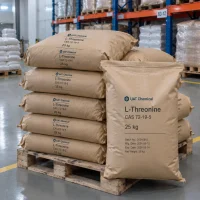
L-Threonine CAS 72-19-5
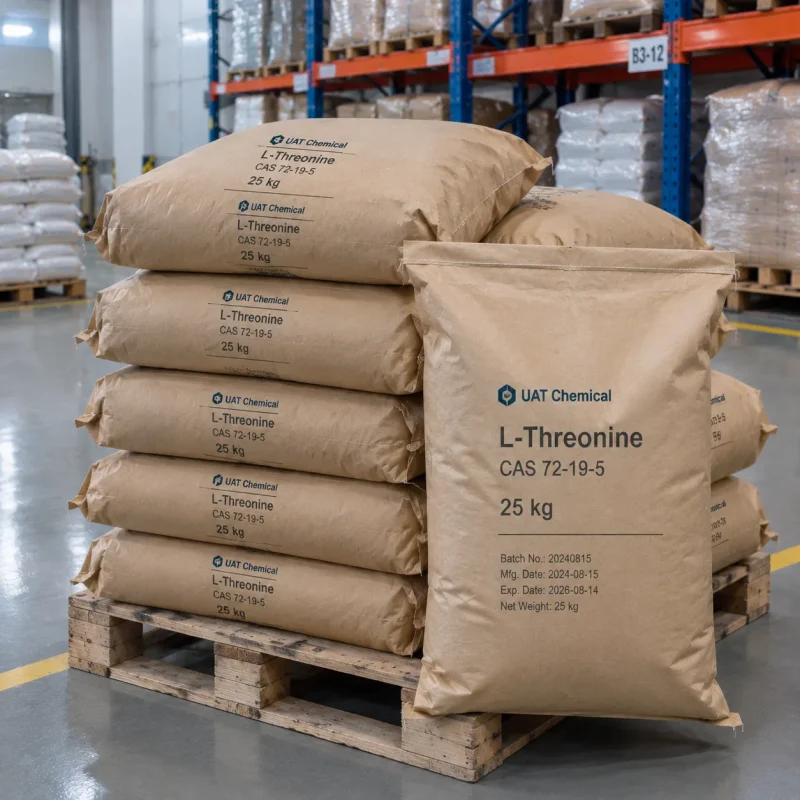
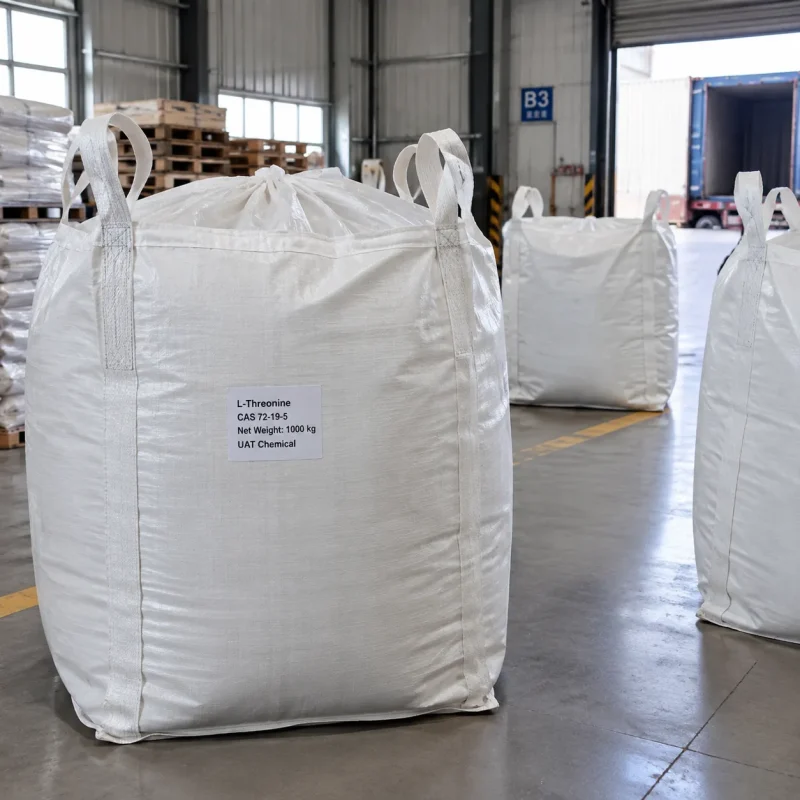
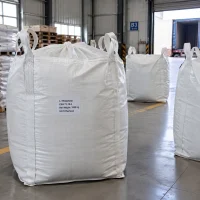
L-Threonine is an essential amino acid and a standard addition to livestock and aquaculture diets, supplied as a white crystalline powder or granules with a faint sweet taste. Animals cannot synthesize it, and only the L form is usable, so feed mills add it to corn and soybean meal rations to balance protein and support growth and feed conversion. Most tonnage moves as fermentation-made feed grade, with smaller FCC and pharmacopoeia grades for foods and amino acid infusions. UATChem supplies L-threonine in powder or granular form, in 25 kg bags and bulk bags, with assay, optical rotation and the grade-specific test results shown on the COA.
- CAS: 72-19-5
- EC Number: 200-774-1
- Synonyms: L-Threonine; (2S,3R)-2-amino-3-hydroxybutanoic acid
- Molecular Formula: C₄H₉NO₃
- Molecular Weight: 119.12
- Appearance: White crystals or crystalline powder; powder or granules
- Form: L-isomer, the nutritionally usable form
- Grades: Feed grade (main); food (FCC); pharma (USP/EP/JP, AJI)
- Production: Microbial fermentation
- Solubility: Soluble in water; practically insoluble in ethanol
- Main use: Pig, poultry and aquaculture feed; foods and infusions
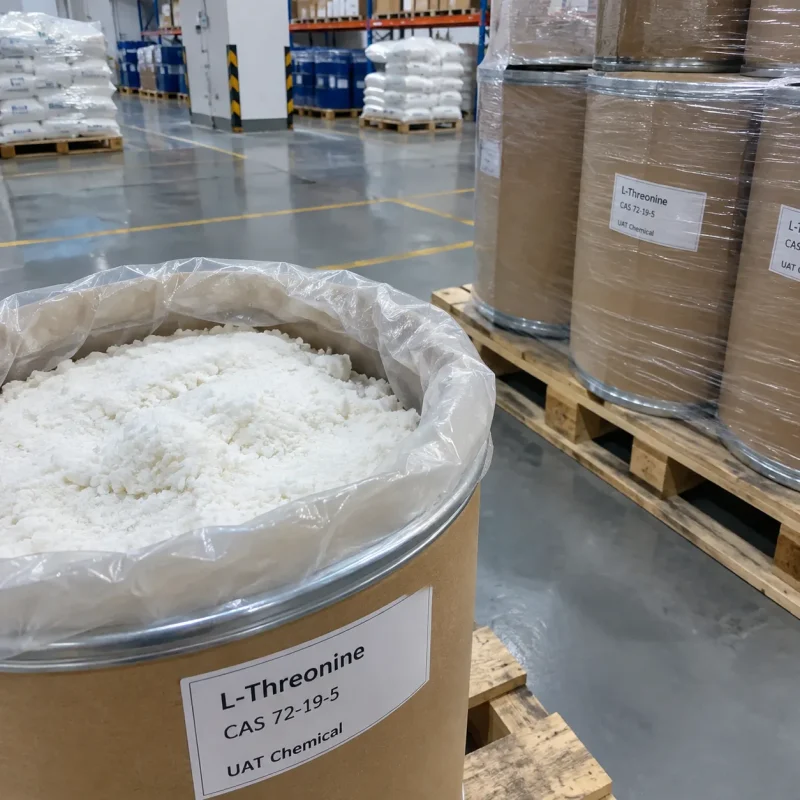
- Packaging: 25 kg bag or fiber drum; 500/1000 kg FIBC
About L-Threonine
L-Threonine is one of the essential amino acids, meaning animals have to take it in from feed, and the L form is the only form their metabolism can use. Commercial material is a white crystal or crystalline powder with a faint sweet taste, made by microbial fermentation rather than extracted from protein, so every tonne is the nutritionally active L isomer with no racemic mix. It dissolves in water and is practically insoluble in ethanol. The great majority of output goes into compound feed and premix for pigs, poultry and aquaculture; smaller food and pharmacopoeia grades cover fortified foods and amino acid infusions.
Animal Feed, Food and Pharma
In corn and soybean meal diets, threonine is the next limiting amino acid after lysine for pigs and ranks high for poultry and fish. Adding the pure amino acid meets the threonine requirement without raising whole dietary protein, the basis of low-protein balanced feeds. It shows up in several ways:
- Balances amino acids with lysine and methionine for growth, feed conversion and carcass or egg output.
- Lets diets run lower crude protein and less soybean meal at lower cost, holding performance.
- Raises nitrogen efficiency and cuts nitrogen lost in manure and urine.
- Supports gut mucin in poultry and protein supply for fish, shrimp and aqua stocks.
It is dosed with lysine and methionine in least-cost premixes, and methyl donors such as anhydrous betaine often join the same formula to spare methionine and ease heat stress in birds. Inclusion is small, a few kilos per tonne at most, and set by the formulation.
Food grade meets the FCC for fortified foods, sports nutrition and amino acid blends, including infant formula. Pharmacopoeia material to USP, EP, JP or AJI, including allo-free grades, serves compound amino acid infusions and finished medicines.
Grade and Specifications
Feed grade is the standard tonnage item; FCC and pharmacopoeia grades cover food and pharmaceutical work. Values below are typical, with the batch COA as the confirmed record.
| Parameter | Value |
|---|---|
| Appearance | White crystals or crystalline powder; granular feed grade available |
| Assay | Feed, FCC or pharmacopoeia value on the COA |
| Identification and optical rotation | Confirms the L isomer |
| allo-threonine (pharma grades) | Controlled on allo-free material |
| Solubility | Soluble in water; practically insoluble in ethanol |
| Loss on drying and heavy metals | Within grade limits, reported on COA |
| Applicable standard | Feed grade; FCC; USP/EP/JP/AJI as ordered |
Packing and Storage
- Packing. Feed grade leaves in 25 kg woven bags with a polyethylene liner, or 500 kg to 1000 kg FIBC bulk bags for container orders; food and pharma lots can be supplied in 25 kg fiber drums or cartons.
- Storage. Keep sealed in a cool, dry, ventilated place, away from rain, moisture, direct sun and toxic goods.
- Shipping and shelf life. A non-hazardous solid for ordinary freight, about 20 tonnes per 20-foot container without pallets; use within two years under proper storage.
Frequently Asked Questions
Q: Why is L-threonine added to pig and poultry feed?
A: It is essential and often limiting in feed; adding it balances protein for growth while cutting crude protein and nitrogen.
Q: Which grade should I order: feed, food or pharma?
A: Feed grade for compound feed; FCC for foods; USP, EP or AJI for infusions and medicines, which set tighter limits.
Q: How is bulk L-threonine packed for export?
A: It ships in 25 kg bags or 500 to 1000 kg FIBC bulk bags, about 20 tonnes per container, as non-hazardous ordinary freight.
Related products
Ready to Source? Talk to Our Engineers
Industrial Chemical Raw Materials, Factory-Direct — Quote Within 1 Hour
Stable high-purity supply, flexible packaging and complete compliance documentation for your formulations — exporting worldwide since 2006.
- 1000+Products
- 200+QC Protocols
- 7–15Days Delivery
- Factory-Direct Pricing
- COA / TDS / SDS Included
- Free Samples for Testing
- ISO 9001 Certified